Bronze Age tombs at Cape Trafalgar reveal elite burial practices
Radiocarbon dating of two newly excavated megalithic tombs on Spain's Cape Trafalgar shows they were used for 200 years between 1875 and 1625 B.C., containing high-status goods like gold, silver, and ivory.
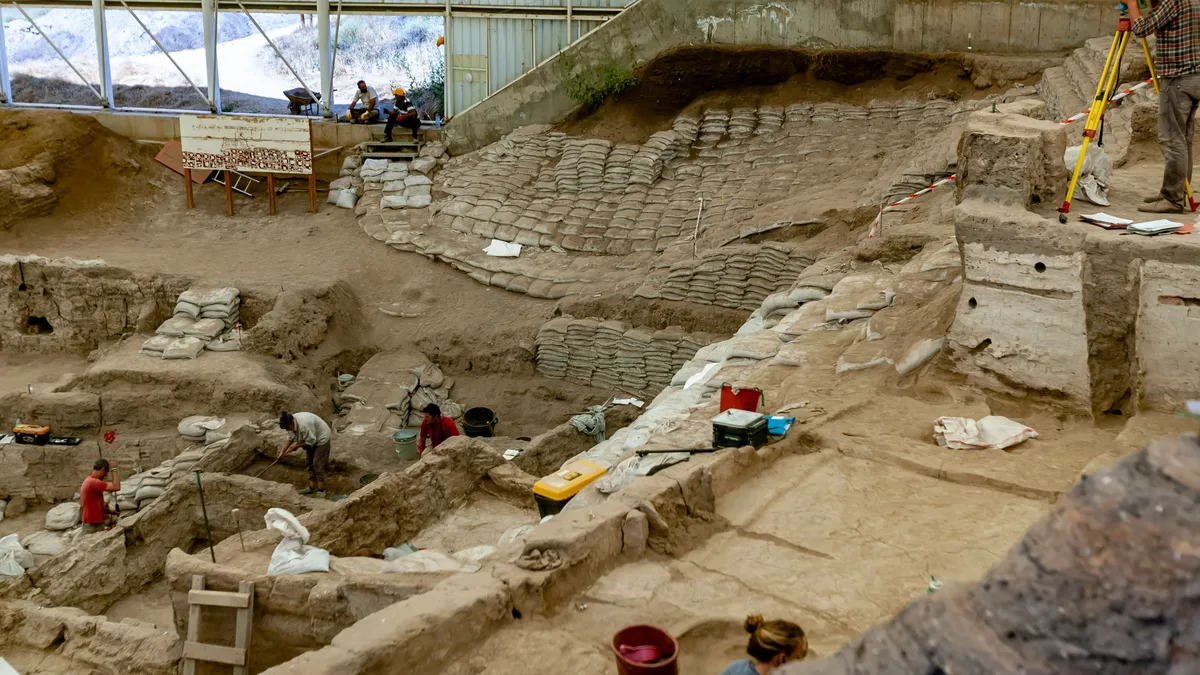
Two previously unknown megalithic tombs have been excavated beneath the dunes of Cape Trafalgar in Cádiz, Spain. Radiocarbon dating of human bones reveals the collective tombs were in use for approximately 200 years between 1875 and 1625 B.C., placing them among the last such monuments built in southern Iberia. The research, led by Eduardo Vijande-Vila of the University of Cádiz and published in the open access journal PLOS One, indicates the tombs operated simultaneously for over two centuries in this sea-dominated landscape.
Archaeologists suggest the sea played a significant role in both trade routes and ritual practices for the community that built the tombs. Activity at the site peaked around 1750-1700 B.C. The tombs were constructed and first used during the first quarter of the 2nd millennium B.C., with no older material found, indicating they were built new for this purpose. The Trafalgar necropolis is now considered one of the latest megalithic burial sites on the Iberian Peninsula.
Tomb I reveals elite burial practices
Tomb I is an oval chamber cut directly into the rock, connected to a passage under 2.6 meters long that was flanked by stone slabs and roofed with capstones. It contained the commingled remains of at least 13 individuals, including men, women, a child, and an adolescent. The bones were highly fragmented and rearranged after decomposition, indicating secondary burial practices. However, the final burial was different. A young adult woman was interred in an articulated, original position, her skeleton intact.
Her burial was accompanied by a cache of high-value grave goods not found with any other individual. This assemblage points to elite status and complex rituals.
| Item | Material | Quantity |
|---|---|---|
| Earrings | Gold | 2 |
| Beads | Silver | 3 |
| Bead | Green mica | 1 |
| Comb | Ivory | 1 |
| Shells | Perforated | 2 |
Analysis shows the gold is nearly 88% pure with 12% silver, resembling gold from the major site of Valencina de la Concepción. The green mica bead contains chromium not found locally, suggesting distant origins. The ivory comb likely came from Africa, though an Asian source is not excluded. The chamber was sealed with a stone wall and a slab, then covered with a mound of stones and sand about 4 meters across.
Tomb II shows structural adaptation and stabilization
Tomb II is a tholos, a tomb type with a circular chamber roofed with courses of stone. Its chamber, facing southeast with open views of the sea, measures about 2.9 meters in diameter. This tomb contained the remains of at least seven individuals. It yielded one gold earring, one copper arrowhead, and one green mica bead.
The structure suffered significant instability. Its original dome collapsed, likely due to dune sand seeping into the chamber. The community responded with a remarkable stabilization effort. They installed a central pillar made of three stone slabs to support the compromised roof and filled roughly half the chamber with material to buttress the walls. This engineering reduced the tomb's usable space from 6.54 to 2.65 square meters. Despite these efforts, the roof eventually collapsed completely. Archaeologists created detailed 3D digital models of both tombs using lasers and drones to document their forms.
Radiocarbon evidence establishes Bronze Age timeline
Sixteen radiocarbon dates from human bones, processed using Bayesian statistical models, firmly establish the timeline. The evidence confirms the tombs were used between 1875 and 1625 B.C. The chambers saw first use around 1875-1700 B.C., while the passages were used slightly later, around 1740-1630 B.C. Only one skull from Tomb I's passage dates to a later period, 1610-1440 B.C., which researchers interpret as a one-off instance of reuse long after the tomb's primary function had ended.
The dating indicates these large collective burials were maintained in southern Spain centuries after individual graves became more common elsewhere in Iberia. The study proposes the tombs were built ex novo around the 19th century B.C., though luminescence dating is still needed to pinpoint the exact construction date.
The site remains threatened by strong winds and shifting sands that could rebury the tombs, requiring constant maintenance. Geophysical surveys in the dune environment are challenging because dry sand conducts electricity poorly. Meanwhile, analyses are ongoing. Specialists from several Spanish universities are conducting ancient DNA, paleopathology, and stable isotope studies on the remains. Bone chemistry already suggests the sea contributed surprisingly little to the diet of these individuals buried so close to the coast. These forthcoming results will further elucidate the lives, health, and origins of the people interred at Cape Trafalgar.