Abandoned Shipwreck Act And Sunken Military Craft Act
| Site | Abandoned Shipwreck Act and Sunken Military Craft Act |
|---|---|
| Material culture shown | Legal text and associated resources |
| Original use | Federal legislation |
| First created | 1988 (Abandoned Shipwreck Act), 2004 (Sunken Military Craft Act) |
| Country of origin | United States |
| Governing body | United States Congress |
| Primary subject | Maritime heritage preservation and sovereign rights |
Origin and history
The Abandoned Shipwreck Act (ASA) is a federal law of the United States enacted in the late 1980s. It originated as a legislative response to conflicts between commercial salvors and state governments over the ownership and management of historic shipwrecks in state waters. The Sunken Military Craft Act (SMCA) is a separate United States federal law that was passed in the early 2000s. This act was created to address the need for a uniform national policy regarding the protection of sunken U.S. and foreign military vessels and aircraft. Both laws emerged from a growing recognition within the U.S. of the archaeological and historical value of submerged cultural resources. Their development reflects a shift from viewing shipwrecks primarily as sources of salvageable treasure to treating them as non-renewable historical sites. The laws are grounded in established principles of maritime law and sovereignty, adapting them to modern preservation goals.
What it is for
The Abandoned Shipwreck Act serves to transfer title to certain abandoned shipwrecks embedded in a state's submerged lands to the state government. Its primary purpose is to facilitate the stewardship and protection of these wrecks as historical and archaeological resources. The law aims to remove these wrecks from the traditional law of salvage and finds, which prioritizes recovery of cargo, and place them under a management framework. The Sunken Military Craft Act serves to affirm the ownership rights of the United States over its sunken military craft, regardless of location or time elapsed since sinking. A key purpose of the SMCA is to protect the sovereign immunity of these vessels and aircraft from unauthorized disturbance. Furthermore, it establishes a mechanism for the U.S. Department of Defense to grant permits for archaeological or historical research on these sites, balancing preservation with controlled access.
Overview
The Abandoned Shipwreck Act applies specifically to shipwrecks that are embedded in the submerged lands of a state, which generally extends three nautical miles from the coastline. It defines "embedded" as firmly affixed in the seabed or requiring tools for removal. The law explicitly does not apply to shipwrecks in the exclusive economic zone or on the outer continental shelf. The Sunken Military Craft Act applies to all U.S. sunken military craft, defined as any sunken warship, naval auxiliary, or other vessel or aircraft owned or operated by the U.S. government at the time of sinking. It also extends protections to foreign sunken military craft within U.S. jurisdiction, recognizing the reciprocal principle of sovereign immunity. Together, these acts create a layered legal framework where a site's location, its physical state, and its original ownership determine which law governs its management and protection.
What to know
Researchers and divers must know that jurisdiction is the critical first determinant: state waters fall under the ASA, while U.S. military craft anywhere are covered by the SMCA. It is essential to understand that the ASA transfers authority to individual states, meaning management regimes, permit requirements, and protected site lists can vary significantly from Florida to Michigan to California. For the SMCA, one must know that the law presumes U.S. ownership in perpetuity, and no act of abandonment by the government is recognized, making unauthorized disturbance a violation of federal law. Knowledge of the permitting process through the Naval History and Heritage Command is mandatory for any proposed work on a U.S. military wreck. Field methodologies on sites governed by these acts must prioritize in-situ preservation and detailed archaeological recording over artifact recovery. Material culture from such sites is not considered "treasure" but data, and its analysis is aimed at answering historical research questions rather than fulfilling commercial value.
Common questions
A common question is whether a finder can claim ownership or a salvage award under these laws, and the answer is generally no, as both acts explicitly remove eligible wrecks from the traditional salvage regime. People often ask if they can keep artifacts they find on a wreck, and under both acts, the removal of artifacts without explicit authorization from the managing state (ASA) or the U.S. government (SMCA) is illegal. Many inquire about how to identify if a wreck is protected, which requires consulting state underwater archaeological inventories for ASA sites and the U.S. Navy's database for SMCA sites. A frequent question concerns the difference between an "abandoned" wreck under ASA and a "sovereign immune" wreck under SMCA, which hinges on the original owner's intent and the specific legal definitions within each statute. Divers ask about the penalties for violation, which can include substantial fines, forfeiture of equipment, and even imprisonment for knowing and willful disturbances. Researchers commonly seek clarification on whether they can conduct remote sensing surveys, which typically requires prior notification or a permit even for non-intrusive documentation.
Pros and cons
A significant pro of this legal framework is that it provides clear, though complex, rules that prioritize archaeological preservation over commercial salvage for historically significant sites. The cons include a sometimes confusing jurisdictional overlap where a sunken U.S. military craft embedded in state waters may be subject to both acts, requiring coordination between state and federal authorities. A common mistake is for recreational divers to assume that because a wreck is old and its location is known, it is free to explore without restriction, leading to unintentional violations. State agencies under the ASA often regret the lack of consistent federal funding for site monitoring and enforcement, leaving many protected wrecks vulnerable to looting despite the law. Researchers sometimes find the permit process, especially under the SMCA, to be lengthy and administratively burdensome, potentially delaying field seasons. A genuine drawback is that the acts can create an adversarial dynamic with some segments of the diving community who feel excluded from historical resources, rather than fostering collaborative stewardship.
Who it suits
This legal framework suits state and federal resource managers who require enforceable tools to protect submerged cultural heritage from uncontrolled exploitation. It is well-suited for professional maritime archaeologists and historians whose research methodologies align with the preservation mandates and who are equipped to navigate the permit processes. The system suits educational institutions and non-profit organizations that partner with government entities to conduct research and public outreach on documented shipwreck sites. It does not suit commercial salvage operators whose business model relies on the recovery and sale of artifacts from historic shipwrecks, as these acts largely preclude that activity. The framework is less suited for casual hobbyist divers seeking souvenir collection, as it legally redefines their role from "salvor" or "finder" to that of a visitor or potential permittee. It ultimately serves the public interest by ensuring that significant underwater archaeological sites are preserved for future generations' study and interpretation.
Latest Abandoned Shipwreck Act And Sunken Military Craft Act news
Latest reporting
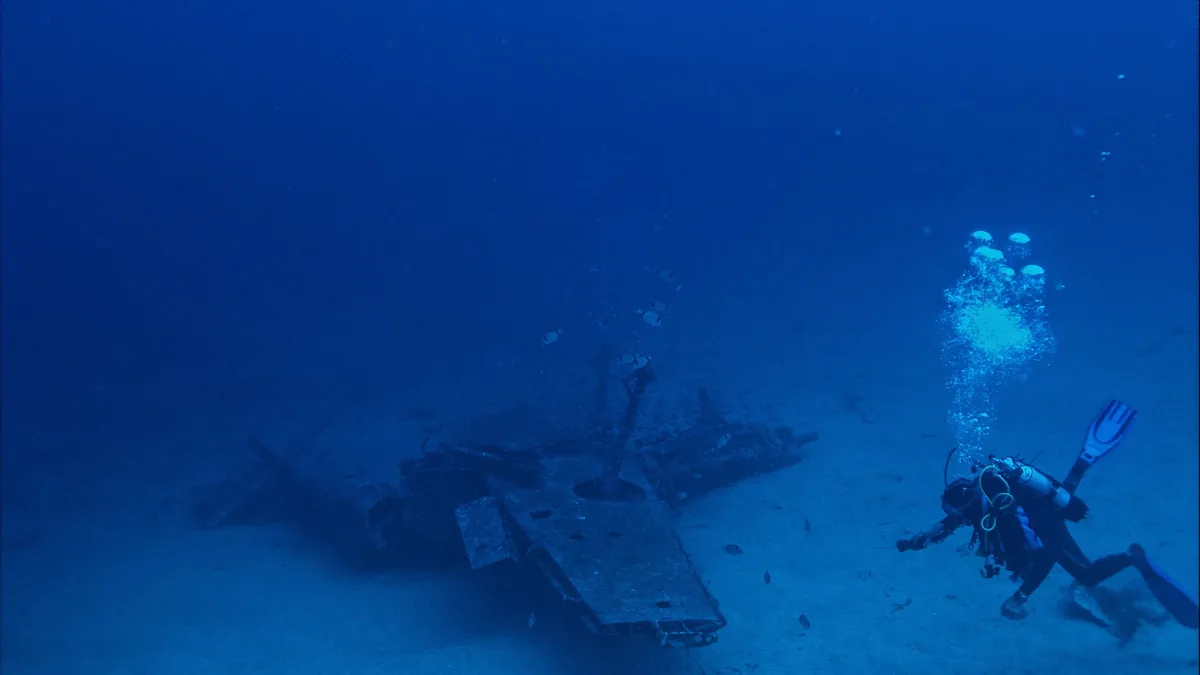
Po wreck hosts invasive fish and rare seals
A sunken WWII hospital ship off Albania acts as an artificial reef, attracting invasive devil firefish and providing shelter for endangered...
Ancient Roman Wine Shipwreck Found Near Sicily
A 2,100-year-old Roman shipwreck carrying 500 amphoras, likely used for wine transport, has been discovered off Sicily's coast. The vessel, measuring...
Medieval Caravansery Uncovered in North Sinai
Archaeologists have discovered the remains of a medieval caravansery in North Sinai, Egypt. The structure, which dates back to the Mamluk Sultanate...