First Lighthouse of Alexandria Signet Ring Discovered
A bronze signet ring engraved with the Lighthouse of Alexandria has been found in the submerged palace ruins of Antirhodos, providing the first archaeological evidence of its symbolic use in administration.
The first signet ring engraved with the Lighthouse of Alexandria has been found in the submerged palace ruins of Antirhodos. This bronze ring, discovered underwater off the coast of Alexandria, Egypt, is the only known example of its kind.
The image carved into the ring is of the Lighthouse of Alexandria, one of the Seven Wonders of the Ancient World. The depiction closely resembles those found on coins dating to the second century A.D. The ring was found in the royal quarters of Alexandria’s Portus Magnus, on the now-submerged Royal Island of Antirhodos.
Archaeological Context
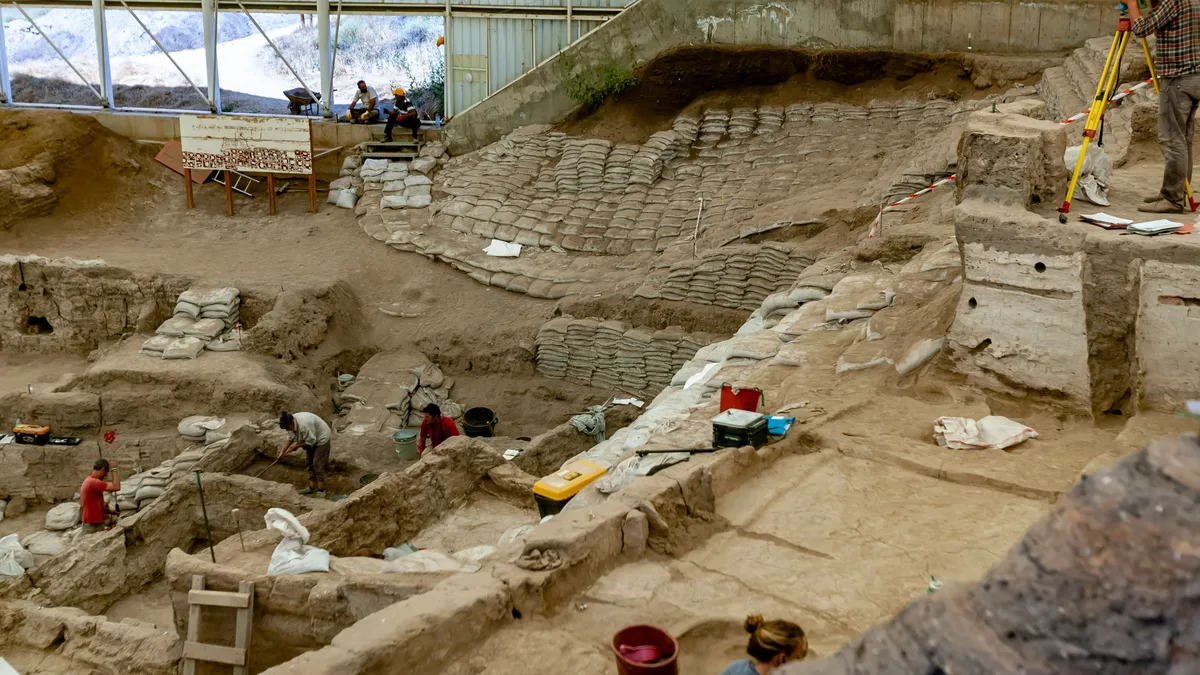
The artifact was uncovered during underwater excavations on the Royal Island of Antirhodos, a former royal administrative center. The excavations, conducted by a joint team from the European Institute for Underwater Archaeology (IEASM) and the Egyptian Ministry of Tourism and Antiquities, have revealed architectural remains across several thousand square metres.
The palace on Antirhodos was used by the pharaohs during the rule of Egypt's Ptolemaic dynasty, which lasted from 304 to 30 B.C. The palace included offices for administrative functions, which researchers now suggest were connected to the administration of the famous lighthouse. The ancient Greek geographer Strabo visited the palace between 29 and 25 B.C.
The Pharos Lighthouse
The lighthouse itself was built on the nearby island of Pharos around 280 B.C. It stood more than 328 feet (100 meters) tall. Some ancient writers, such as Pliny the Elder, considered it among the wonders of the world. A statue, possibly of Zeus, stood at its summit holding an oil lamp to guide mariners.
The structure continued to be used into the Middle Ages. Earthquakes and coastal erosion eventually caused its destruction and disappearance beneath the sea. Recent research off Alexandria's coast, including the 2025 discovery of 22 enormous stone blocks, has aided digital reconstruction efforts.
Scholarly Interpretation
The ring's engraving likely depicts the lighthouse, though the image is worn. The discovery in the palace ruins suggests the site served administrative functions linked to the lighthouse. This provides the first physical evidence of the lighthouse's symbolic role in Ptolemaic governance.
Doris Behrens-Abouseif, professor emeritus of history of art and archaeology at the University of London, noted the commonality of the image on currency. "There are 'thousands of coins from Alexandria showing a similar depiction of the lighthouse,'" she said.
Scholars have focused on a specific detail in the engraving. Andrew Chugg, an independent researcher and author of a recent book on the lighthouse, stated the most interesting feature is an asymmetrical peak that may depict a plume of smoke from the oil lamp. Margaret Miles, professor emeritus at the University of California, Irvine, also noticed what appears to be rising smoke. She suggested the ring could have been used by a merchant from Alexandria to signal his location, noting that "the lighthouse was famous, so it became a symbol of the city."
Signet rings were used to press impressions into soft materials like clay or wax to create official seals. The ring's wear indicates it was used. The full importance of the find depends on detailed context and dating from the ongoing excavation, which also uncovered a set of pottery and glass artefacts dating from the fourth century B.C. to the fourth century A.D. The ring's asymmetrical peak feature may depict smoke from the lighthouse's oil lamp.