Ancient frog bones reveal Roman-era owl predation in Cambridgeshire
Analysis of 8,000 frog bones from a Cambridgeshire ditch confirms they were deposited by short-eared owls and hen harriers 1,700 years ago, solving an archaeological mystery and revealing landscape changes in Roman Britain.
Archaeologists have solved a 1,700-year-old mystery involving 8,000 frog bones found in a single ditch near an Iron Age roundhouse at Bar Hill, Cambridgeshire. Radiocarbon dating confirms the bones were deposited during the Roman period by birds of prey, specifically short-eared owls and hen harriers.
Roman period context
The frog remains date to approximately 1,700 years ago, a time spanning from about 400 B.C. to A.D. 43. During this Roman period, the local fen wetlands were slowly receding. This created ideal, damp breeding conditions for frogs. Concurrently, large areas of woodland were being cleared, replaced by open spaces for grazing livestock. This landscape transformation made the amphibians more visible and vulnerable to predators hunting over grassland.
Predator evidence confirmed
Scientific analysis identified the predators responsible. Researchers from Bournemouth University and the Museum of London Archaeology (MOLA) found no cut marks on the bones, ruling out human involvement. The bone breakage patterns matched those caused by birds of prey. Most of the frogs were less than one year old when they died, consumed in the winter of their first year. Paul Clarkson, who led the research team, stated: "The mystery of these frogs has been solved-a feast of frogs that were eaten and their bones left behind by a group of owls."
Scientific investigation
The study combined expertise from Bournemouth University, MOLA, and the University of Vienna. The University of Vienna conducted the radiocarbon dating that firmly placed the activity in the Roman era. The concentration of bones was particularly puzzling because archaeological evidence indicates the ditch filled within a single year, pointing to a rapid accumulation of remains. The research was published in the journal Environmental Archaeology.
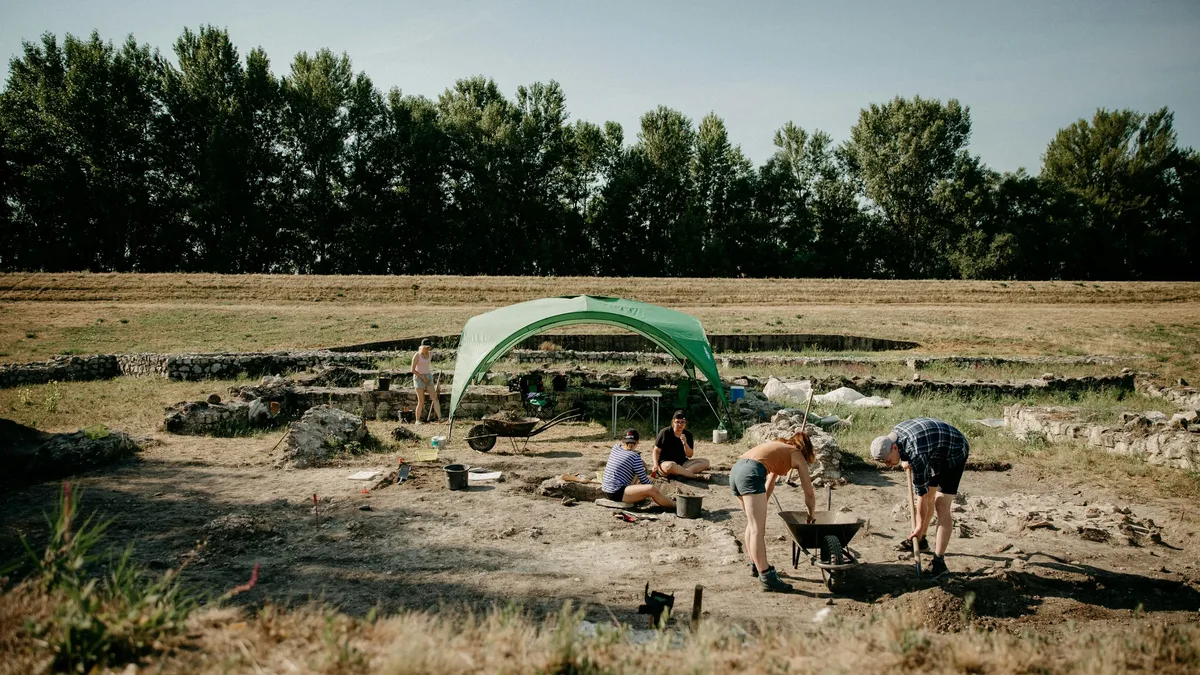
The discovery was made during archaeological investigations linked to the A14 Cambridge to Huntingdon road improvement scheme. Dr Vicki Ewens, a senior zooarchaeologist, noted the find shows how even the smallest animal remains can help reconstruct past environmental conditions and human activity within a wider landscape. The changing patterns of human activity, including seasonal livestock movements, are reflected in this predator-prey snapshot. The research demonstrates how such minute finds can reveal detailed insights into Roman-era landscape management and predator behavior.