Largest Xiongnu Tomb in Mongolia Reveals Elite Trade Network
A four-year excavation of a 73-meter Xiongnu tomb in eastern Mongolia uncovered 413 artifacts, including potential Roman glass and Han jade, highlighting the nomadic empire's long-distance connections during its decline.
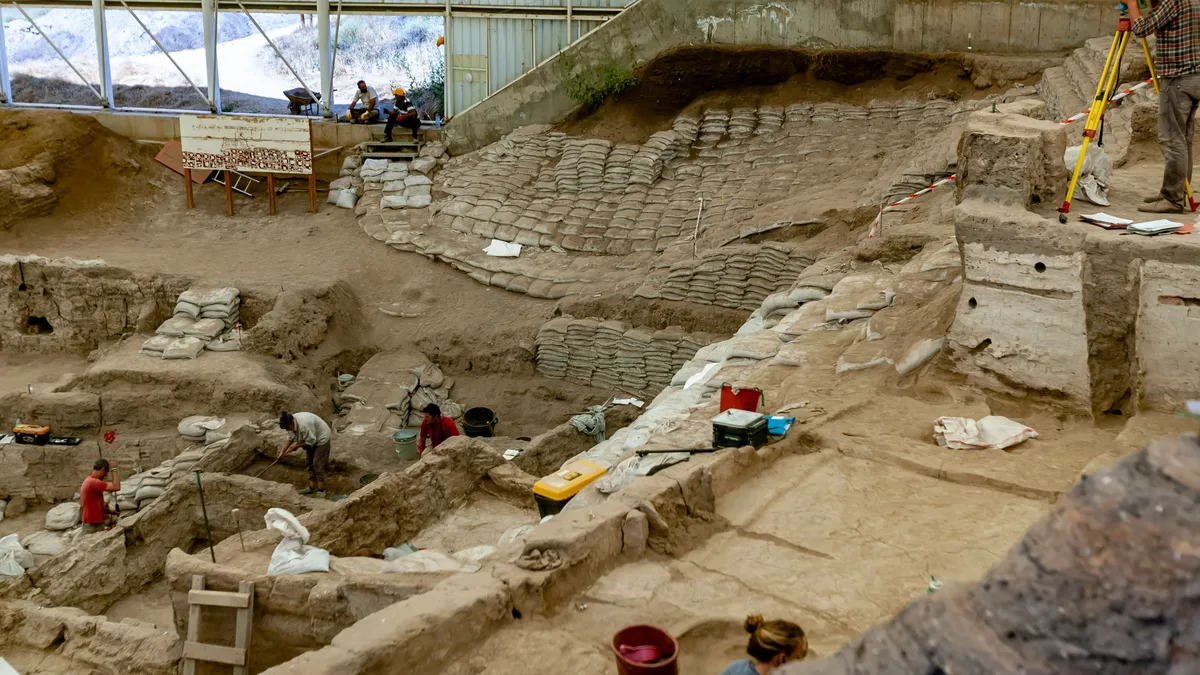
Archaeologists have fully excavated the largest Xiongnu tomb ever identified in Mongolia. The monumental 73-meter (240-foot) structure at the Duurlig Nars cemetery, dug between 2023 and 2026, contained a trove of 413 artifacts pointing to extensive trade with Rome, Han China, and Korea.
Located in Khentii province, the tomb known as Tomb 160 dates to between the late first and second century AD, a period of waning Xiongnu political power. The team from the National Museum of Korea, the Institute of Archaeology of the Mongolian Academy of Sciences, and the National Museum of Mongolia removed nine layers of stacked stone fill measuring more than 45 feet deep to reach the central burial chamber.
International Artifacts and Cultural Connections
The tomb's contents reveal a web of long-distance exchange. A transparent glass cup with a handle was recovered, possibly manufactured in the Roman Empire during the reigns of Trajan or Hadrian. Scientific testing of its chemical composition is planned to confirm this origin.
Fifteen jade objects were placed in the wooden coffin. These pieces imitate the ceremonial bi discs of China's Han Dynasty but feature irregular shapes and fine carvings. Researchers interpret this as an adoption of Chinese funerary ritual, modified by Xiongnu artisans.
A silver, gourd-shaped horse harness pendant with a rock crystal set in its center was also discovered. It closely resembles pendants from Tomb 219 at Seokam-ri in Pyongyang, part of the Lelang commandery cemetery, though the Mongolian example's crystal setting is a unique feature. A round gold ornament with red and blue materials beneath transparent crystal was found nearby, noted as the first of its type found in a Xiongnu tomb.
Burial Structure and Symbolic Elements
The burial itself consisted of a small central chamber inside two nested wooden structures, containing a single coffin. A lacquer-coated carriage was buried above this central chamber, a clear symbol of elite rank. The enormous stone construction and the presence of the carriage are characteristic of high-status Xiongnu burials.
Despite its massive surface length, the burial chamber is relatively shallow at about 14.5 meters deep. For comparison, some Xiongnu tombs in central Mongolia reach depths of about 22 meters. This smaller central space may reflect societal changes during the empire's decline after Han military campaigns in AD 89 and 91.
Ongoing Research and Unanswered Questions
The identity of the tomb's occupant remains a mystery. DNA analysis on recovered teeth and hair remains is planned to potentially shed light on this. The tomb is part of the largest Xiongnu cemetery complex in eastern Mongolia, comprising around 300 graves. Satellite tombs associated with this main mound, excavated in 2019, yielded silver belt ornaments shaped like human faces, showing similar patterns of elite burial practice.
The Xiongnu, who dominated the Mongolian steppes from the 3rd century BC, left few written records. This makes archaeological evidence from sites like Duurlig Nars critical for understanding their culture and diplomatic ties. The museum consortium will now undertake conservation and a full analysis of all 413 finds before preparing a comprehensive excavation report.