Messapian tomb reveals priestess role through inscriptions and grave goods
A 2,300-year-old Messapian tomb in Manduria, Italy, contains inscriptions identifying a woman as a 'thabara' and grave goods suggesting priestly functions, offering rare evidence of female religious authority.
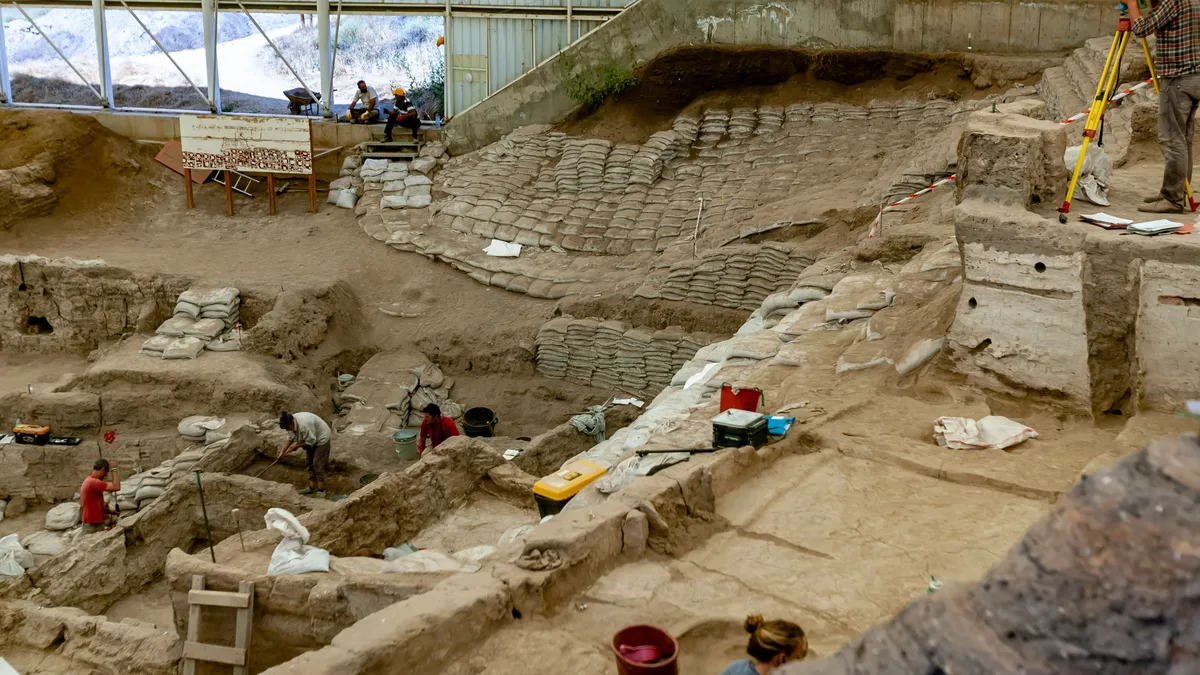
Archaeologists have uncovered a 2,300-year-old Messapian tomb in southern Italy that may clarify women's religious roles. The burial, designated Tomb 17, was found in the ancient necropolis of Manduria within the Mura Messapiche Archaeological Park in Apulia.
Tomb 17 was carved directly into the bedrock and sealed with three massive stone slabs. The tomb had been looted in antiquity, leaving only sparse and fragmentary human bone remains. Despite this disturbance, the chamber preserved significant inscriptions and a collection of grave goods.
Inscribed tributes to Demeter
The tomb's three sealing slabs bear a carved Messapic inscription. It identifies a woman, gives her father's name, and includes the word 'thabara,' interpreted as a priestly title in the genitive case. A second, painted inscription on an inner slab also contains the word 'thabara' and the name 'Damatrioas,' a possible reference to the goddess Demeter.
These inscriptions suggest the deceased may have been a priestess of Demeter. The painted text uses red and blue pigments. With only about 600 surviving Messapic inscriptions known, each new find is key. The language became extinct after the Roman conquest of southern Italy in the Second Punic War.
Ancient ritual objects and evidence
The grave goods found within the tomb point to ritual activities and status. The objects include bronze fibulae, a silver finger ring decorated with a snake motif, and an unknown iron object. A key ritual assemblage consists of painted depictions of a temple key and a thymiaterion, or incense burner.
A silver coin from the mint of Taranto was also recovered. It depicts Athena and Heracles battling a lion. The collection of items, particularly the symbolic key and incense burner, supports the interpretation of the occupant's priestly functions.
Preservation and future study
The discovery was made during excavations funded by Italy’s Ministry of Culture. The work, conducted over 180 square meters in the park's southern sector, was overseen by the Soprintendenza Archeologia, Belle Arti e Paesaggio for Brindisi, Lecce, and Taranto.
Archaeologists now plan to conserve the fragile painted decorations and study the inscriptions further. They will conduct archaeobotanical analyses and a full examination of the grave goods. The role of women in Messapian religion remains an open question, making this tomb a focal point for ongoing research.
Decorative elements inside the tomb include a meander pattern alongside the painted ritual objects. As work continues, researchers aim to extract every possible detail from this rare find.