Neanderthal Died from Wooden Spear Wound 75,000 Years Ago
A Neanderthal buried in Shanidar Cave, Iraq, died from a penetrating chest wound caused by a wooden spear thrust.

Archaeologists have identified the earliest known case of lethal interpersonal violence involving a wooden spear. A Neanderthal individual, buried 75,000 years ago in Shanidar Cave in Iraqi Kurdistan, died from a spear thrust that entered the chest and exited through the left shoulder blade.
The remains, named Shanidar A, were found beneath 7.5 meters of rock and sediment. The injury left a near-perfect circular hole, 1.5 centimeters in diameter, in the shoulder blade. Researchers believe the spear damaged a lung and likely major arteries, causing rapid death. The blow appears to have been deliberately aimed at the heart.
Shanidar A was estimated to be about 45 years old at death. The remarkably well-preserved remains included the left shoulder blade, a largely complete right hand, three ribs, and seven teeth.
Research context
Led by Dr Emma Pomeroy from the University of Cambridge's Department of Archaeology, the study re-examined remains first uncovered in the 1950s. The research was published in the journal Scientific Reports. Professor Graeme Barker, a University of Cambridge archaeologist, led the modern excavations at the cave, where at least ten Neanderthal remains were originally found.
This discovery adds to a complex picture of Neanderthal behaviour. An earlier find in the same cave involved a Neanderthal from around 50,000 years ago with a partly healed rib wound, likely from a stone-tipped spear. Some researchers suggest the new wound could alternatively be explained as a hunting accident or friendly fire.
Evidence from other sites also shows violence was not unknown. A 2022 study of Neanderthal skulls from 'the Pit of Bones' in Spain found numerous healed and fatal injuries, including puncture wounds, suggesting deliberate blows occurred hundreds of thousands of years ago. Neanderthals, who lived across Europe and western and central Asia and sometimes overlapped with Homo sapiens, went extinct around 40,000 years ago.
Broader implications
The finding challenges simplistic assumptions about Neanderthal peacefulness. It adds to growing evidence of complex behaviour, including possible ritual burial and symbolic thought. The discovery also highlights the extreme rarity of preserved wooden weapons from this period, as wood typically decays.
Very few wooden objects from early prehistory survive. A notable exception is the collection of wooden spears discovered at Schöningen, Germany, preserved in waterlogged conditions. Those spears date back more than 200,000 years. Some were over two meters long and were crafted with optimized weight distribution for throwing, similar to modern javelins.
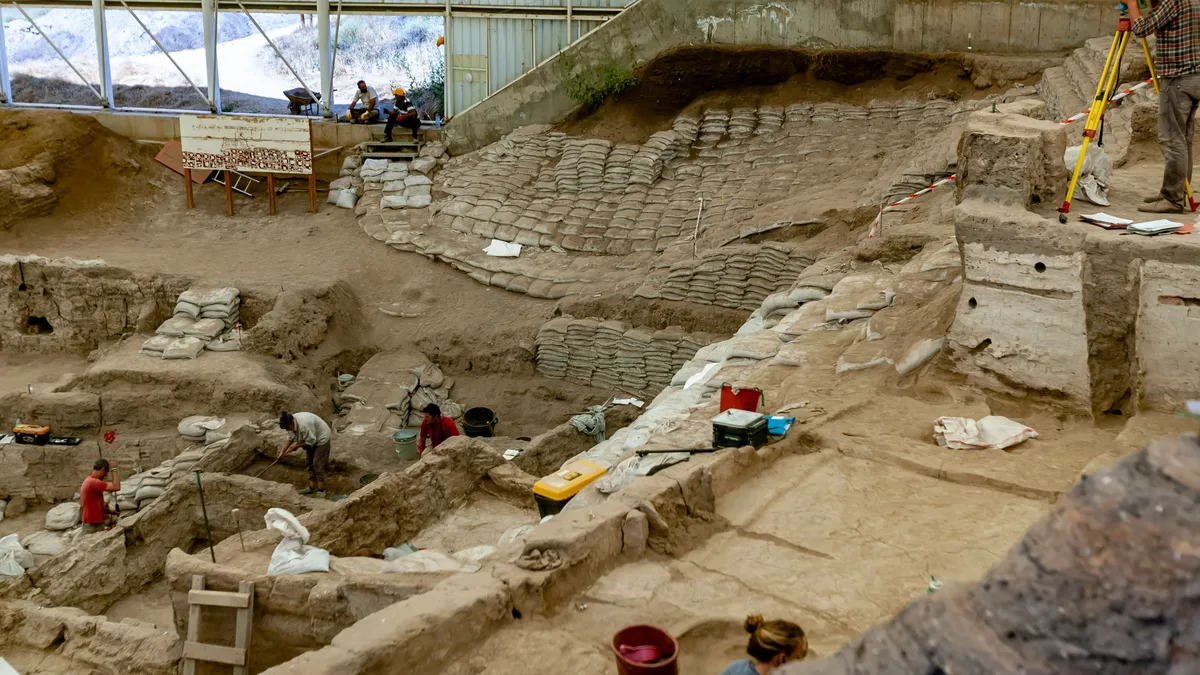
The remains of Shanidar A were buried beneath 7.5 meters of rock and sediment, preserving the skeleton for millennia until its recent discovery and analysis.