Medieval Nobleman’s Tomb Found in Western Russia
A tenth-century wooden burial chamber at Gnezdilovo, western Russia, revealed the remains of a man aged 25 to 35, a horse, a dog, and a silver brooch, indicating a Rus noble with Scandinavian ties.
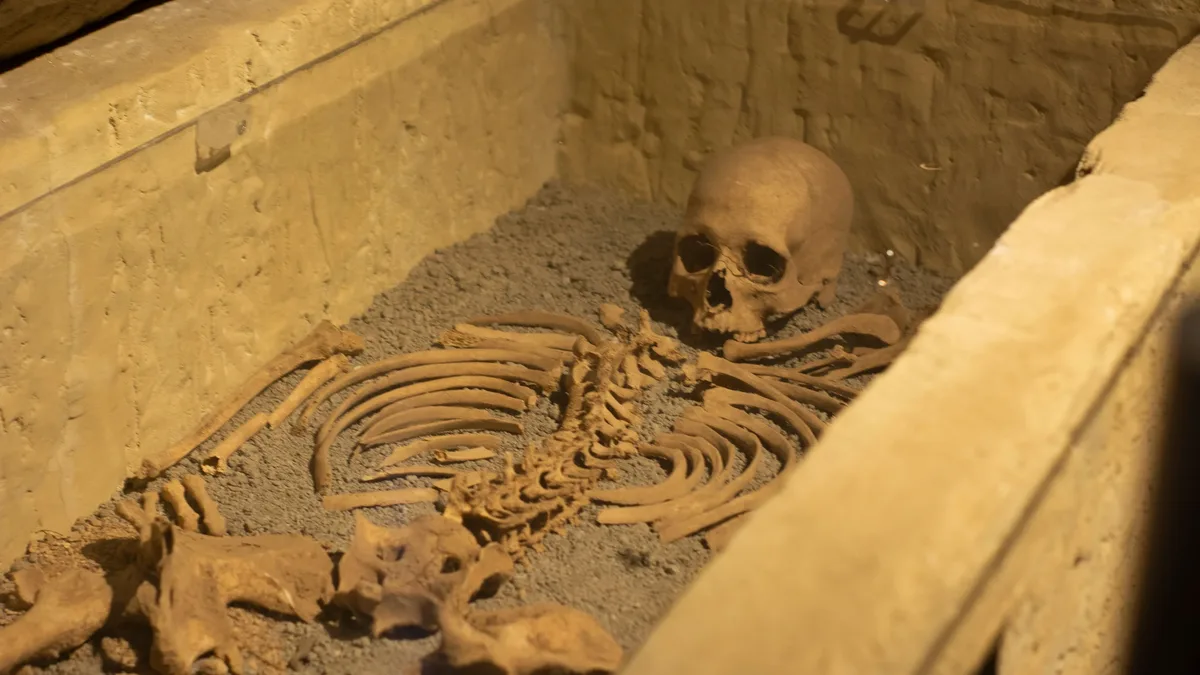
The discovery was made in Suzdal, Russia, where a tenth-century wooden burial chamber was uncovered at the medieval cemetery of Gnezdilovo.
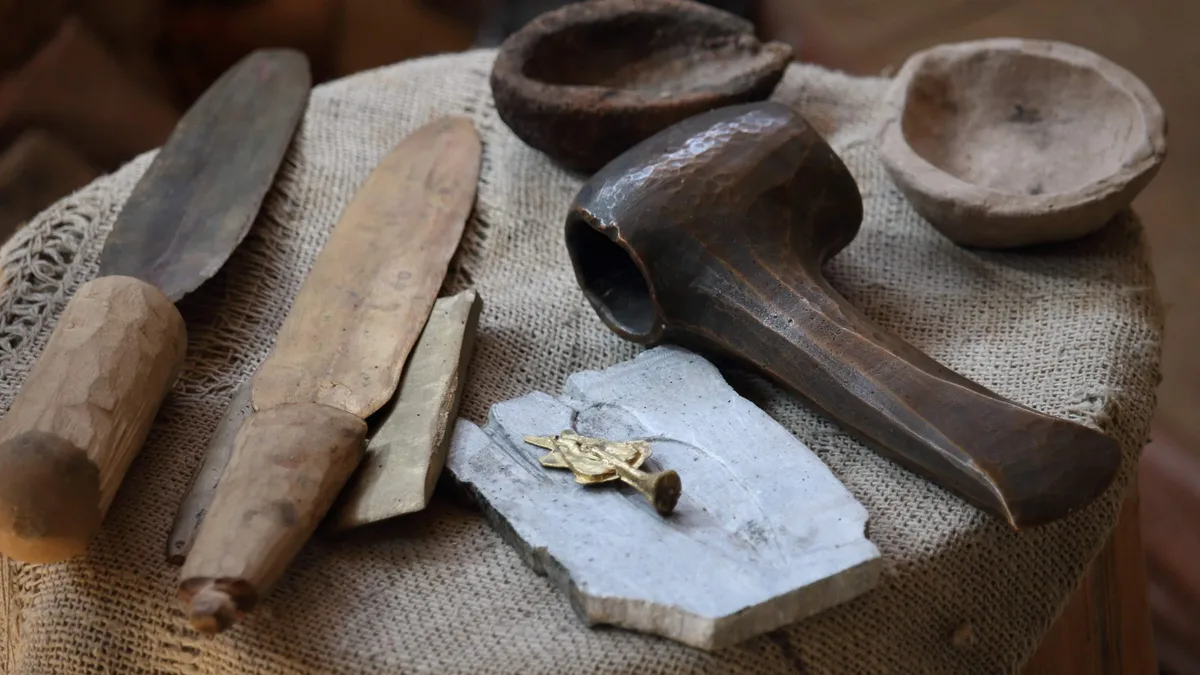
A team from the Russian Academy of Sciences found the remains of a man estimated to have been between 25 and 35 years old at the time of death, along with a horse, a dog, a silver horseshoe-shaped brooch, an iron knife, stirrups, horse-related gear, a bone comb, and a battle ax.
The wooden chamber measured about 10 feet long and nine feet wide, and its roof had collapsed.
The find dates to the late ninth century, when the region was ruled by the Kievan Rus, a confederation that included Baltic, eastern Slavic, and Norse peoples.
The burial style suggests that the settlement at Suzdal may have become a Rus administrative center, as it reflects an Old Russian local noble adopting a Scandinavian funerary practice.
The presence of a horse and dog in the chamber, along with the silver brooch, indicates high status, according to the excavation team.
The silver horseshoe-shaped brooch, used to fasten a garment at the neck, was a key artifact linking the burial to broader Rus and Scandinavian cultural connections.
The grave goods, including the iron knife, stirrups, and battle ax, further support the interpretation of a warrior elite.
The discovery was reported by Live Science on August 26, 2026.
The cemetery at Gnezdilovo is located in western Russia, near the historic town of Suzdal.
The Kievan Rus influence extended across the region, integrating diverse peoples under a shared political and cultural framework.
The wooden burial chamber’s collapse preserved the artifacts in a manner that allowed clear identification of the items.
No later disturbances or looting appear to have affected the site, according to the excavation report.
The presence of a battle ax and stirrups suggests the individual may have been a mounted warrior.
The bone comb indicates personal grooming practices consistent with elite burials of the period.
The horse remains were articulated, suggesting the animal was buried alongside the individual rather than sacrificed separately.
The dog remains were small, possibly a lapdog, and were positioned near the human remains.
The silver brooch is described as horseshoe-shaped and likely made of silver, though its exact weight is not specified.
The iron knife and other metal items show signs of use, indicating they were functional rather than purely ceremonial.
The excavation team concluded that the burial reflects a blend of local Old Russian traditions and Scandinavian influences.
The Kievan Rus period, beginning in the late ninth century, saw the spread of Norse customs into eastern Slavic territories.
The site’s location in western Russia places it within the broader sphere of Rus expansion and administrative development.
The discovery provides physical evidence for the integration of Scandinavian funerary practices into local elite culture.
No written records were found at the site, so the individual’s identity remains unknown.
The burial chamber’s dimensions-10 feet by nine feet-suggest a modest but purpose-built structure.
The collapse of the wooden roof may have been caused by natural decay or post-burial environmental factors.
The horse’s equipment, including stirrups, indicates the animal was used for riding, consistent with elite mobility.
The battle ax, a common weapon in early medieval warfare, was found near the remains.
The bone comb, a personal item, was likely used for grooming and may reflect the individual’s status.
The dog’s presence in the burial aligns with later medieval practices of including pets in graves.
The silver brooch, while decorative, may have served a practical function in fastening clothing.
The iron knife’s condition suggests it was used for daily tasks as well as ceremonial purposes.
The excavation was conducted as part of ongoing research into medieval settlement patterns in the Suzdal region.
The cemetery at Gnezdilovo contains multiple burials, indicating it was an active burial ground.
The find contributes to a growing body of evidence for early medieval elite interactions with the Norse world.
The article notes that further analysis will be conducted to determine the individual’s diet, origin, and genetic background.
The discovery was made during a routine survey of the cemetery, not during a targeted excavation.
The site’s significance lies in its potential to reveal how local nobility adopted foreign customs.
The combination of horse, dog, and human remains in a single chamber reflects a complex funerary ritual.
The silver brooch is the most visually striking artifact, drawing attention to the cultural exchange involved.
The presence of multiple grave goods suggests the individual was buried with items intended for use in the afterlife.
The excavation team emphasized that the burial reflects a deliberate choice of Scandinavian-style interment.
The Kievan Rus state, centered in Kyiv, influenced much of the region, including western Russia.
The Suzdal area, historically linked to the principality of Vladimir, shows early signs of administrative centralization.
The burial’s location within a larger cemetery suggests it was part of a community with established social hierarchies.
No evidence of later reburial or disturbance was observed in the chamber.
The horse’s age and condition were not specified, but its inclusion indicates value.
The dog’s breed or exact size was not detailed in the report.
The battle ax’s design and size were not described, but it was clearly a weapon.
The iron knife was small and likely used for personal grooming or utility.
The bone comb was made from animal bone and had fine teeth.
The silver brooch was found near the neck region, consistent with its use in fastening clothing.
The wooden chamber’s construction suggests it was built from planks, typical of the period.
The collapse of the roof may have occurred after burial, as no signs of immediate structural failure were noted.
The site’s preservation conditions allowed for the survival of organic materials, including wood, bone, and metal.
The discovery was reported without mention of any prior knowledge of the burial’s location.
The excavation team included researchers from the Russian Academy of Sciences, though individual names were not provided.
The article does not specify the exact date of the burial, only that it dates to the late ninth century.
The broader context of Kievan Rus trade and diplomacy is referenced, suggesting the individual may have had ties to wider networks.
The presence of a horse and dog together in a burial is rare but not unprecedented in early medieval contexts.
The silver brooch’s shape is distinctive and may be linked to specific regional styles.
The grave goods collectively indicate a person of high rank, possibly a local noble or military leader.
The cemetery’s location in western Russia places it within the heartland of early Rus expansion.
The find underscores the cultural blending that occurred during the Kievan Rus period.
The excavation’s findings were published in a report by Live Science, based on fieldwork conducted in 2026.
The article concludes with a reference to further studies on the Rus, directing readers to additional coverage.