Neanderthals Crafted Sophisticated Wooden Tools at Abric Romaní
Thirteen impressions of wooden Neanderthal tools, including long spears and a club, were identified in travertine at the Abric Romaní rock shelter in northeastern Spain, dating from 40,000 to 62,000 years ago.
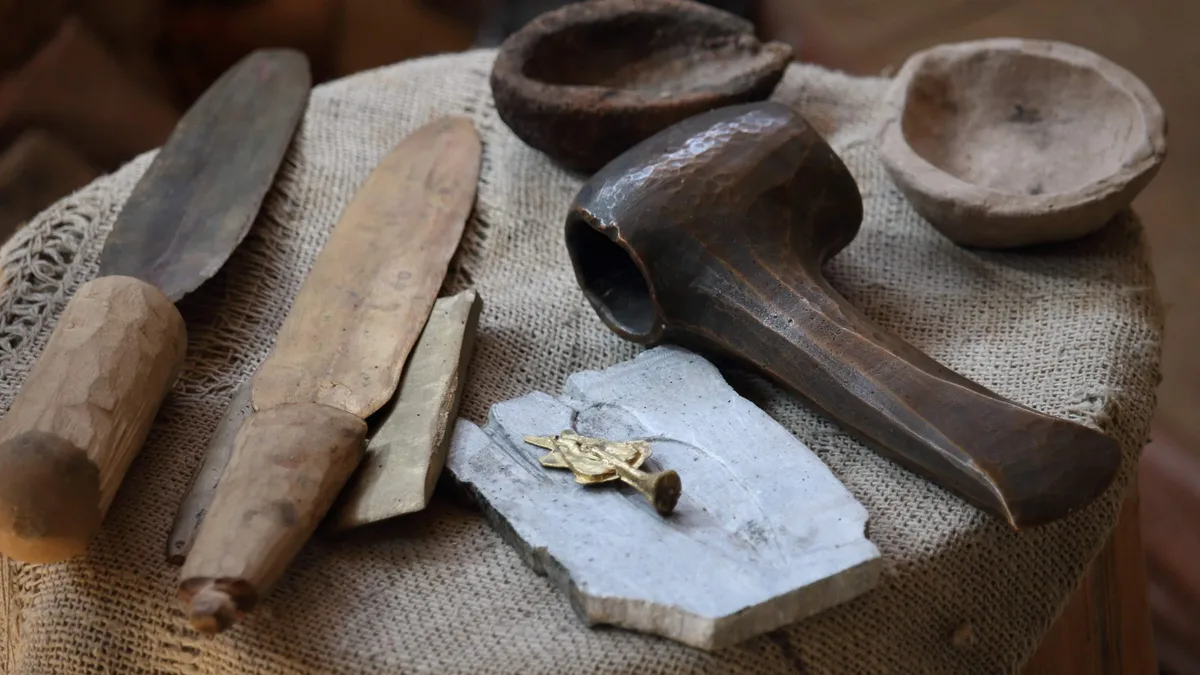
Thirteen impressions of wooden tools made by Neanderthals have been identified in the travertine sediments of the Abric Romaní rock shelter in northeastern Spain. The objects were preserved when wooden items were coated with calcium carbonate-rich water; the wood later decayed, leaving hollows in the stone.
Context of Neanderthal occupation
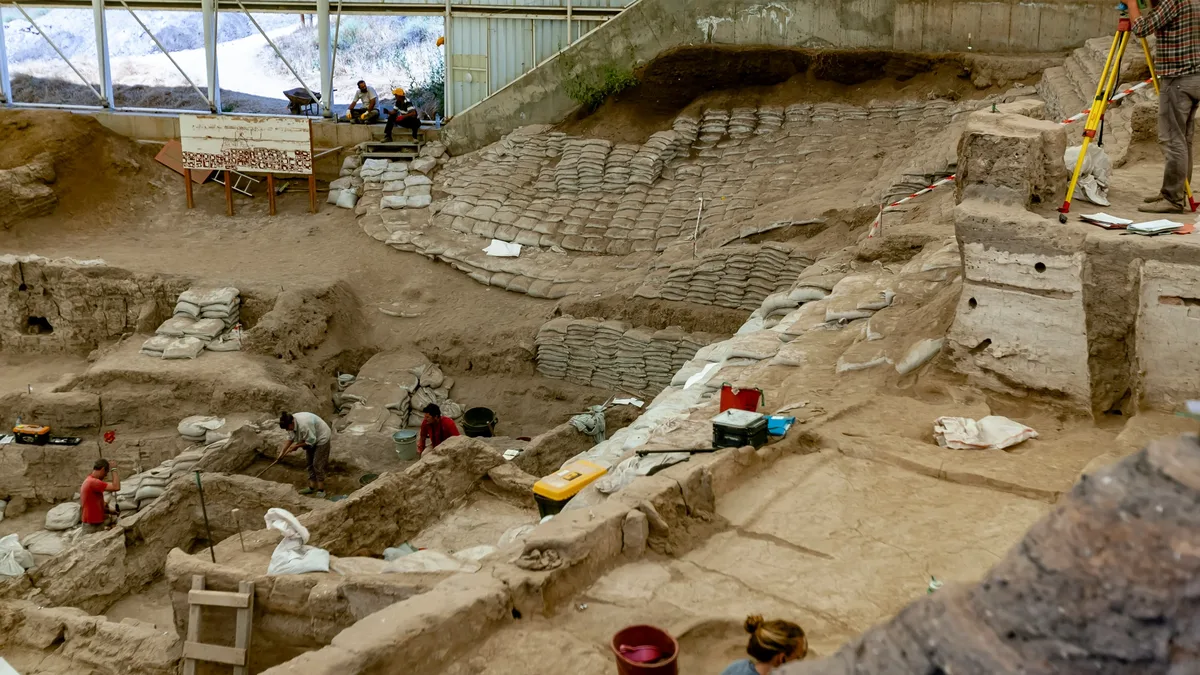
Neanderthals inhabited the region between 40,000 and 62,000 years ago. The rock shelter contains about 66 feet of sediments laid down over thousands of years. The artifacts were found within 16 different archaeological layers in these deep deposits.
Evidence of sophisticated woodworking
The preserved impressions reveal a complex array of wooden items. Among the most striking are two spears discovered in the oldest excavated layer, level R. One spear measures 2.45 meters (8 feet) long and appears suited for thrusting at prey from close range. The other, surviving to a length of 1.99 meters (6.5 feet), has a deliberately shaped point and was broken into three pieces.
In a younger layer, level P, researchers found the impression of a possible club. Its handle measures approximately 16 centimeters, leading to an enlarged, asymmetrical head roughly 14 centimeters tall. Grooves on its surface show it was shaped by scraping. Stone blades were also found in this layer.
Other finds include four flat pieces of charred juniper bark, some up to 55 centimeters long, from levels H and O. The flexible bark is thought to have been used as plates, shallow bowls, or scoops. Straight sticks found atop a hearth in level I may have been part of a raised support for cooking. A smooth pole measuring 5.10 meters (16.7 feet) in level N was surrounded by five hearths and may have supported a windbreak or small hut. Thick sticks from other layers could have been used for digging.
| Artifact Type | Key Details | Likely Use |
|---|---|---|
| Spear | 2.45 m long, from level R | Close-range thrusting weapon |
| Spear | 1.99 m long, shaped point, from level R | Hunting weapon |
| Club | ~16 cm handle, ~14 cm head, from level P | Tool or weapon |
| Bark pieces | Up to 55 cm long, charred, from levels H & O | Trays, bowls, or scoops |
| Pole | 5.10 m long, from level N | Structural support for windbreak or hut |
Broader significance of the findings
The preservation of these wooden artifacts is exceptionally rare, owed to periodic flooding and minerals in the water that formed travertine limestone. Researchers examined 597 wooden remains from the site's layers, of which 13 were clearly shaped by human hands. The complexity of these items indicates Neanderthal behavior was very close to that of early Homo sapiens. Palmira Saladié, Gema Chacón, and Josep Vallverdú said: "The researchers explained."
Most Paleolithic evidence comes from stone because organic materials decompose. The findings at Abric Romaní, a shelter covering roughly 3,200 square feet located about 30 miles west of Barcelona, fundamentally expand the understanding of Neanderthal daily life.
Research methods and expert commentary
Systematic excavations at the site began in 1983. To study the impressions, researchers poured resin into some imprints to create casts and used 3D scanning to make models. The study was published in the journal Science Advances.
Other evidence of ancient woodworking exists, such as digging tools from muddy lake shores in Italy and Germany. A notable parallel comes from Lehringen, Germany, where a 125,000-year-old wooden stick was found between the ribs of a straight-tusked elephant, suggesting Neanderthals hunted big game with wooden spears. The shelter contains about 66 feet of sediments laid down over thousands of years.