Kadesh Treaty Refugee Fragment Discovered at Hattusha
A 3,400-year-old cuneiform fragment from the Treaty of Kadesh, the world's oldest known peace treaty, has been unearthed at the Hittite capital of
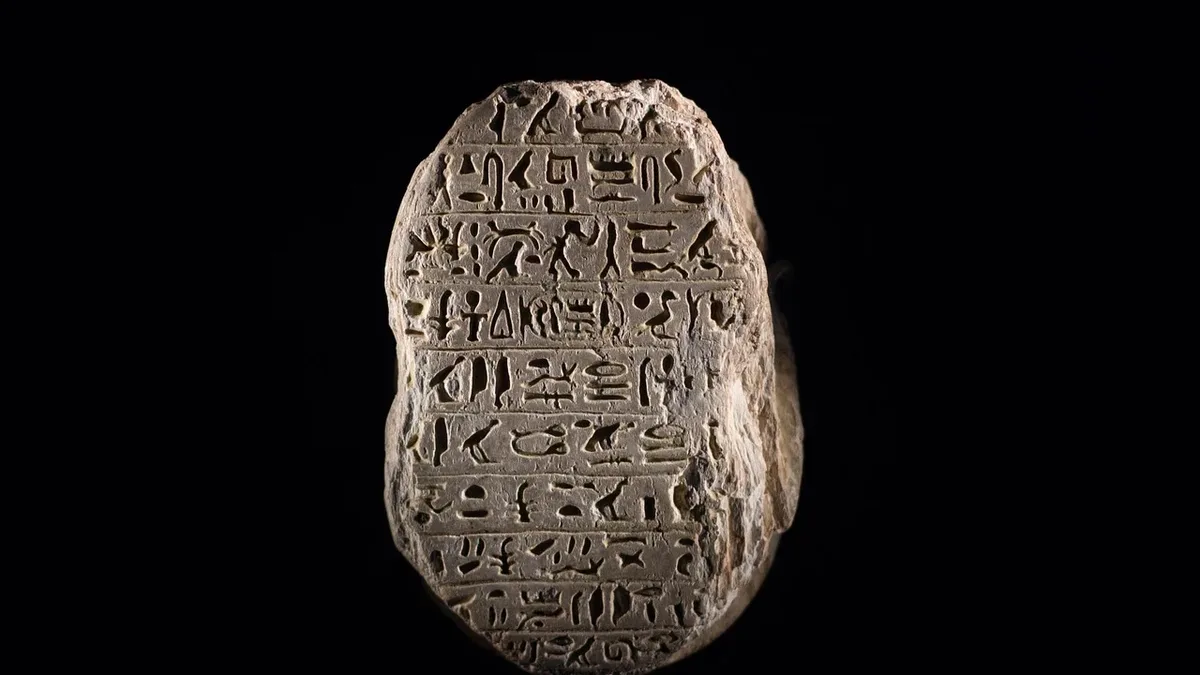
A 3,400-year-old clay fragment inscribed with Akkadian cuneiform has been found at Hattusha in north-central Turkey. The piece contains lines from the Treaty of Kadesh, the world's oldest known peace treaty, specifically detailing rules for the treatment of refugees. It was unearthed during excavations at Buyukkale, the site of the Hittite royal palace and citadel within the ancient capital.
Archaeologists spent roughly a year studying the fragment before confirming it belongs to an Akkadian copy of the Egyptian-Hittite peace treaty. The surviving text concerns articles 12 through 20, which govern people who fled from one kingdom to the other. Researchers hope further excavation at the site near Building E will uncover additional segments of this copy.
Fragment confirms ancient refugee protections
The newly discovered text includes specific prohibitions against harming refugees and destroying their homes. The treaty forbids punishing those who seek asylum. It states: 'Their tongue and their eyes are not to be pulled out; their ears and their feet are not to be cut off; their houses with their wives and their children are not to be destroyed.'
The provisions establish a system for the return of refugees. Individuals fleeing from Egypt to Hattusha would be returned to Egypt, and the same rule applied in reverse. This section of the treaty was designed to manage population movement between the two rival empires. Part of this refugee protection text appears on the newly discovered cuneiform fragment.
Treaty of Kadesh as enduring peace framework
The Treaty of Kadesh was signed around 1269 B.C.E. By the Hittite king Hattusili III and the Egyptian pharaoh Ramesses II. It marked the end of a two-century-long war over lands in the eastern Mediterranean. The agreement is also known as the Eternal Treaty or the Silver Treaty, named for the original silver tablets now lost.
The treaty established a lasting military détente. It promised eternal friendship, lasting peace, territorial integrity, nonaggression, extradition, and mutual help. One translation includes the line: 'He is a brother to me and he is at peace with me; and I am a brother to him and I am forever at peace with him.' It also included pledges for mutual military assistance if either kingdom was invaded.
The text was preserved in multiple formats. In the early 19th century, it was discovered inscribed in hieroglyphics on temple walls in Thebes. Fragments of the Akkadian cuneiform version were first identified at Hattusha in the early 20th century. A copper replica is displayed today in the United Nations Conference Building in New York City.
Modern resonance of ancient peace pledge
Turkey's Minister of Culture and Tourism, Mehmet Nuri Ersoy, announced the find on September 21. He connected the ancient text to contemporary principles. "We have found traces of peace, thousands of years old, in the soil of Anatolia," Ersoy said. He added that the discovery serves as a reminder of the enduring duty to protect human life and dignity.
The pledges within the treaty are seen as early precursors to modern international ideals. Its focus on asylum and humane treatment resonates amid current global displacement crises. The Hittite Empire, which controlled central Anatolia from about 1650 to 1200 B.C., left a diplomatic legacy through this document.
Ongoing excavations may help uncover the remaining parts of the treaty at Hattusha. Researchers continue to sift the soil of the royal citadel, looking for more fragments of this foundational peace accord.