Second-generation planet discovered orbiting white dwarf HS 0209+0832
Astronomers have detected a Jupiter-sized exoplanet candidate orbiting the white dwarf HS 0209+0832, a discovery that confirms a new pathway for planet formation from stellar debris.
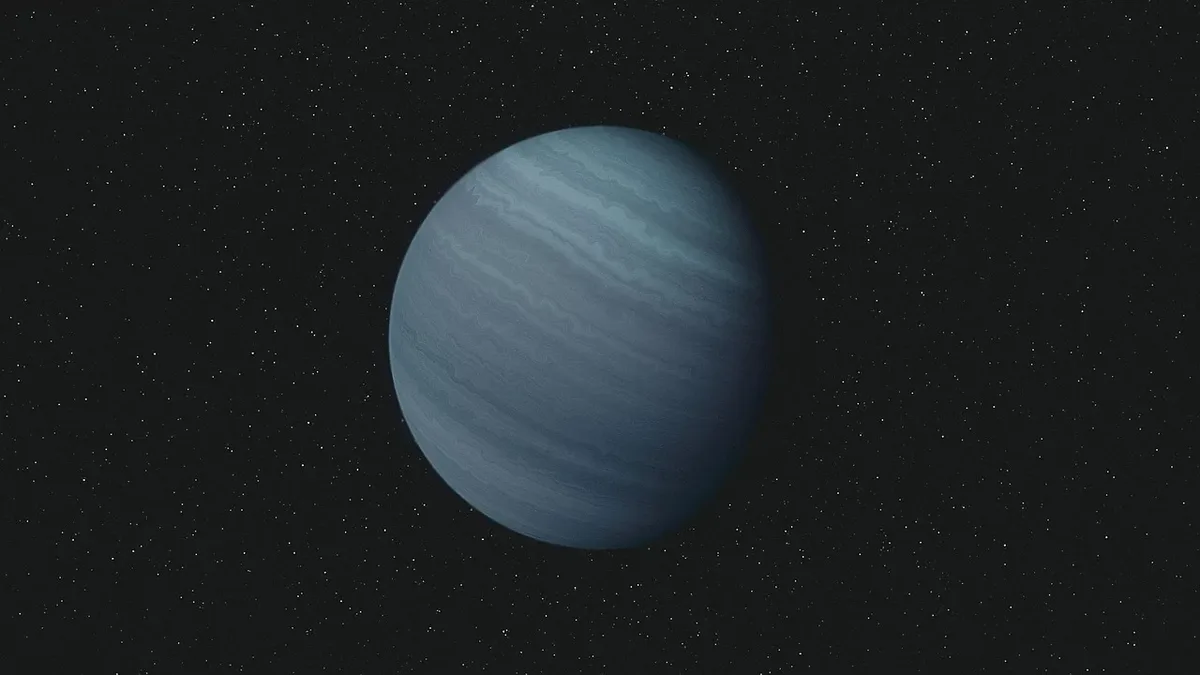
Astronomers have identified a Jupiter-sized exoplanet candidate orbiting the white dwarf HS 0209+0832, located roughly 270 light-years from Earth. The planet, detected via transit dimming in data from NASA's TESS spacecraft, completes an orbit approximately every 4.4 Earth days.
Follow-up observations revealed a recurring dip in the white dwarf's brightness, suggesting a transit event. Based on the transit duration and orbital period, the team predicted the planet is roughly the size of Jupiter. This marks the first discovery of a second-generation planet orbiting a white dwarf.
Unusual chemistry points to stellar rebirth
A new study published on October 5 in Nature Astronomy reveals the white dwarf's atmosphere contains unusually high concentrations of heavy elements, including zinc, copper, and niobium. The niobium concentration is around 1,000 times greater than in the Sun.
The chemical signature matches the 's-process' nucleosynthesis that occurs in dying stars during their red giant phase. This pattern, along with previously detected surprising levels of aluminium, titanium, and nickel, points to material forged in the star's final throes.
Planet formed from the star’s own ashes
The chemical and orbital evidence suggests the exoplanet is a candidate 'second-generation' world. It likely formed from material the star cast off as it died, rather than being a first-generation planet that survived the star's evolution. The lack of silicon and iron in the current system supports this interpretation.
Second-generation planets are incredibly rare. Previously, such reborn planets were only suspected around neutron stars. Boris Gänsicke, a co-author of the study, said, "In a sense, this system has given birth to a new world using the foundations of the old one."
The signature suggests the white dwarf is now accreting material stripped from the planet's atmosphere by stellar winds. The planet itself is thought to have formed within a protoplanetary disk created from material shed during the star's red giant phase, a process that likely required a companion star to pull the ejected material back into orbit.
Implications for the Sun’s distant future
This system offers a preview of what may happen to our own solar system. The Sun is expected to run out of fuel and transition into a red giant in around 5 billion years. After eventually becoming a white dwarf, it could potentially host brand-new worlds, forming a solar system 2.0.
HS 0209+0832 is a young white dwarf, formed within the past few million years and still burning at around 63,000 degrees Fahrenheit (35,000 degrees Celsius). It may have once harbored other exoplanets when it was a red giant, but any prior worlds likely perished as the star ballooned. The planet’s atmosphere is suspected to be stripped by the white dwarf’s stellar winds, with rare elements falling back onto the star.