Etruscan Well Yields Ritual Offerings and Human Remains
Archaeologists near Bologna have uncovered an Etruscan well that was ritually opened with offerings to a goddess and later closed with human bodies.
Archaeologists in Italy have made a significant discovery at an ancient Etruscan site, uncovering a well that was ritually opened with offerings for a goddess and later closed with human bodies.
The well was discovered in the outskirts of modern-day Bologna, near the religious sanctuary of the mother-goddess Uni, the Etruscan version of ancient Rome's Juno.
Ritual Offerings and Human Remains
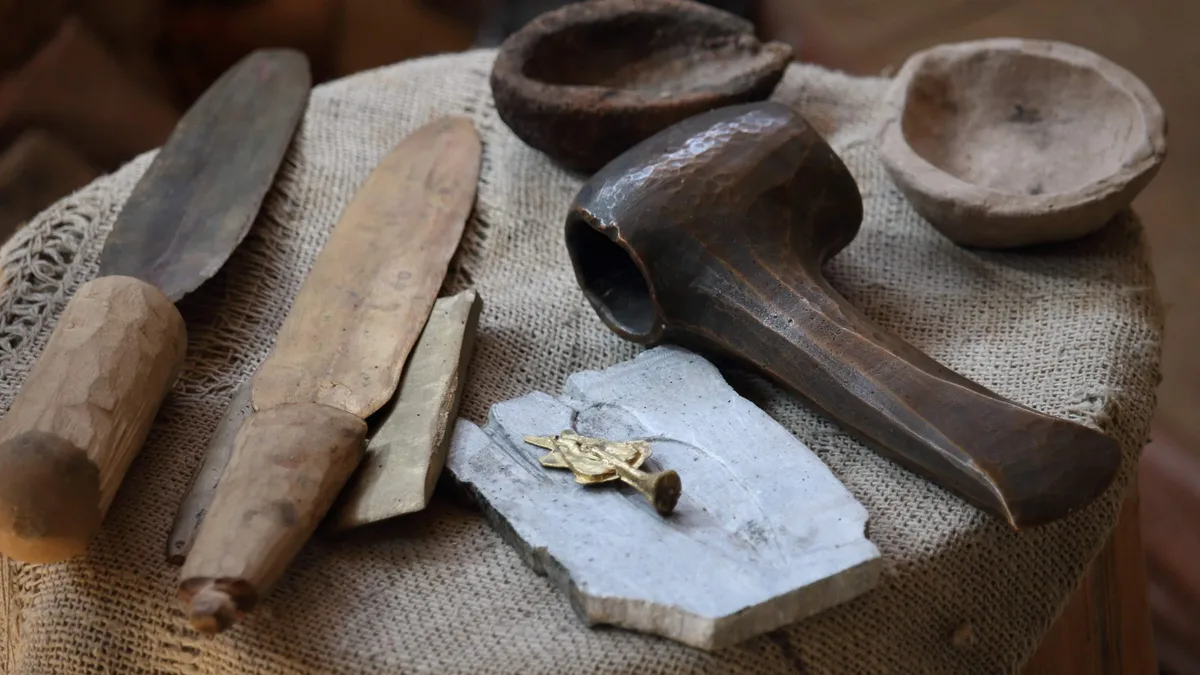
The team led by Elisabetta Govi, an archaeologist at the University of Bologna, found stunning bronze statuettes and a unique plate at the bottom of the well. These artifacts date back to the end of the sixth or the beginning of the fifth century B.C. and were likely placed in the well in a ceremony to celebrate the "birth" of an ancient city.
The well also contained the fragmented remains of two bronze female statuettes, which were probably intentionally broken as part of a ritual. These statuettes depict richly dressed girls or women with finely decorated dresses, likely either high-class individuals or goddesses.
The Significance of the Discovery
The discovery of the well and its contents provides valuable insights into the Etruscan cult and its practices. The Etruscans were known for their strong cult related to water, and the construction of every well was accompanied by a ritual. The presence of the bronze plate and statuettes suggests that this well was no exception, and that it was likely used for ceremonial purposes.
The goddess Uni was associated with women, marriage, birth, and growth, and the artifacts found in the well reinforce this connection. The Etruscans considered the production of bronze from copper and tin to be regenerative and "alive," a strong reference to the notion of birth and thus Uni's domain.
Preliminary Investigations
Preliminary investigations suggest that the people found in the well were not victims of human sacrifice, but rather played a role in the ritual closing of the well. Further study, including DNA analysis and carbon-14 dating, may shed light on the individuals' identities and the well's chronological history.
The discovery of the Etruscan well and its contents is a significant find that provides new insights into the practices and beliefs of the Etruscan cult. The well's proximity to the sanctuary of Uni and the presence of the bronze plate and statuettes suggest that it was used for ceremonial purposes, and the discovery of the human remains adds a new layer of complexity to our understanding of the Etruscan cult.
The discovery of the Etruscan well and its contents is a testament to the importance of continued archaeological research and excavation. As we continue to learn more about the Etruscan cult and its practices, we gain a deeper understanding of the people who lived in ancient Italy and the cultures that shaped their world.
The well's contents, including the bronze plate and statuettes, will be further studied to gain a better understanding of the Etruscan cult and its practices. The discovery of the human remains will also provide valuable insights into the lives of the people who lived in ancient Italy.
The study of the well's contents will continue in the coming months, with further analysis and investigation planned. The discovery of the Etruscan well and its contents is a significant find that will contribute to our understanding of the Etruscan cult and its practices.