80,000-Year-Old Uzbek Points Challenge Human Migration
Archaeologists have identified 80,000-year-old microlithic projectile points in Uzbekistan that resemble later Homo sapiens arrowheads from France.
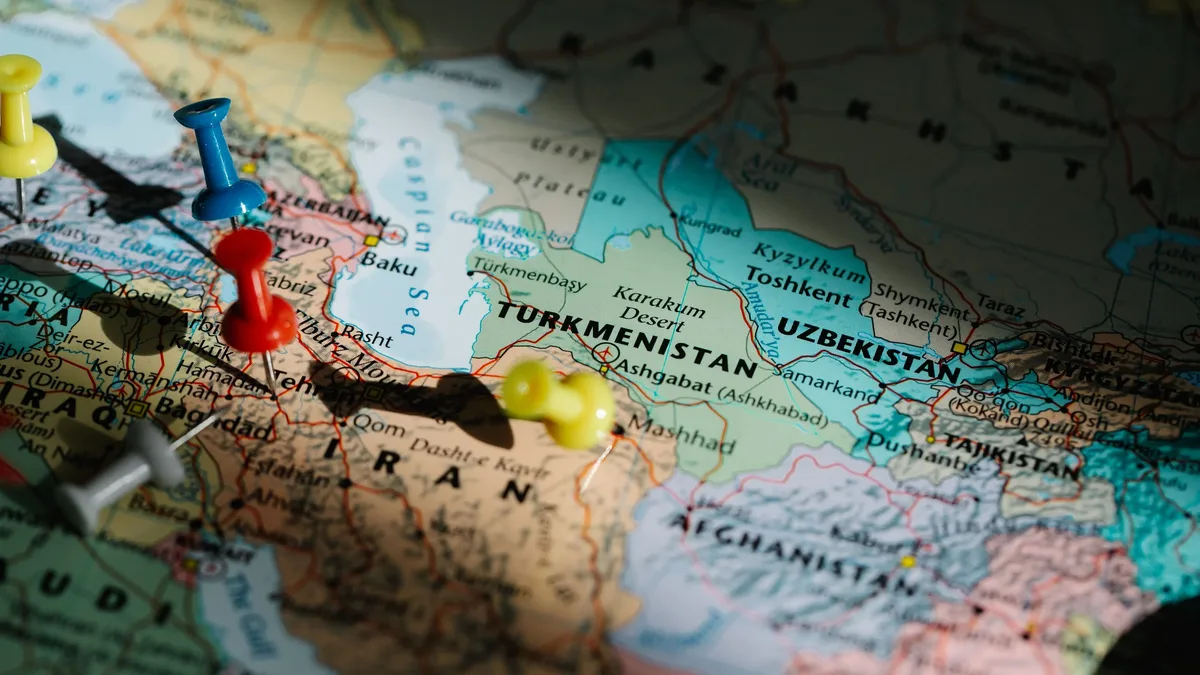
Tiny stone projectile points found in Uzbekistan date to 80,000 years ago. Their discovery suggests sophisticated hunting technology may have appeared in Central Asia long before Homo sapiens became firmly established in Europe, according to a new study published in PLOS One.
An international research team identified the unretouched triangular points at the Obi-Rakhmat rock shelter site. The points were distinguished by macroscopic and microscopic impact damage, comparing them to experimental reference data. Their small size-less than two centimeters wide and weighing only a few grams-makes them unsuitable for heavy spear shafts. The width of their cutting edges matches the diameter of arrow shafts used with low-poundage bows, a pattern seen across cultures due to physical and ballistic constraints.
The Obi-Rakhmat Site Context
The Obi-Rakhmat rock shelter in Uzbekistan was discovered in 1962. Recent excavation campaigns were led by Andrei Krivoshapkin. Located in the Tien Shan mountains at 1,250 meters altitude, the site contains a remarkably consistent lithic industry across a stratigraphic sequence spanning from approximately 80,000 to 40,000 years ago. This industry, initially classified as part of the Initial Upper Paleolithic, appears to derive from the Levantine Early Middle Paleolithic. A child's skull found in a layer dating back around 70,000 years shows features considered both Neanderthal and anatomically modern, a combination that could result from hybridization.
A Question of Ballistics and Design
Thrown piercing weapons are complex systems with components not interchangeable between weapon types. Spears require robustness, with mass ensuring impact force and penetration. Light projectiles shot from a distance, however, depend on sharpness, as their lower kinetic energy comes mainly from speed. This speed necessitates a throwing instrument like a bow. The characteristics of a stone point provide clues to the type of weapon it tipped. The study argues the Obi-Rakhmat points' tiny size is not a default due to material shortage. Microscopic examination shows the same assemblage contains much more strong retouched points, 15 to 20 times heavier and 3 to 4 times thicker, used as spear or javelin heads.
The research team reviewed literature and their own work on Middle Paleolithic tools. They found that the presence in the same assemblage of various projectile point types, including purpose-made microlithic ones, is only documented at Homo sapiens sites. The oldest known occurrences are in South Africa at the Sibudu cave, in layers older than 77,000 years. In contrast, lithic points damaged by use as projectile heads are rare in the Neanderthal record. When present, Neanderthal points tend to be large and do not differ notably in size or manufacture from tools used for other activities like butchery. This design difference takes on anthropological significance. Given the vast distance and differing manufacturing techniques, the study suggests independent invention centers in South Africa and Central Asia are most likely.
A Striking Parallel in France
The microlithic points from Obi-Rakhmat have no known equivalents in the Eurasian Middle Paleolithic, except for identical projectile points identified by traceology expert Laure Metz at the Mandrin site in France's Rhône Valley. These French points come from a layer dating to approximately 54,000 years ago. A Homo sapiens milk tooth was also recovered from that layer. The similarity between the points from Uzbekistan and France, despite being separated by over 6,000 kilometers and 25,000 years, is so close they could be interchanged with only the stone type betraying the substitution. Recent paleogenetic work defines the Persian Plateau, on whose north-eastern edge Obi-Rakhmat sits, as a population hub where the ancestors of all present-day non-Africans lived between early expansions out of Africa and the wider colonization of Eurasia.