Gold Christian amulet and Bronze Age seal found at Turkmen
A 4th-5th century gold Christian amulet and a 3,500-year-old inscribed stone seal have been unearthed at the Turkmen Karahoyuk site in Turkey, revealing
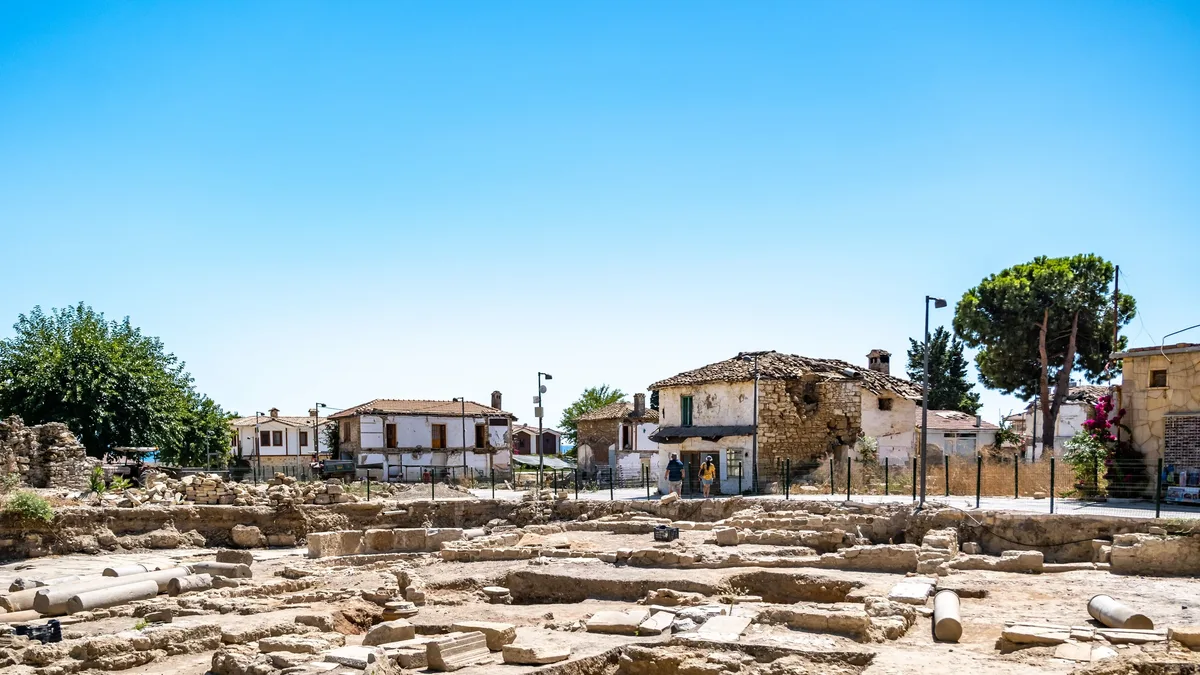
A rare gold Christian amulet from the 4th or 5th century A.D. Has been discovered at the Turkmen Karahoyuk site in central Turkey. The find, alongside a 3,500-year-old Bronze Age administrative seal, shows the site's long and significant occupation history.
Archaeologists from the ongoing excavation found the amulet, known as a philacteria, inside a small copper cylinder. The cylinder contains a tightly rolled sheet of gold measuring just 0.1 millimeter thick. The team, led by co-director Assoc. Prof. Dr. Massa, has not yet unrolled the delicate sheet, but they believe it is inscribed with a passage from the Bible. Such amulets were worn as protective talismans in Late Antiquity. Gold examples are exceptionally rare.
The copper container's size suggests it was likely worn by a child. The closest comparable gold philacteria was discovered in Germany, making this Turkish find a significant addition to the archaeological record of early Christianity in Anatolia.
Site History and Earlier Discoveries
The Turkmen Karahoyuk mound rises 115 feet high today. It was founded on the shore of an ancient lake. First identified in a 2017 surface survey, the site gained international prominence in 2019 when the same research team unearthed a Luwian hieroglyphic stele. That stele was dedicated to King Hartapu, who ruled in the early 8th century B.C., and suggested the mound may have been the capital of a previously unknown Iron Age kingdom.
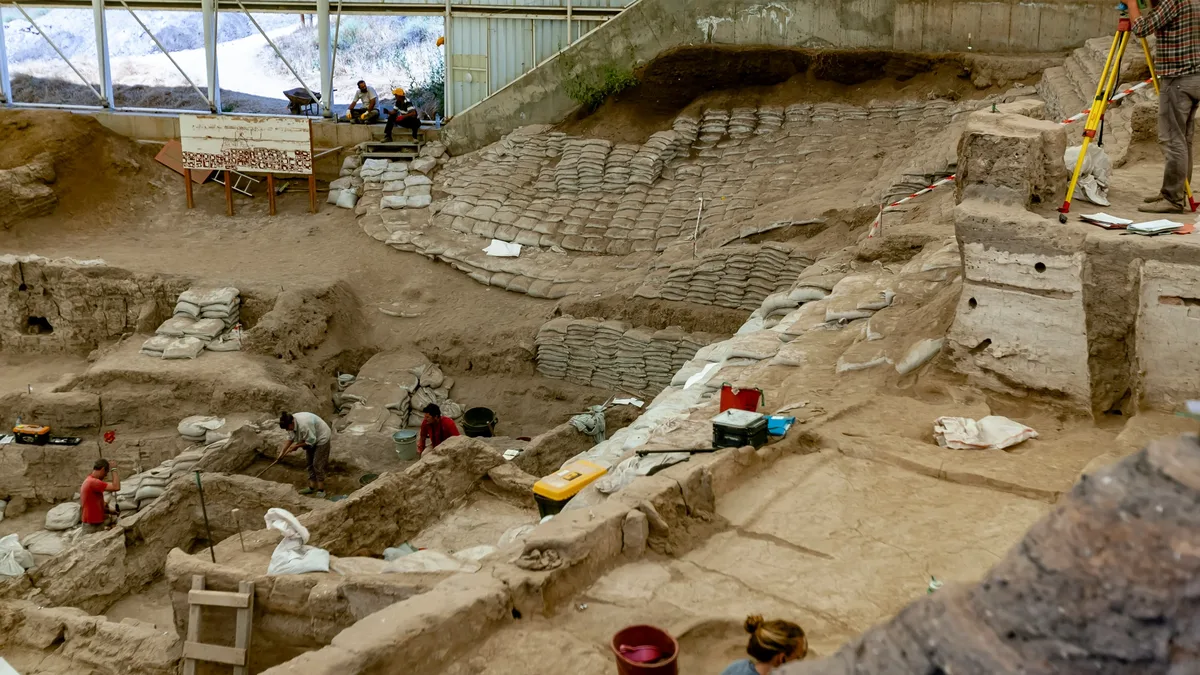
Ceramics and inscriptions found in subsequent surveys confirmed occupation spanning from the Bronze Age through Late Antiquity. The current field excavations represent the site's third season, having begun in 2024.
Bronze Age Administrative Seals
This season's dig yielded several important finds beyond the amulet. Archaeologists recovered a stone seal inscribed with Luwian hieroglyphics, two copper seals, and a clay seal impression.
The stone seal bears the personal name "Kurunti-ziti." According to excavation co-director Massa, this name is linked to the god Kurunta (also known as Runtiya), a protective deity associated with deer in Hittite and Luwian belief systems. The name appears frequently in personal names and royal circles from that period. The accompanying clay seal impression, however, bears a different name.
Massa states these seals were used by administrative personnel to authenticate documents. Their discovery provides clear evidence of a structured state bureaucracy operating at Turkmen Karahoyuk during the Late Bronze Age.
Significance of the Finds
The combined discoveries illustrate Turkmen Karahoyuk's evolving importance over two millennia. The Bronze Age seals confirm it was a regional administrative center. The Iron Age stele points to its potential political peak as a royal capital. Finally, the Late Antique Christian amulet shows the site remained inhabited and culturally significant into the early centuries of the Common Era.
The site's location on an ancient lakeshore likely contributed to its long-term strategic and economic value. The research team continues its excavations, with the unopened gold amulet holding the promise of a direct scriptural link to its ancient owner.