Miseeda Petroglyph May Depict Ancient Kushite Ruler
A life-sized petroglyph in northern Sudan may represent a Kushite ruler, according to new research published in Antiquity.
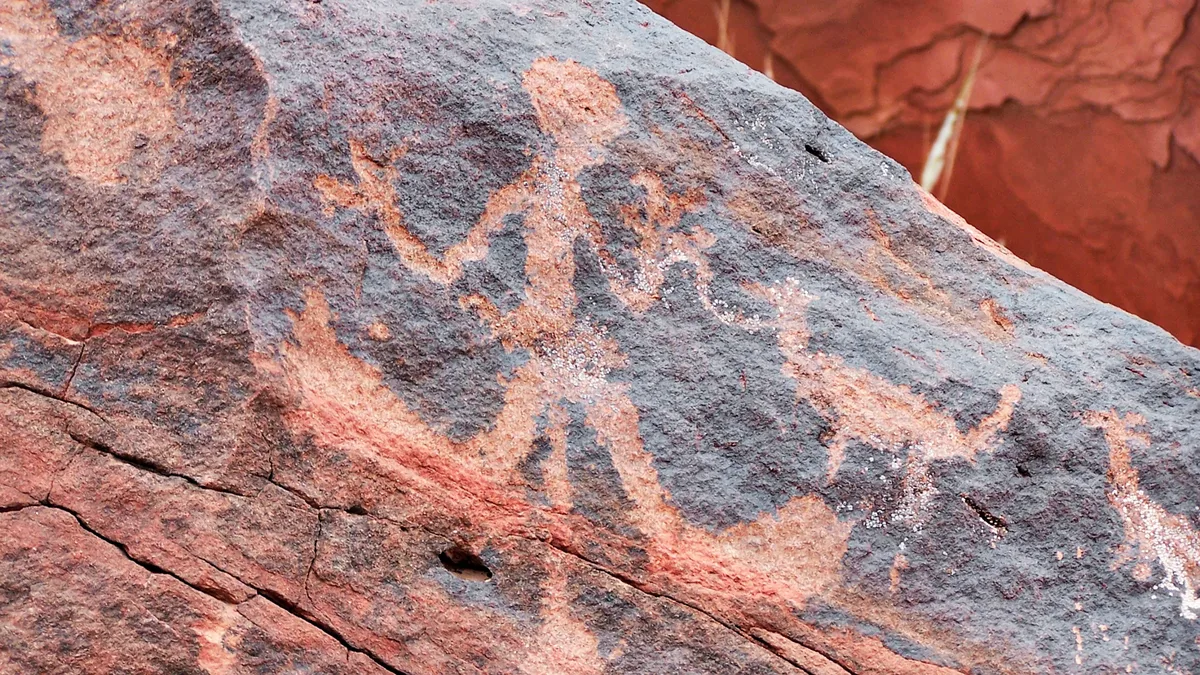
A life-sized petroglyph at the site of Miseeda in northern Sudan may depict an ancient Kushite ruler. This is the conclusion of new interdisciplinary research published in the journal Antiquity, led by Joanna A. Ciesielska of the University of Warsaw and her colleagues.
The petroglyph is located at Miseeda in the Mahas region, near the Third Nile Cataract. The carving is life-size and shows a human figure. The team compared it to a known carving of the Meroitic king Sherkarer at Gebel Qeili. That carving has been interpreted as a sign of Meroitic authority near the kingdom's southern edge. The comparison supports the idea that the Miseeda figure may also have marked an important border area or zone of authority.
Context and Chronology
The carving predates a seventh-century church built directly around it. The hill surrounding the church ruins contains other large animal carvings thought to date to the Kerma period, roughly 2500 to 1500 B.C. These include images of a lion, a possible rhinoceros, and an elephant. Smaller images of cattle are also present.
Surveys near the church found Christian-era symbols, including crosses and ships. Pottery from the site reflects connections with the later Nubian kingdoms of Nobadia and Makuria. Evidence points to major periods of human activity at Miseeda spanning thousands of years.
| Period | Approximate Date Range |
|---|---|
| Mesolithic | About 12,000 to 8,200 years ago |
| Late Neolithic and Pre-Kerma | Around 3000 to 2500 B.C. |
| Kerma period | About 2500 to 1500 B.C. |
| Christian era | Roughly sixth to 15th centuries |
Modern oral traditions from the area connect the church, rock art, and nearby ruins with sacred stories, ritual offerings, spirits, and gold. Researchers say this evidence shows Miseeda remained a meaningful place through thousands of years of cultural change.
Comparative Evidence and Interpretation
The link to royal iconography comes from the detailed comparison with the carving of King Sherkarer. Both are large-scale human figures carved into rock in borderland regions. Joanna A. Ciesielska said the team "think that a life-sized petroglyph at the site of Miseeda in northern Sudan may depict an ancient Kushite ruler."
Earlier studies had suggested the figure could date to either the Kerma period or the broader Kushite era. The new analysis does not rule out these possibilities but strengthens the connection to expressions of rulership.
Uncertainties and Significance
The exact age and identity of the person depicted remain unconfirmed. The new research does not establish a precise date for the petroglyph. Its identity as a specific ruler is not proven.
Yet the site's long-term use is clear. The carving's integration into a later church and its position among rock art from multiple eras show enduring cultural importance. The location continued to be significant long after the church was built.
Researchers recorded nearly 300 archaeological sites in the area using methods that included field surveys, rock-art documentation, collection of local oral history, and spatial mapping.