Paris dig uncovers Celtic fort burned in Caesar's Gallic
Archaeologists have found the first physical evidence of the Celtic fort of Lutetia, sacked by Julius Caesar in 52 B.C., beneath a Paris hospital.
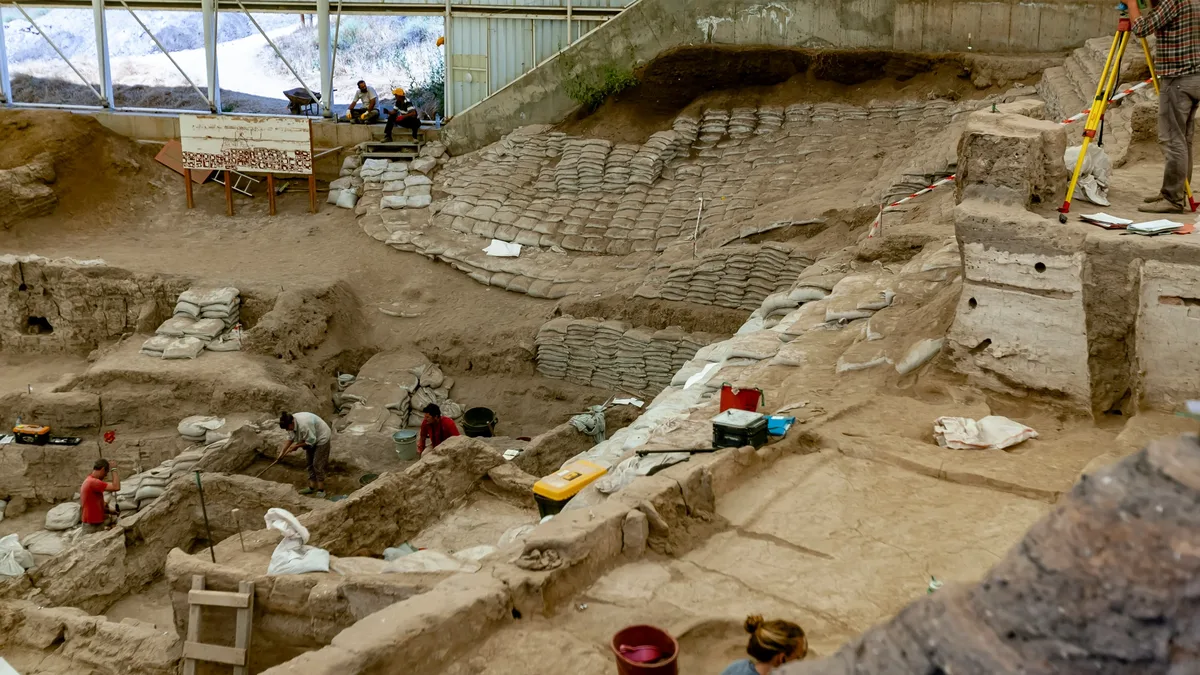
Archaeologists have discovered the first material evidence of the Celtic fort of Lutetia, which was burned during Julius Caesar's Gallic Wars. The remains, including a 65-foot stone and timber wall showing signs of violent fire, were found beneath the courtyard of Paris's oldest working hospital, the Hôtel-Dieu.
Dorothée Chaoui-Derieux, chief curator of heritage at the Île-de-France Regional Archaeology Service, stated that the wall's architecture pointed to Gallic tradition. "The wall's architecture, with its large blocks and interlocking beam system, immediately led us to believe it was a wall of Gallic tradition," she said. Traces of fire and first-century B.C. Artifacts led the team to conclude they had found Lutetia, a settlement described in Caesar's writings.
The Historical Context of Lutetia
In the first century B.C., Lutetia was a Celtic oppidum, or fortified settlement, serving as the capital of the Parisii tribe. Julius Caesar's campaign against the Gauls, known as the Gallic Wars, lasted from 58 to 50 B.C. The Battle of Lutetia in 52 B.C. Resulted in a Roman victory. According to historical accounts, the Gauls subsequently burned Lutetia and destroyed its bridges to prevent Caesar from capturing the town. This act had left the precise location of the fort a mystery for centuries.
Details of the Archaeological Discovery
The excavation on the Île-de-la-Cité island, near Notre-Dame, began in February. The team uncovered a section of defensive wall typical of Celtic fortifications. Associated finds included charred wall facing, burnt seeds, and the remains of a burned wooden building. These elements strongly suggest the settlement was intentionally destroyed by fire.
Carbon-14 dating of wooden elements from the site provided a date range between 200 and 10 B.C. A Gallic spearhead was also discovered at the base of the wall, further supporting the military nature of the site and its connection to the period of conflict.
Significance and Preservation
Stéphane Deschamps, regional curator of archaeology at the Île-de-France Regional Archaeology Service, emphasized the discovery's importance. "This discovery fills an archaeological gap. For centuries, the location of Lutetia has been debated," he said. The find provides solid archaeological corroboration for Caesar's written account of the settlement's destruction.
The fire that destroyed the fort also damaged the remains, making them extremely fragile. The wall cannot be preserved in situ. Instead, archaeologists plan to create a detailed replica using 3D photogrammetry to make the discovery accessible for study and public engagement.
The investigation confirms that the heart of ancient Lutetia was centered on the Île-de-la-Cité. The team's work links material culture directly to a key historical narrative.