Stone Age Burial in Poland Holds Decapitated Heads and Tooth
Archaeologists in Poland discovered a Stone Age burial of a man interred with two human skulls and a necklace made from drilled animal teeth
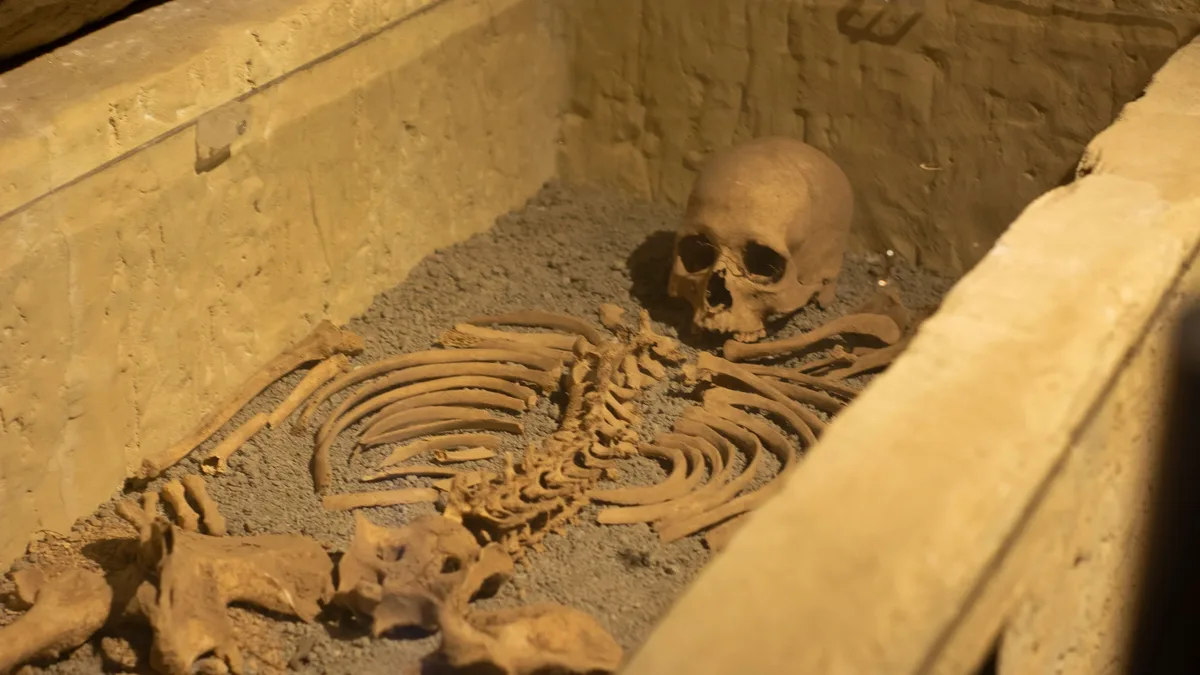
Archaeologists have uncovered a Stone Age burial in southwest Poland containing the skeleton of an adult male buried with two human skulls and a necklace fashioned from dozens of animal teeth. The grave, found near Wrocław, dates to around 2900 B.C. Based on the style of a serpentinite battle ax placed with the body.
Researchers from Wrocław Medical University made the discovery while excavating a later Roman-period cemetery. Biological anthropologist Paweł Dąbrowski described finding the grave as they were preparing to finish work. "We found fairly well-preserved animal teeth arranged in a necklace," Dąbrowski said in a translated statement.
The Grave Goods
The burial contained a distinctive set of artifacts alongside the nearly complete male skeleton. These items provide clues about the man's status and the burial practices of his time.
Dąbrowski emphasized the craftsmanship of the necklace. "The arrangement of the teeth was precise," he noted. "All of them had holes drilled through their roots. They must have formed a kind of necklace."
Significance of the Finds
The presence of the ornate necklace and the ax suggests the individual held a prominent position in his community. Dąbrowski speculated that the man could have been a warrior, hunter, or clan leader.
The two human skulls present a particular puzzle. Archaeologists think they may be from decapitated heads placed in the grave as funeral offerings. Further analysis is required to confirm if decapitation occurred.
Cultural Context
A burial of its kind found in the region. A similar elite grave containing axes, flint tools, amber beads, and the bones of a sacrificed calf was discovered nearby. Researchers suggest both burials may be linked to the Corded Ware culture, a group associated with the spread of Indo-European languages.
The discovery provides a rare window into Middle Neolithic funerary practices and social hierarchy. Dąbrowski stated the next step is to analyze the remains from both Stone Age burials to determine if the individuals were related and to learn more about their lives. The first results of these analyses are expected later this year.
The excavation, reported by Live Science, highlights how a site used centuries later for Roman burials preserved this much older and strikingly different interment.