Ancient Cave Rituals Revealed by 25,000 Years of Burned
Microscopic plant remains in Cloggs Cave show GunaiKurnai ancestors deliberately gathered and burned whole grasses in ritual practices spanning millennia
Archaeologists have uncovered evidence that an Australian cave was used for ritual burning practices over roughly 25,000 years. The findings center on microscopic plant remains called phytoliths found within Cloggs Cave on GunaiKurnai country in southeastern Australia.
Dr Elle Grono, a postdoctoral researcher at the Australian National University and the study's corresponding author, explained the process. "Here we show that the Old Ancestors selected whole grasses from the wider landscape and carried them into Cloggs Cave to spread out in thin layers and burn," she said. Sediments later covered each burnt layer, preserving a sequential record.
Microscopic Plant Evidence
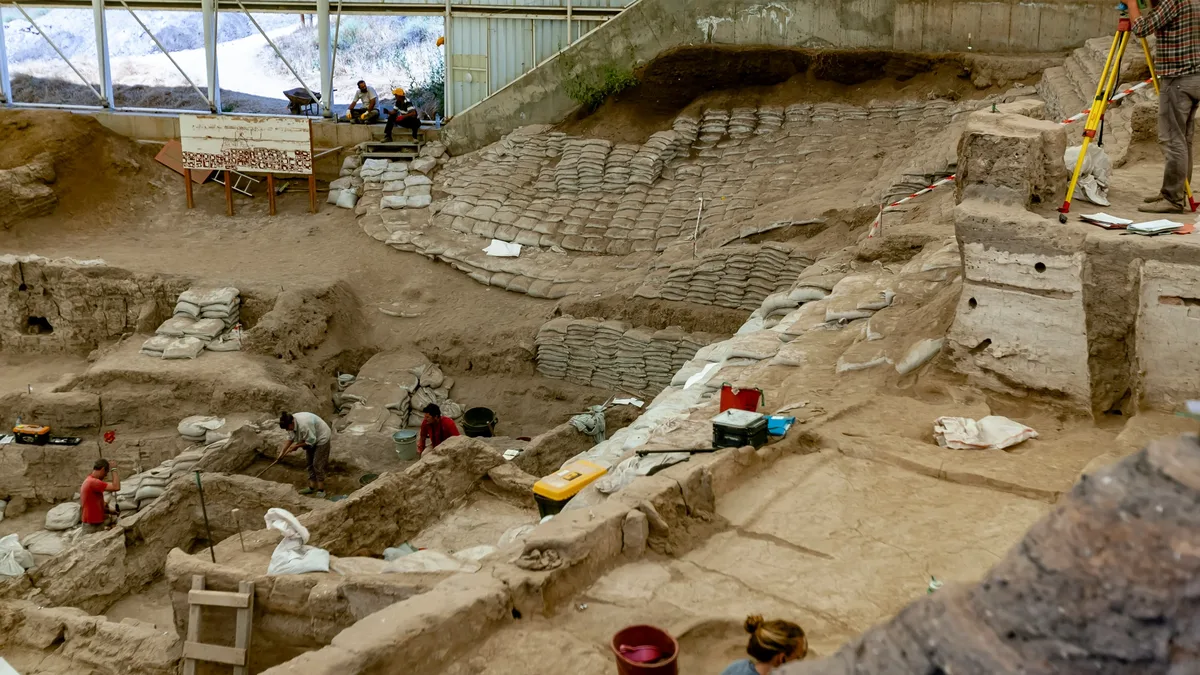
The research team from Australia, France, and New Zealand analyzed phytoliths-microscopic silica structures from plant tissues-recovered from sediments during excavations in 2019 and 2020. These excavations were requested by the GunaiKurnai Land and Waters Corporation, with GunaiKurnai representatives involved throughout the project.
A key detail made the phytoliths compelling evidence for human activity. "No plants grow inside the cave due to a lack of light, so the phytoliths must have been carried in by people or by animals," Grono noted. The team focused on half-burnt phytoliths from ashy layers, which could only have been brought in by people, unlike unburnt remains.
A Layered History and a Ritual Stone
Researchers examined thousands of phytoliths from two deep excavation pits. In the upper sections, they identified 73 distinct, thin layers of ash deposited by people between approximately 4,400 and 1,600 years ago, as dated by optically stimulated luminescence and accelerator mass spectrometry.
Within these layers, they discovered a standing stone placed intentionally around 2,000 years ago. The 28 cm high stone further signaled the cave's ritual purpose, aligning with 19th-century accounts and oral traditions that describe such caves as places where spiritual practitioners called 'mulla-mullung' performed magic, healing, and cursing.
Selective Gathering of Grasses
The phytolith analysis revealed a pattern of deliberate plant selection. The team identified 29 types of phytoliths from grasses, herbs, and woody plants. Grass phytoliths dominated overwhelmingly, making up as much as 97% of the total.
The grasses brought into the cave represented different subfamilies adapted to various climates below.
Despite a diverse local landscape of riparian forest and open woodland before European settlement, people largely bypassed those plants. They instead chose grasses growing near the cave entrance. Grono pointed out that the phytoliths came from all parts of the grass plants-stems, leaves, flowers, and roots-indicating whole grasses, including inedible parts, were carried in.
Millennia of Ritual Fire
Evidence of burning was pervasive. Up to 18% of the phytoliths showed signs of burning or melting, and these altered remains were found throughout the dated sequence, suggesting the practice was repeated across millennia. This aligns with other archaeological finds at the site, such as fat-smeared, trimmed wooden sticks from Casuarina trees in older deposits.
Professor Bruno David from Monash University, who co-led the excavations, connected the findings to recorded traditions. He stated that the burning is consistent with GunaiKurnai practices of using ash for magic, rituals, and tracking the footsteps of visitors, including spirit-Beings. The accumulated evidence firmly positions Cloggs Cave as a long-lived spiritual site rather than a domestic living space.