Egyptian Horse Burial Found at New Kingdom Fort
A ceremonial burial of a 3,000-year-old young male horse has been discovered at the Abqaa' fortress in Egypt's Lake District, offering rare evidence of
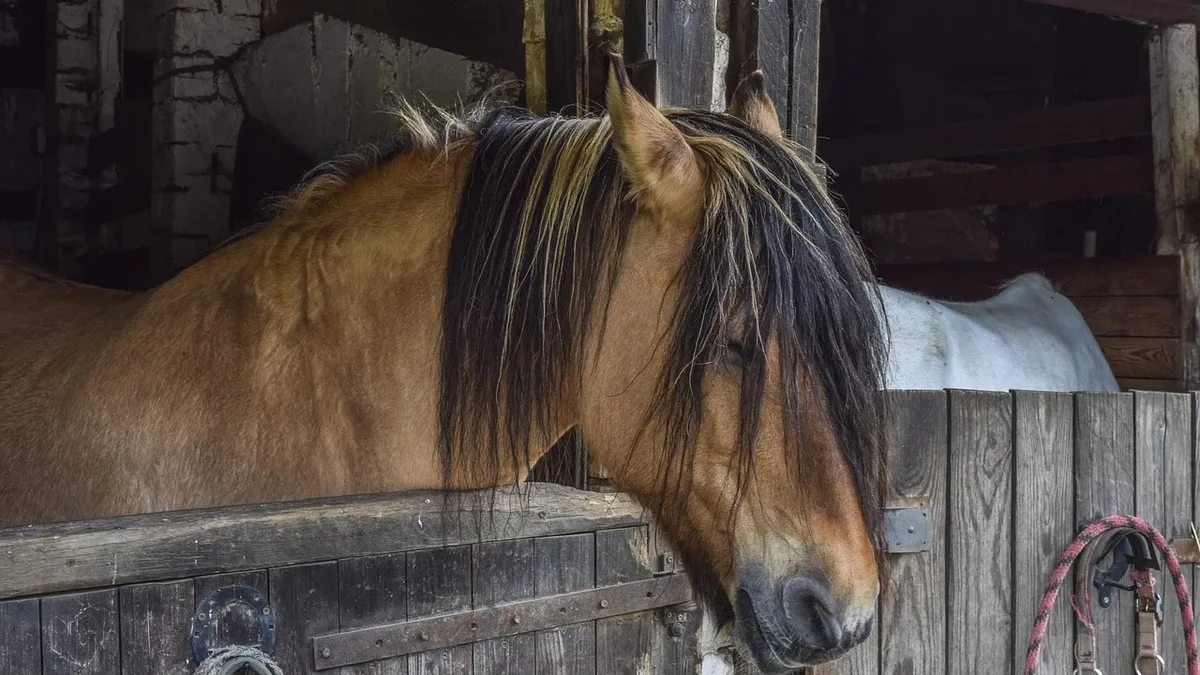
Archaeologists have unearthed the 3,000-year-old burial of a young male horse inside the ancient Egyptian fort of Abqaa' in the western Nile Delta. The medium-sized animal, likely used to pull a chariot or for other military duties, was found with remains of chariot harness fittings nearby, pointing to a ceremonial interment linked to the fort's martial activities.
The fort dates to the New Kingdom period, roughly 1550 to 1070 B.C., and was strategically positioned to guard against hostile Libyan tribes to the west. The horse burial, carefully placed within the fortress grounds, provides a rare physical connection to the era's military logistics and the cultural significance of equines.
Context of conflict and captivity
Artifacts from the site show the fort's defensive role. Among the finds is a tablet depicting a bound Libyan prisoner. The prisoner's clothing identifies him as a member of the Meshwesh tribe, a group frequently in conflict with Egypt. He is shown with his hands tied behind his bent body, a posture symbolizing submission and captivity.
Pharaonic connections
Hieroglyphic tablets recovered from the excavation firmly place the site within a well-documented historical timeline. One tablet bears the name of the great pharaoh Ramesses II, who reigned from about 1279 to 1213 B.C. A second tablet names his successor, Merneptah, ruler from approximately 1213 to 1203 B.C. The Merneptah tablet includes a text comparing the pharaoh's strength to that of the god Seth, associated with the desert and storms.
Expert analysis on significance
Researchers emphasize the exceptional nature of the discovery. Lonneke Delpeut, a researcher at the University of Vienna who has conducted extensive research into ancient Egyptian horses, stated, "It is an amazing find, simply because we have so few horse remains from Pharaonic Egypt, especially complete skeletons." While archaeologists have found remains of horse stables elsewhere, such as at the capital Pi-Ramesses, complete burials are exceedingly rare.
Delpeut noted the horse will contribute to knowledge about the use of horses in military forts in the region. She cautioned against definitively labeling it a war horse, as there is no clear definition for such a role in ancient Egypt, but confirmed it was certainly a chariot horse. Horses revolutionized mobility and warfare, she said, making this individual a valuable animal, a status reflected in its careful burial.
Carolyn Willekes, an expert on ancient horses at Mount Royal University, highlighted the find's potential. Well-preserved horse remains can provide important information about the life of that individual horse. The fact that this appears to be an intentional burial, she noted, offers tantalizing hints about the equine-human relationship in ancient Egypt and the cultural importance of the horse. The discovery will help scholars understand the practical use of these animals within the frontier defenses of the New Kingdom.