Dakhla Oasis Tomb Reveals Fourth Century CE Greek Poem
A 1,700-year-old Roman-era tomb in Egypt's Dakhla Oasis, built for a married couple, features a rare Greek funerary poem and hybrid Egyptian-Greek
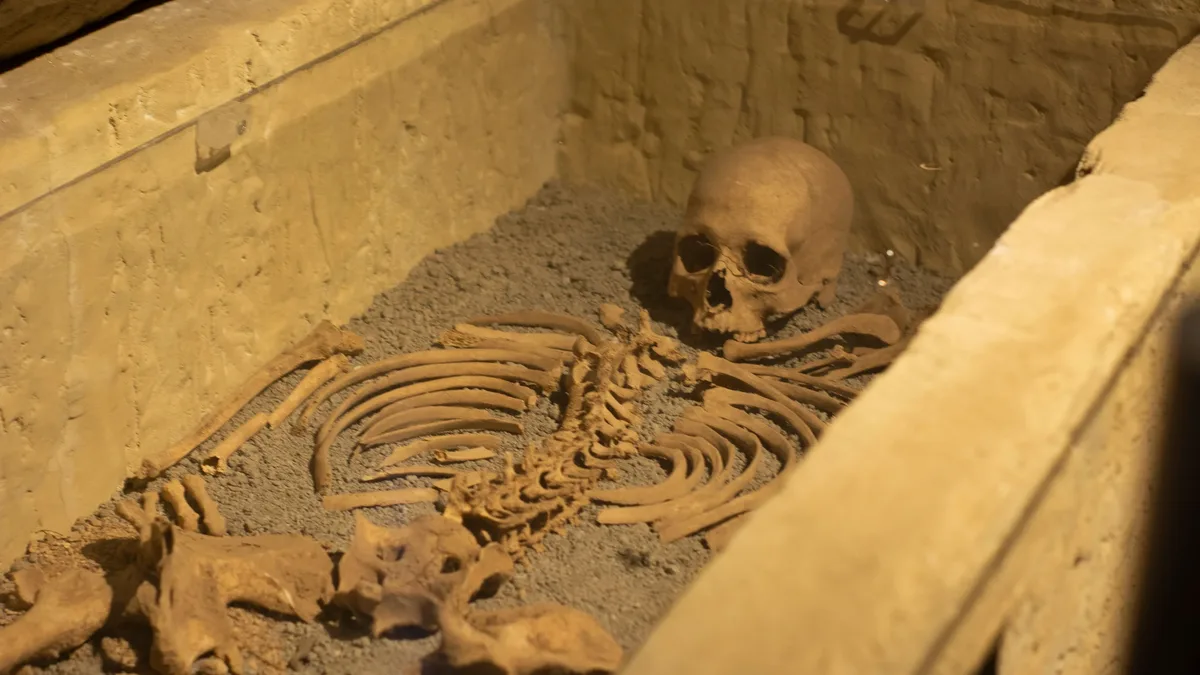
Archaeologists have uncovered a 1,700-year-old limestone tomb with a pyramid-shaped roof in Egypt's Dakhla Oasis. Dating to the fourth century CE, the structure was found near the ancient city of Mothis, modern-day Mut, during Roman control of Egypt. Fourteen steps descend to an entrance decorated with a winged sun disk, an image of the god Osiris, and two cobras.
A Bilingual Funerary Monument
The tomb was built for a husband and wife. The deceased man was named Pisechtes and may have been a judge. His burial chamber combines distinct cultural traditions. Hieroglyphic inscriptions contain protective spells, with some referencing parts of the 'Amduat', a text detailing the sun god's journey through the underworld. An offering table, a purification basin, and pottery were also discovered.
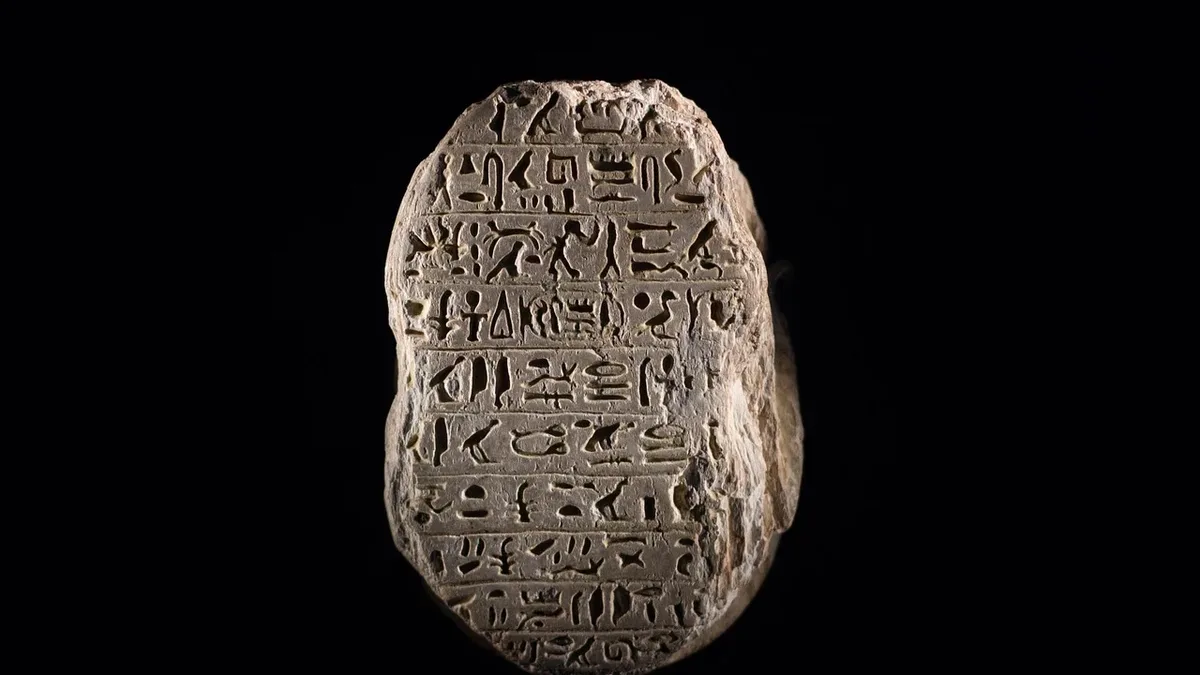
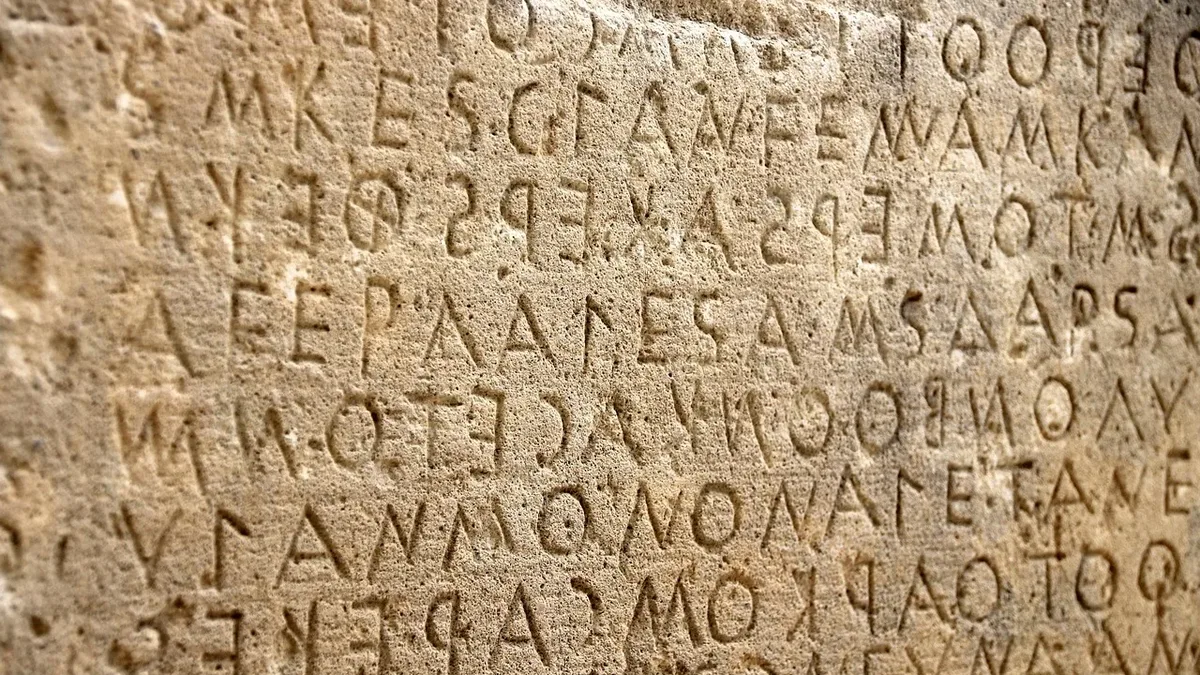
Alongside these Egyptian elements, a stone plaque bears a 19-line lament composed in ancient Greek. The poem praises the deceased for his kindness and wisdom, calling him an 'advisor in life'. It was likely written by a son mourning his father. The final lines feature the son, named Sarapion, directly addressing Pisechtes. Angelos Chaniotis noted, "In the last lines, Pisechtes' son Sarapion 'addresses his father, 'Listen father!', and asks him to accept the funerary libations and offerings of lamenting children.'"
Echoes of Empire and Learning
The tomb's contents reflect a sophisticated, non-Christian elite navigating life under Roman authority. A coin depicting Constantine the Great, who ruled from A.D. 306 to 337 and later legalized Christianity, was found inside. No Christian symbols or texts were present. The Greek poem itself signals high education. Angelos Chaniotis described it as "a highly literary and original epigram with grammar similar to that of Homer's famous epics." The use of diacritical marks like accents in the inscription further indicates the author's literate skill.
Later Use and Scholarly Response
Evidence suggests the site saw later activity. A mud-brick shrine constructed above the tomb entrance was likely erected after the original burials, pointing to possible reuse. The Egyptian Ministry of Tourism and Antiquities has issued a translated statement about the find. Independent researcher Angelos Chaniotis, who was not involved in the excavation, provided analysis of the poem's literary merit. The archaeological team leading the dig did not respond to media inquiries.
The tomb's fusion of Greek poetry, Egyptian underworld texts, and Roman-era coinage illustrates a complex, layered identity in fourth-century Egypt. This unique combination awaits further comparative study by scholars.