Ancient artists used heated charcoal to preserve Chauvet Cave art
A new non-invasive analysis of 37,000-year-old drawings in France's Chauvet Cave reveals that artists used hot charcoal, which inadvertently created a protective calcite layer that preserved the artworks for millennia.
Researchers have used ultraviolet light to discover how prehistoric artists in Chauvet Cave preserved their charcoal drawings for 37,000 years. A team from Sorbonne Université and the French National Center for Scientific Research (CNRS), including lead author Philippe Walter and Yohan Boulard, employed a novel, non-contact technique to analyze the cave's famous panels.
They developed a portable instrument featuring a 365-nanometer ultraviolet LED, a battery pack, and a 3-meter fiber-optic bundle mounted on a carbon-fiber pole. From up to 2.5 meters away in the cave's humid, 13-degree-Celsius air, they shone UV light on the artworks. The method relies on the fact that the cave's bedrock limestone and calcite deposits glow with distinct spectral signatures under UV light due to organic impurities trapped within them, even though they are chemically similar.
The nature of the pigments
Charcoal pigment absorbs ultraviolet light and does not glow. On the renowned Horses Panel, however, the UV light that emerged came not from the underlying rock but from a thin, translucent layer of calcite covering the black lines. This discovery indicated that a mineral coating had formed directly over the ancient drawings. The researchers propose this calcite layer may have acted as a natural varnish, protecting the delicate charcoal from degradation.
The discovery of the orange glow
The analysis yielded an unexpected clue. Beneath some charcoal marks and around smears thought to be from torches, the researchers observed a distinct orange glow. To identify its source, they conducted laboratory tests, attempting to recreate the signal with various materials.
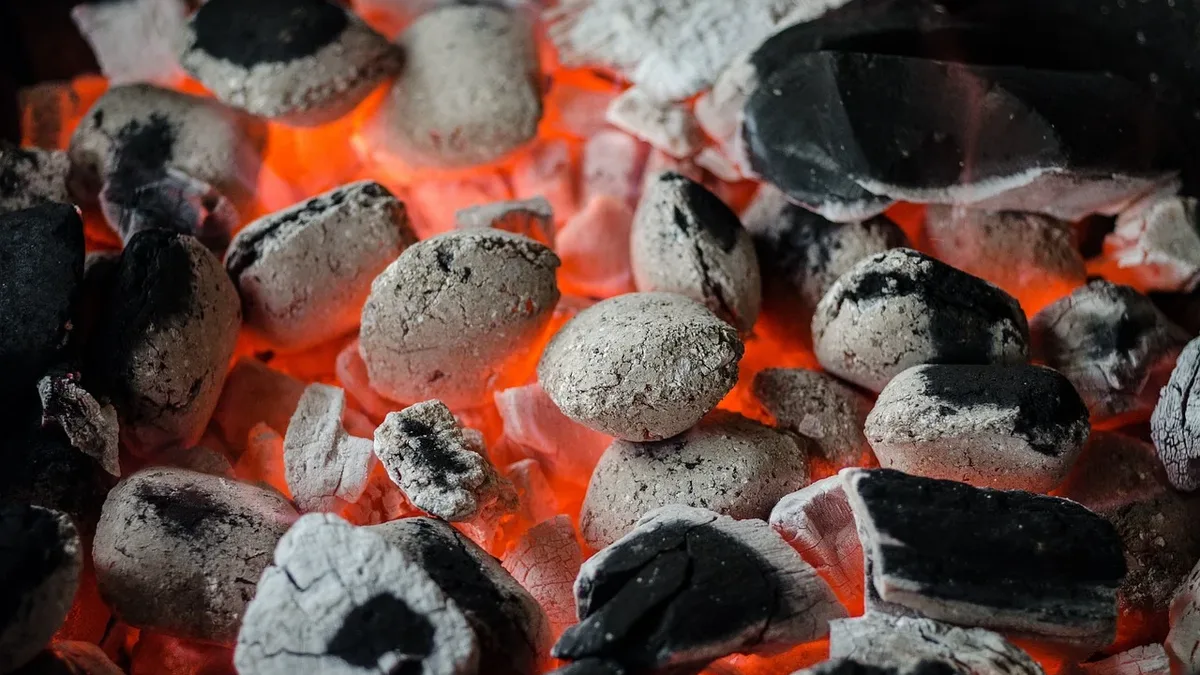
The tests were conclusive. Only heated limestone and heated calcite produced the orange fluorescence. This led the team to a significant conclusion: the ancient images were drawn with hot or even burning charcoal. The heat from the drawing tool altered the mineral composition of the rock surface beneath it.
Implications for preservation
The heating process appears to have initiated a preservation chain reaction. The heat-altered rock surface may have influenced how mineral-rich water later flowed and crystallized over the artwork. In the Alcove of the Lions, calcite flows formed on bare rock but notably avoided the drawings, suggesting the pigments themselves directed the mineral deposition. This created the protective coating detected by the UV light. Philippe Walter summarized the find, stating, "These results showcase the careful interaction between humans and geology that allowed these artworks to be preserved for tens of thousands of years."
The exceptional conservation of Chauvet Cave's more than 1,000 drawings of horses, lions, mammoths, and bison is also attributed to ancient rockfalls that sealed the site during the Upper Paleolithic. The artists' choice of material and technique created an accidental yet effective preservation system. Their heated charcoal left a mineralogical signature that, millennia later, guided a protective layer of calcite to safeguard their work.