Neolithic Cemetery Near Paris Reveals Painted Standing Stone
Archaeologists in Champigny, France, have excavated a 6,500-year-old Neolithic cemetery containing 11 graves, a massive painted menhir, and evidence of early communal burial practices.
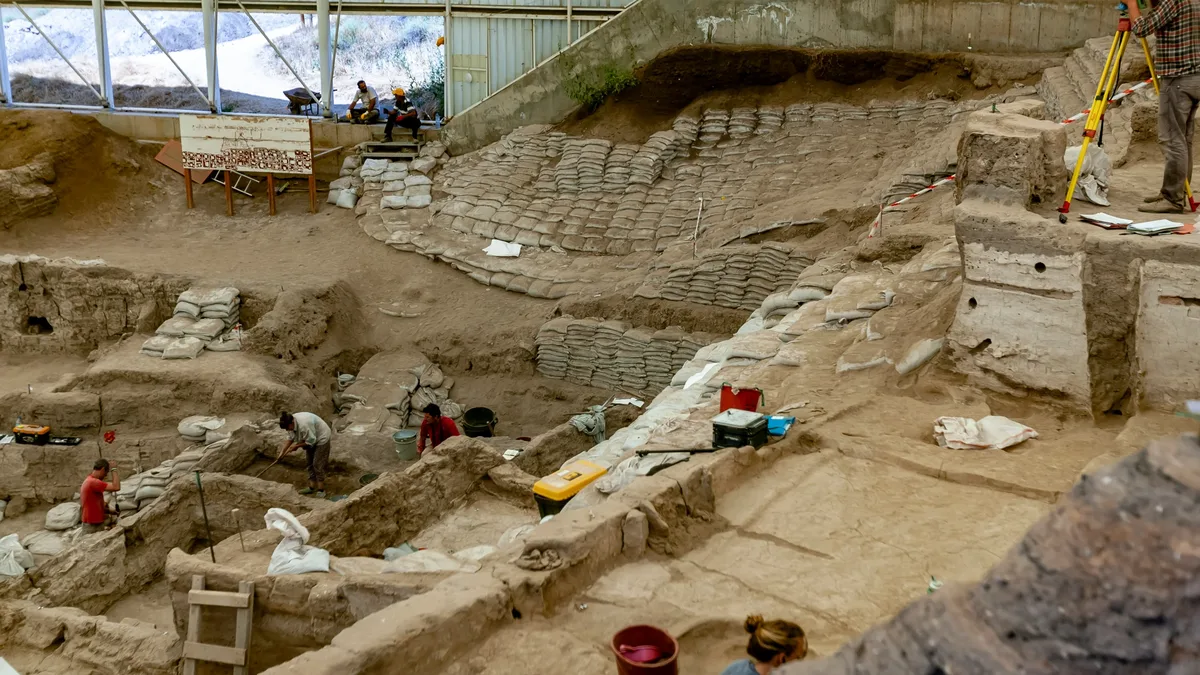
Archaeologists have excavated a 6,500-year-old Neolithic cemetery near Paris in Champigny, France, revealing 11 graves and a large standing stone. The site, located near the Marne River, was investigated by the French National Institute of Preventive Archaeological Research ahead of planned property development. The discovery includes a human-shaped monolith weighing more than 20,000 pounds and 30 other megalithic stone blocks.
The menhir was found lying on its side. It was originally more than 10 feet tall. The cemetery contains 11 graves. Three graves around the menhir were disturbed by modern construction.
Painted standing stone and ritual landscape
The site features a 9.7-tonne menhir with painted stains and carved cupules, suggesting symbolic use and possible ritual significance. The stone measures 3.04 metres long, 1.68 metres wide, and 0.74 metres thick. Its surface shows pock marks from repeated blows. Cupules were carved into the menhir’s surface in an arc. White and black stains, possibly pigment, were found on the upper left corner, suggesting it may have been painted.
Two smaller sandstone blocks near the menhir are thought to have also stood upright. A primitive cement mixture was used along grave edges, in pits supporting stones, and within a dome-like structure. This carbonate-rich building material, made from local sand, silt, gravel, and water, had previously been identified in Mediterranean settlements.
Burial practices and grave goods
Grave goods including flint tools, bone artifacts, and sandstone implements indicate complex burial customs and social organization. The burials date from approximately 4750 to 4300 BCE.
Most skeletal remains were found lying in graves. Two eroded graves contained women buried on their backs. One notable grave contained a seated adult skeleton in a narrow circular pit, with lower legs and feet trapped in calcite formed by lime-rich water. A mound with a broken stele was found, containing pits and trenches with postholes forming a palisade.
Site layout and preservation threats
Planned property development threatened the site, prompting urgent excavation and documentation by French archaeologists. The graves were arranged in distinct groups. Eight graves were grouped within 60 square metres. Three graves were located north of a mound-like structure. Nine additional burials were discovered, seven of which were extended burials.
A dome-like structure of brown silt covered 30 square metres. The burial mixture, which hardened as it dried, was found on the edges of graves and in pits where the menhir and other blocks were unearthed. Ongoing analysis focuses on this carbonate-rich cement mixture and its implications for Neolithic construction techniques in northern Europe.