Wildfire Smoke Threatens U.S. Health
Climate change-driven wildfire smoke is causing tens of thousands of excess U.S. deaths each year, with a sharp increase projected by 2050.
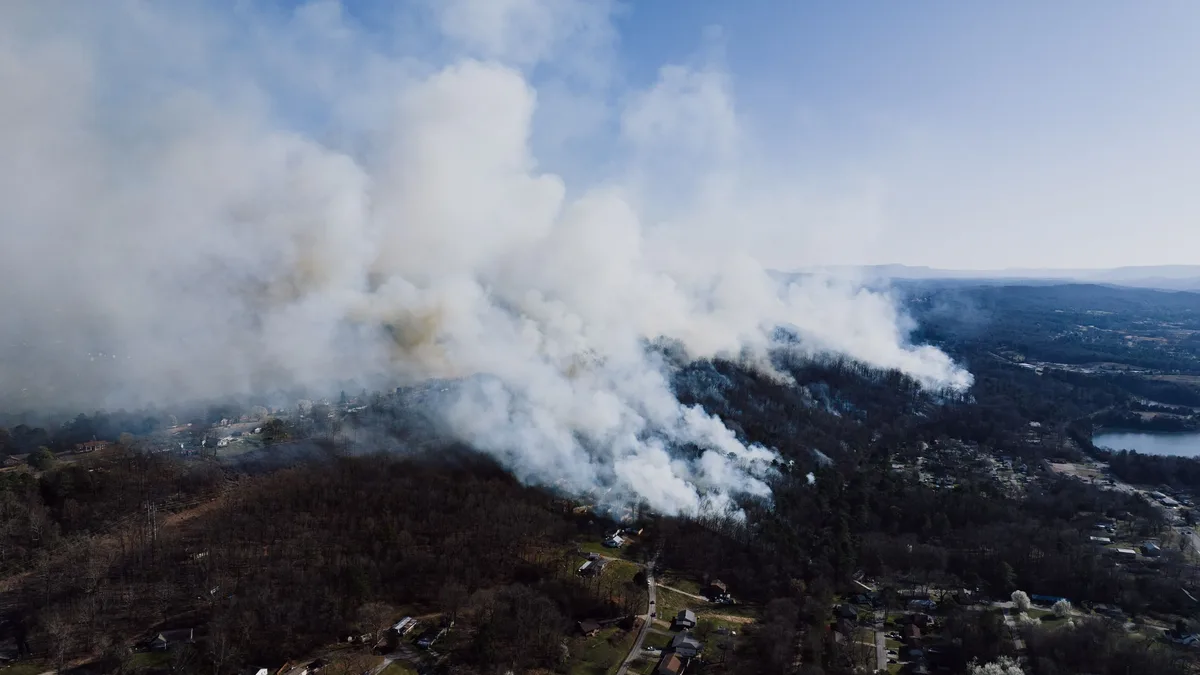
Wildfire smoke is now the fastest-growing environmental threat to health in the United States, according to Stanford University professor Marshall Burke. A 2025 study found smoke contributed to 41,380 excess U.S. deaths per year from 2011 to 2020, a figure projected to rise to 71,420 by 2050 under high warming scenarios.
These health impacts spread far beyond fire zones. Smoke from the record-breaking 2023 Canadian wildfires, which reached Europe and Asia, may have shortened the lives of 87,000 people globally, a separate 2025 study concluded. The smoke carries PM2.5, fine particles that enter the bloodstream and are linked to heart attacks, strokes, dementia, and lung cancer.
Longer Seasons and Larger Fires
Climate change is locking in a future of more frequent and intense wildfires. "No one foresees changes in the near future, at least, that are going to result in decreases in wildfire," said Mary M. Johnson, an environmental health scientist at Harvard. She stated wildfires are "predicted to increase in size, intensity and frequency."
Data shows the U.S. West saw the number of large wildfires double between 1984 and 2015. Fire seasons are also shifting. A 2026 study in Geophysical Research Letters found climate change is pushing the fire season earlier in Alaskan and Canadian boreal forests as snow vanishes sooner. In the U.S. West, drought is extending the season later into the year.
Hongliang Zhang, an air quality researcher at Fudan University and senior author of that study, explained the mechanism is "about dryness." A warmer atmosphere holds more moisture but can lead to more intense rainfall and concurrent dry periods.
Under a high-emission scenario with 7.9°F (4.4°C) of warming by 2100, his team projected specific shifts in North American fire seasons:
| Region | Projected Change in Fire Season Timing |
|---|---|
| Canadian & Alaskan Forests | Starts about 1 week earlier; northernmost areas shift up to 23 days earlier |
| California | Peak burning shifts later in the season |
| U.S. Southwest | Starts 1 week later, ends over 1 month later than current season |
Worsening Air Pollution and Health Toll
More fire means more pollution. A 2020 study suggested particulate smoke levels could double or triple in the Pacific Northwest and Northern California by century's end under unmitigated warming. Burke's research indicates smoke emissions could increase 262% to 482% between 2046-2055 compared to 2011-2020.
This pollution travels. "There really isn't any place in the world now where you can say, 'I'm not going to be exposed to smoke,'" Johnson told Live Science. The health consequences are severe and cumulative.
Between 2006 and 2020, PM2.5 from wildfire smoke caused an average of 24,100 U.S. deaths annually, a Science Advances study found. It worsened death rates for all conditions studied, with the largest rise seen in neurological diseases.
Smoke also affects pregnancy. A 2022 study found a week of exposure raised preterm birth risk by 3.4%. A 2025 study confirmed preterm birth risk increased in the U.S. West with smoke exposure, regardless of how exposure was measured.
Cognitive impacts are emerging. A 2022 study linked cumulative school-year smoke exposure to slightly lower test scores in children. Research using brain-training app data shows adult cognitive task performance declines on high-smoke days. Long-term PM2.5 exposure from fires is linked to dementia risk.
A Toxic Mixture
Scientists are investigating why wildfire smoke is particularly harmful. It contains a complex mix of toxins, especially when buildings burn. Air testing after the 2025 Palisades fire in Los Angeles found high levels of silver and carcinogenic chromium-6 nanoparticles.
Johnson's team has found smoke exposure causes epigenetic changes tied to the immune system, altering how DNA is expressed. One change is a decline in regulatory T cells. These epigenetic shifts can potentially be passed to the next generation.