Neuroscientist Steve Ramirez on Memory Manipulation
Neuroscientist Steve Ramirez explains his research on memory engrams and the potential for memory manipulation in his 2025 book.
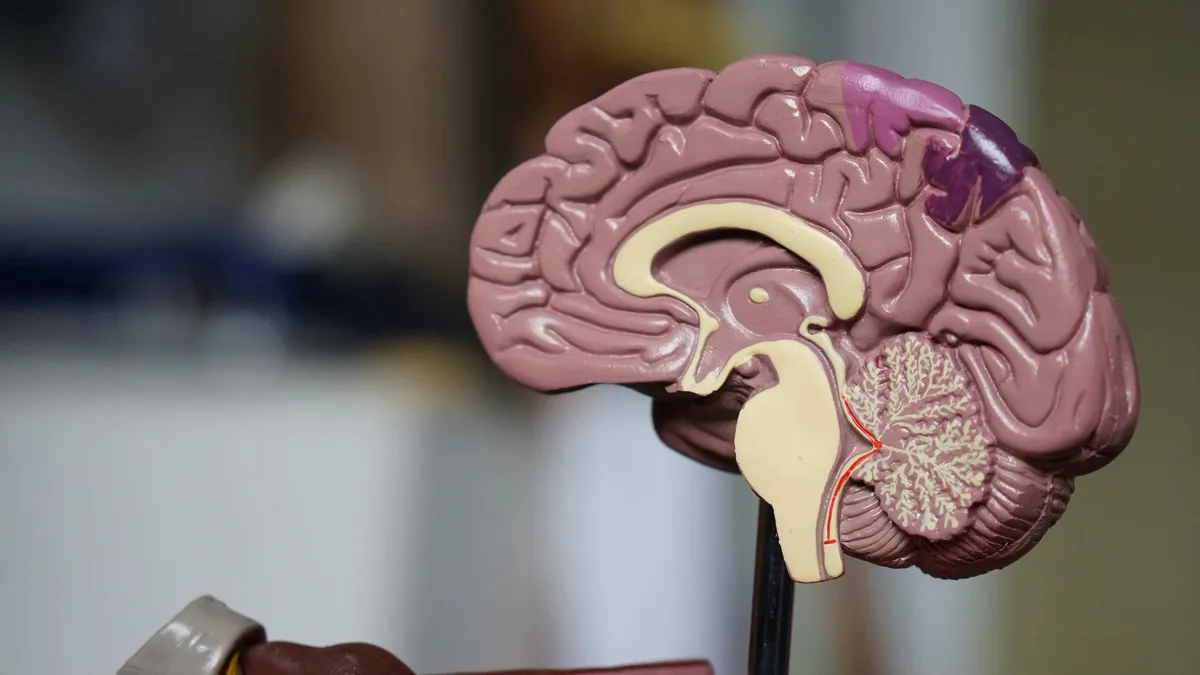
Neuroscientist Steve Ramirez, an associate professor at Boston University's Center for Memory and Brain, explores the fundamental nature and potential manipulation of memory in his 2025 book "How to Change a Memory: One Neuroscientist's Quest to Alter the Past." The book, published by Princeton University Press, has been short-listed for the 2026 Royal Society Trivedi Science Book Prize.
In an interview with Live Science, Ramirez reflected on the accidental 2013 breakthrough that propelled his career. He and colleague Xu Liu published a paper detailing how they created false memories in mice using optogenetics, a technique that manipulates cell activity with light. The key discovery occurred when a botched surgery on a single mouse inadvertently targeted a precise location in the hippocampus, the brain's key memory center. While the first four mice showed no response to reactivating tagged "fear memory-bearing cells," the fifth mouse froze in fear, revealing the exact spot where a memory was stored and could be controlled.
The Search for the Engram
Ramirez defines an engram as the theoretical physical basis of memory, the cellular building blocks of a memory in the brain. He calls it "kind of the holy grail of 'what is memory.'" Researchers currently lack a detailed map, possessing only a zoomed-out satellite view of what an engram looks like. The goal is to achieve a full understanding of its physical manifestation. This would allow scientists to better predict outcomes when these building blocks break down, leading to conditions like amnesia or cognitive impairment.
He draws an analogy to cardiology. A deep understanding of the heart's pump mechanics has enabled advanced treatments like 3D-printed valves. Ramirez argues there is no law of physics preventing a similar understanding of the brain. Understanding the detailed physical picture of an engram could lead to predictions and even prevention of its breakdown, ultimately aiming to enable individual well-being.
Pathways to Potential Therapies
While Ramirez's foundational experiments used optogenetics in mice, the technique is not widely used in human medicine. He notes it is primarily explored for noninvasive retinal therapies, which are currently in clinical trials. For brain applications, significant technological hurdles remain, such as delivering genetic payloads without invasive procedures like viral vectors or optic fibers. Some research groups are working on peripheral injections that could noninvasively deliver tools to the brain.
Ramirez suggests optogenetics may not be necessary for human memory manipulation. In rodents, scientists must physically locate and activate specific memory-holding cells to trigger recall. In humans, simple conversation can evoke memory. He conceptualizes a future where memory manipulation could help ease conditions like PTSD or guard against dementia, exploring whether this research could open new treatment paths.
Reflecting on the role of serendipity in science, Ramirez believes the 2013 accidental discovery might have only delayed the inevitable by about six months. He emphasizes the importance of paying attention to confusing or head-scratching experimental results, as such unintended outcomes can form the basis of major scientific advances.