Cattle Collagen Binds Egyptian Paints
Analysis of 28 paint samples from 14 ancient Egyptian artifacts shows cattle collagen was the main binder, with other animal and plant proteins also used.
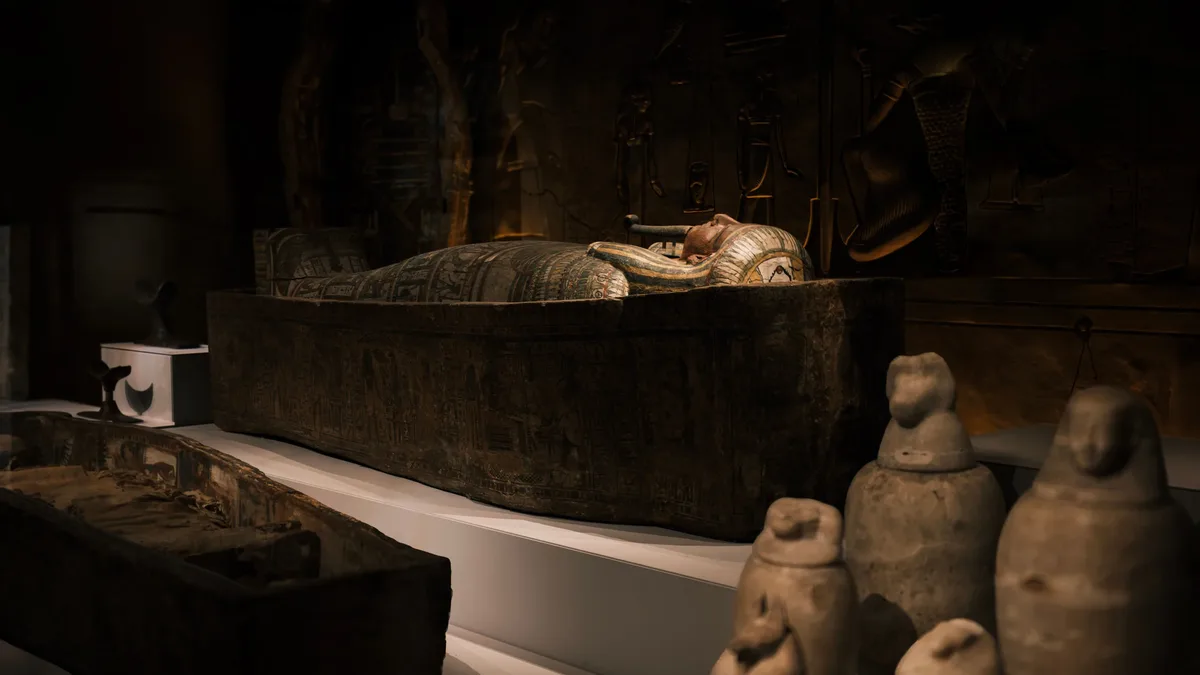
Analysis of 28 paint samples from 14 ancient Egyptian artifacts shows cattle collagen was the main binder. An international research team including Clara Granzotto of the University of Copenhagen and Rebecca J. Stacey of the British Museum has identified the protein binders used in ancient Egyptian paints. The findings come from an analysis of 28 samples taken from 14 artifacts dating from 1425 B.C. To A.D. 400. The coffins, wall paintings from tombs, painted limestone, and mummy-related plasterwork are currently housed in three European museums.
Animal Sources for Paint Binders
The analysis showed that animal hides, connective tissues, and bones were processed to create paint adhesives. The test results indicate that collagen from cattle was used most often as a binding medium for paint. However, the hides, connective tissues, and bones of sheep or goats, donkeys, and horses-and perhaps even wild antelopes-were also used to make paint adhesives.
This variety indicates a pragmatic use of available resources. The paints were not made from a single, standardized recipe.
Plant Proteins and Seed Cake
In addition to animal products, the team identified plant proteins within the paint mixtures. Plant proteins were also identified in the mixtures. These proteins are thought to have been used in the form of seed cake, which is what is left over after seeds are pressed for their oil.
Its use points to a complex understanding of materials. Artists or craftsmen were utilizing by-products from other industries.
Scope and Significance of the Study
The research provides direct chemical evidence for long-suspected practices. The 28 samples offer a broad chronological sweep, covering nearly two millennia of Egyptian art production.
The artifacts represent different forms of funerary and decorative art. Their current locations in European museums underscore the global distribution of Egyptian cultural heritage. The full study is published in the journal Science Advances.
To read about the materials artists in Roman Egypt used to create portraits of the dead, go to "At Face Value." Previous research has examined materials used for Roman-era Egyptian funerary portraits. This new work expands the technical understanding of binders used across a wider span of ancient Egypt's history. The concrete detail of cattle collagen as the primary binder concludes the investigation.