Teotihuacan Writing System Revealed in Cave Glyphs
New analysis of three red-painted glyphs in a Mexican cave provides the strongest evidence yet that Teotihuacan developed a genuine logo-phonetic writing system.
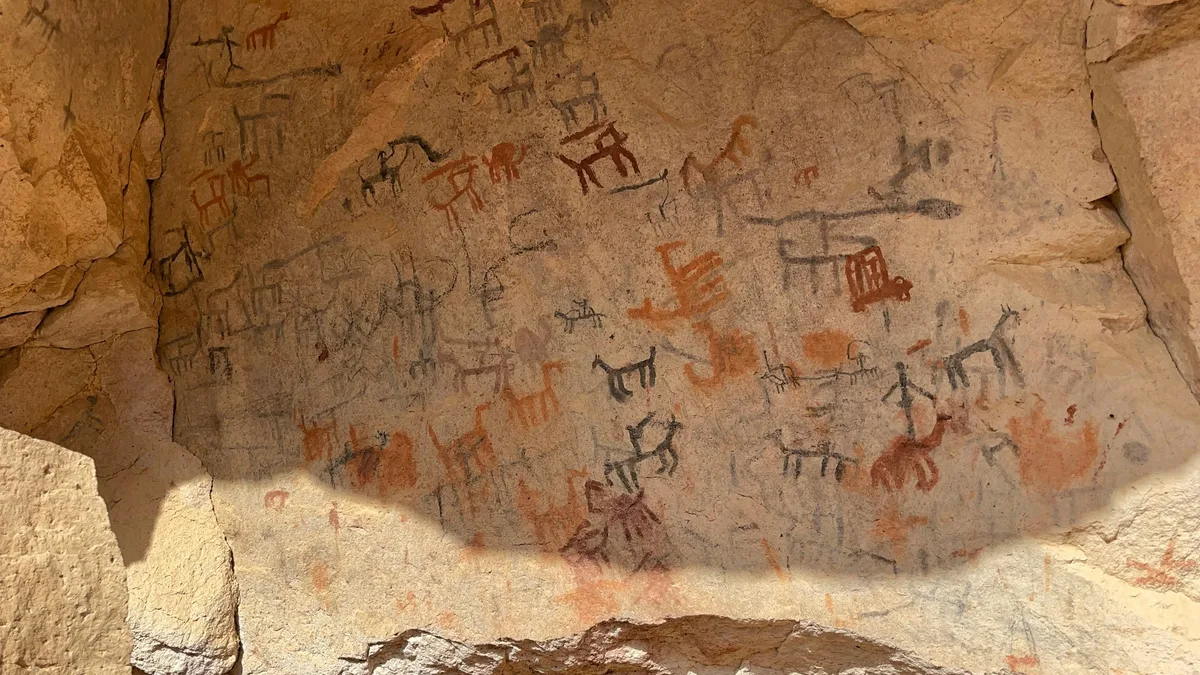
Researchers have documented three red-painted glyphs in a hard-to-access cave at Chalcatzingo, Mexico, using photography and digital enhancement. The glyphs, originally discovered in the 1980s, were revisited and studied in 2022, revealing they were painted with a dark red pigment likely applied with a brush. The findings suggest these symbols are components of a Teotihuacan writing system used for specific ritual and commemorative functions.
Digital enhancement of photographs taken in Cave 19 clarified three distinct glyphs. The first shows two identical stylized mountain signs, one flanked by two large scrolls emanating from an open mouth. Researchers believe a third, now-faded mountain sign may have once been present. The second glyph depicts a beaded necklace draped over a cloak with an upright dart. The third is a rectangular frame containing a five-pointed star motif.
Meaning of the Glyphs
The glyphs are interpreted as depicting a place name, a warrior title, and a ritual setting, with direct parallels in Teotihuacan’s own iconography. The 'tri-mountain' sign accompanied by speech scrolls is thought to refer to a place name meaning 'Singing Mountain,' which is also recorded in murals at Teotihuacan itself. This suggests pilgrimages from the great city to this local hill near Cave 19.
The second glyph, featuring the beaded necklace, cloak, and dart, represents items worn by Teotihuacan warriors. Researchers surmise this glyph pertains to a specific warrior title. The third glyph, a rectangular frame with a star, was painted directly onto a low, modified bedrock shelf at the back of the cave.
Ritual Use of the Cave
The cave's physical context points to its use for fire rituals, possibly linked to the warrior theme of the glyphs. The walls and ceiling surrounding the bedrock shelf are blackened from fire. Christophe Helmke, who led the research team from the University of Copenhagen, said: "We therefore hypothesize that this frame and the modified bedrock shelf served as the background and elevated base for a Teotihuacan pyrolytic ritual."
The combination of the warrior-associated glyph and the evidence of burning supports the idea that visits to Cave 19 involved cremating funerary bundles linked to a Teotihuacan warrior order.
Implications for Teotihuacan Writing
The study provides key evidence in a long-standing scholarly debate over whether Teotihuacan’s symbols constitute a true writing system. The researchers argue the Chalcatzingo glyphs demonstrate that Teotihuacan images were part of a functional logo-phonetic script, where signs represent words or concepts and other elements carry phonetic information. This system shares expressive elements with Maya and Aztec hieroglyphic scripts.
Christophe Helmke concluded: "Teotihuacan writing can therefore no longer be dismissed or considered as a set of isolated or emblematic symbols." The authors suggest the glyphs represent a distinct writing system used to designate the cave as a site for warrior commemoration. Researchers continue to study Teotihuacan signs, with the known repertoire approaching 120 graphemes, though the system remains far from fully deciphered.