Giant scorpion Praearcturus reshapes
A newly identified meter-long scorpion from 415 million years ago, discovered in British fossils, pushes the era of giant arthropods back 50 million years
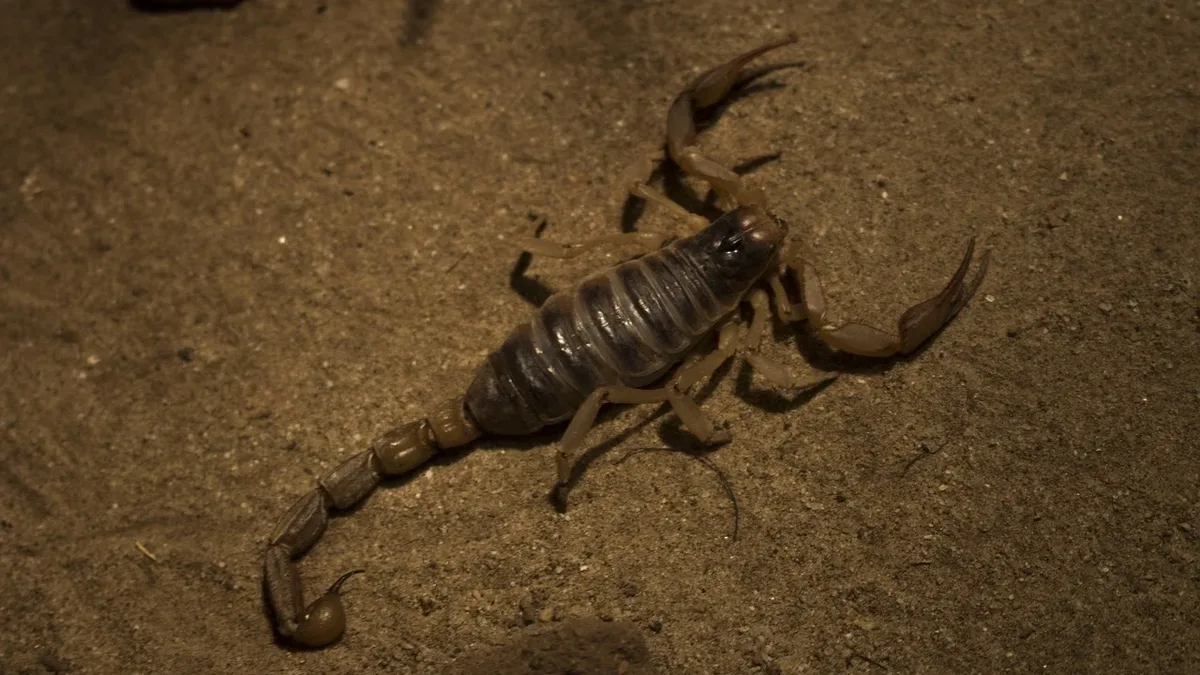
A fossil predator from ancient Britain has been confirmed as the largest scorpion ever discovered. Researchers from the University of Manchester and the Natural History Museum identified the one-meter-long Praearcturus gigas after re-examining specimens that sat in museum collections for over 150 years.
Dr. Richard J. Howard, Curator of Fossil Arthropods at the Natural History Museum and lead author, stated the find changes the timeline for giant arthropods. The creature's pincers alone measured more than 16 centimeters long.
A 150-Year Fossil Mystery
Scientists first described Praearcturus gigas in 1871, but misidentified it as a giant crustacean resembling a woodlouse. Incomplete fossils, lacking a tail, made confident classification impossible for more than a century. The new identification became possible only after researchers compared these historic specimens with better-preserved fossils found more recently, which revealed definitive scorpion anatomy.
Dr. Russell Garwood, a paleontologist at the University of Manchester, noted the long-standing puzzle. The study was published in the journal Palaeontology.
Ecology of an Early Giant
Praearcturus lived approximately 415 million years ago during the Early Devonian period. Terrestrial ecosystems were then in their infancy, dominated by small plants and fungi without forests. This timing is crucial because the scorpion's gigantism occurred before the high atmospheric oxygen levels linked to later forest ecosystems, which are often cited as a driver for giant arthropod size.
The research team suggests ecological opportunity may explain its size. With few other large predators competing in these nascent land environments, Praearcturus could have dominated its floodplain habitat. The analysis also found scorpion fossils are unusually common in rocks from this period compared to other arachnids, hinting at a successful early adaptation.
A Possible Semi-Aquatic Lifestyle
Evidence points to Praearcturus potentially having a semi-aquatic lifestyle. Some fossils preserve flap-like abdominal structures similar to those seen in modern crustaceans like lobsters. This raises the possibility the giant scorpion moved between water and land.
Dr. Greg Edgecombe, a co-author from the Natural History Museum, emphasized the environmental context. The pattern of fossil preservation further supports the idea that some early scorpions occupied freshwater habitats, where remains are more likely to fossilize.
The discovery demonstrates that older museum specimens can yield major new insights when revisited with modern techniques. It challenges the notion that high oxygen alone drove arthropod gigantism, pointing instead to a combination of ecological opportunity and adaptive experimentation during life's early ventures onto land.