Pompeiopolis basilica yields 4th century mosaic and Eros
Archaeologists in Pompeiopolis, Turkey, have uncovered a large 4th-century mosaic floor and a 2nd-century marble head of Eros within a Roman basilica
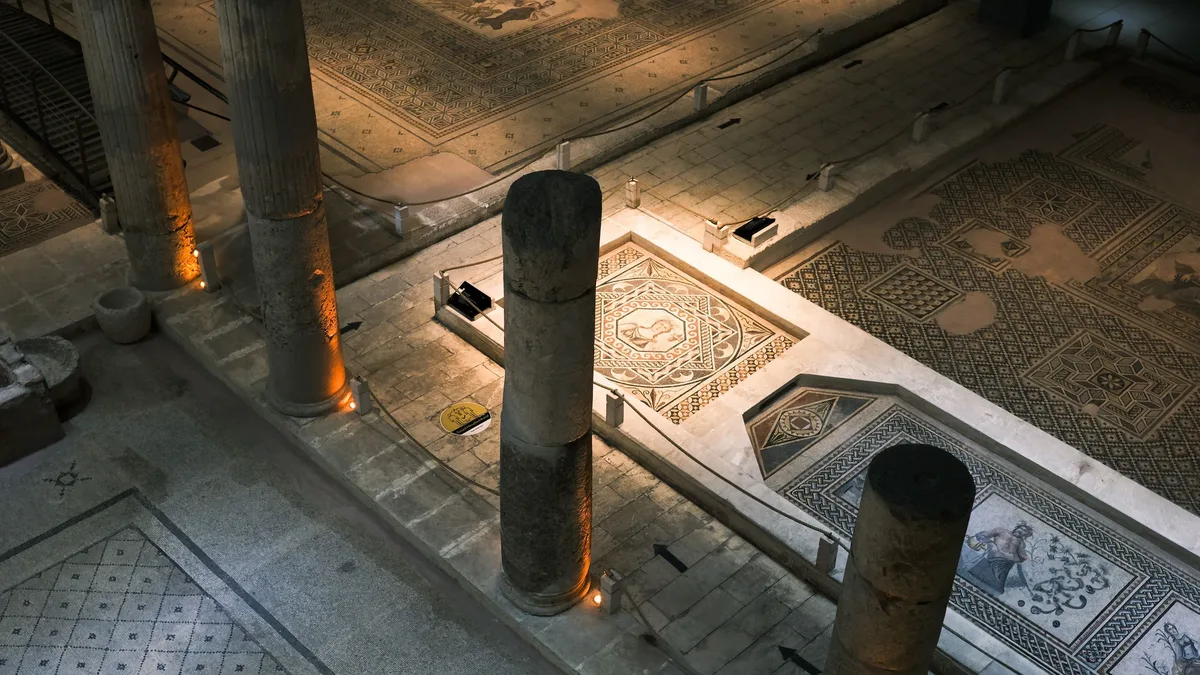
A 105-square-meter mosaic floor from the 4th century A.D. Has been discovered in excellent condition at the ancient site of Pompeiopolis in northern Turkey. The excavation, led by Professor Aliye Erol, also recovered a marble head of the god Eros dating to the 2nd century A.D. From within the same basilica structure.
According to the source report from The History Blog, the geometric mosaic adorned the central nave of a large public basilica originally constructed between 150 and 160 A.D. This building served as the administrative heart of the Roman province of Paphlagonia. The detailed patterns include double-headed axes, wave motifs, diamond shapes, overlapping rings, hexagons, and spirals.
The Basilica's Long History
The basilica's life spanned centuries and major religious shifts. Historians believe Pompeiopolis became an episcopal see in the 4th century, and the civic basilica was subsequently converted into a church. It functioned as a religious center until the 13th-century Seljuk conquest. The newly found mosaic belongs to this Christian phase of the building's use. Professor Erol has noted that the exposed 105 square meters likely represents only a portion of the original pavement, with more mosaic lying under unexcavated earth. Conservation efforts are currently focused on stabilizing the revealed sections before further excavation proceeds.
A Pagan Relic in a Christian Space
A significant find from the building's earlier, pagan period is a marble head of Eros, the god of love. Dating to the second half of the 2nd century A.D., it was discovered in the pastophorium, a small side chamber next to the altar used for storing liturgical objects. The presence of a pagan statue tucked away in a Christian church side room provides concrete evidence of how material culture was handled during religious transitions. Older artifacts were not always destroyed; they were sometimes simply moved out of the main worship space.
Cultural Context of the Finds
For researchers, these discoveries offer new insights into the artistic and cultural life of Pompeiopolis during the Roman imperial period. This was a time when several local families rose to prominence within the senatorial aristocracy in Rome itself. The high-quality mosaic and the finely sculpted Eros head speak to the wealth and sophistication of the provincial capital. The excavation continues to clarify how the site evolved from a Roman administrative center to a long-lasting Christian hub, with material evidence from both phases preserved within a single structure.