Silenus Sarcophagus Found in Attouda Necropolis
A rare cylindrical terracotta sarcophagus featuring a Silenus mask relief has been discovered in western Turkey, dating to the 1st-2nd century AD.
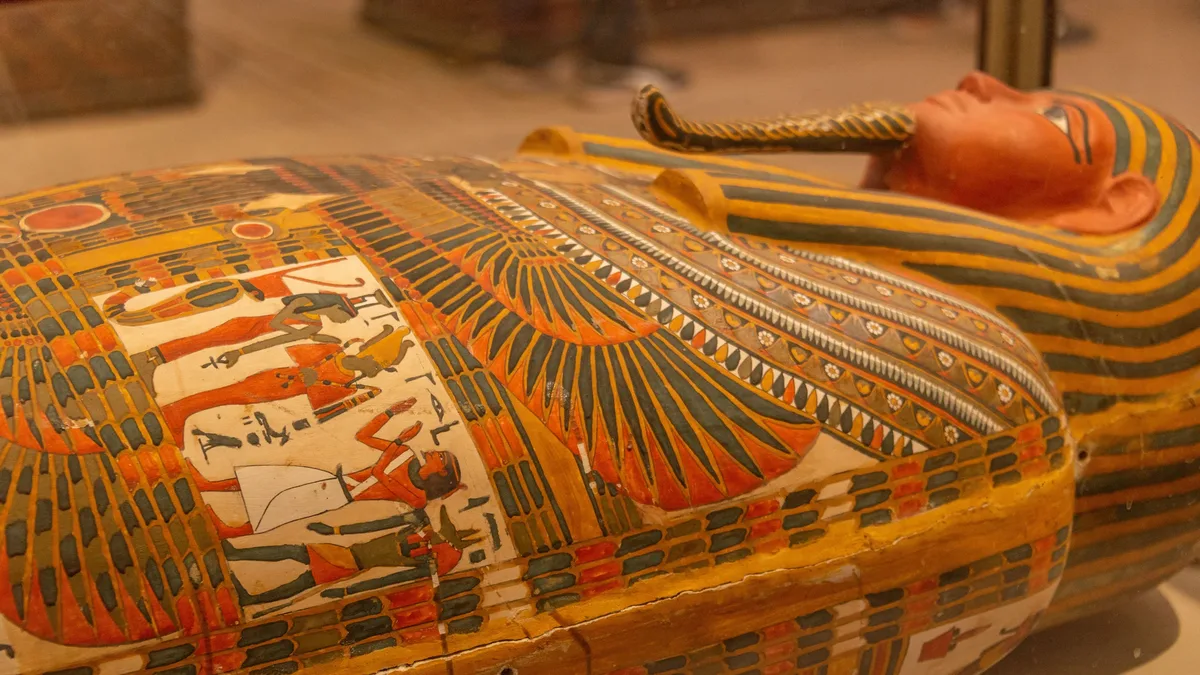
A cylindrical terracotta sarcophagus with a Silenus mask relief was discovered in six fragments during a 2023 ground survey at Musalla in the Attouda necropolis, western Turkey. The 1,900-year-old artifact, damaged by later agricultural activity, has been moved to the Denizli Museum for conservation and study. This marks the first cylindrical terracotta sarcophagus typical of Roman Anatolia found with a Silenus-like figure on its lid.
The find occurred in the agricultural area south of Attouda. A head fragment belonging to a Silenus figurine had previously been recovered from another tomb in the same necropolis. The newly discovered sarcophagus pieces include the cylindrical body, the lid, and the sculpted human face.
Physical characteristics and dimensions
The sarcophagus is made of reddish clay containing mica and limestone particles. When intact, it had an estimated diameter of 55 to 60 centimeters. Its curved lid measures approximately 33 by 30.5 centimeters and features the sculpted Silenus face.
| Component | Measurement |
|---|---|
| Sarcophagus diameter | 55-60 cm |
| Lid dimensions | 33 cm by 30.5 cm |
| Silenus face height | 4.8 cm |
Silenus mask and apotropaic function
The lid's sculpted face displays large eyes, a broad flat nose, thick deeply incised lips turning up at the corners, and a short beard. These are characteristic features of Silenus masks from the 1st century found in Attouda and other regional necropoli. Archaeologists believe the mask served an apotropaic function, acting as a symbolic protector of the dead. This aligns with a previous find from the Tralleis necropolis, where an intact Silenus head had suspension holes, suggesting it was hung inside a tomb for protection.
A Greek letter Beta, approximately seven centimeters high, was carved into the clay next to the mask. Researchers hypothesize this was a maker’s mark from the workshop or artisan who created the sarcophagus. Similar workshop marks are known from other regional sarcophagi.
Historical context and cultural significance
Stylistic comparisons date the sarcophagus to the 1st or 2nd century A.D. Attouda was a frontier settlement founded in the 7th-6th century B.C., continuously occupied and located at a defensible hill near the boundaries of Caria, Phrygia, and Lydia. The city prospered under Roman rule.
The presence of the Dionysian cult in Attouda is documented by Roman-period coins and inscriptions depicting the god Dionysus. Silenus, the older satyr and companion to Dionysus, is commonly depicted in Roman funerary art as part of beliefs in eternal renewal and life after death. The sarcophagus is a rare example of Roman funerary art in Anatolia, with no comparable Silenus-head reliefs known among cylindrical terracotta types. Its design includes raised bands and horizontal handles similar to examples from Laodicea, Hierapolis, and Trapezopolis.
The discoveries reflect cultural exchanges between local traditions and Greco-Roman mythology. They enhance understanding of Roman funerary architecture and rituals in the region. The study of the find was conducted by Associate Professor Bilge Yılmaz Kolancı of Pamukkale University and published in the peer-reviewed journal Cedrus in 2026.
The sarcophagus will undergo further conservation and study at the Denizli Museum to determine its full historical context and manufacturing origins.