Roman Silver Coin Hoard Discovered Near Wesseling
A licensed metal detectorist found a hoard of over 900 Roman silver denarii near Wesseling, Germany. The coins, buried during Emperor Hadrian's reign, are now on display in Bonn.
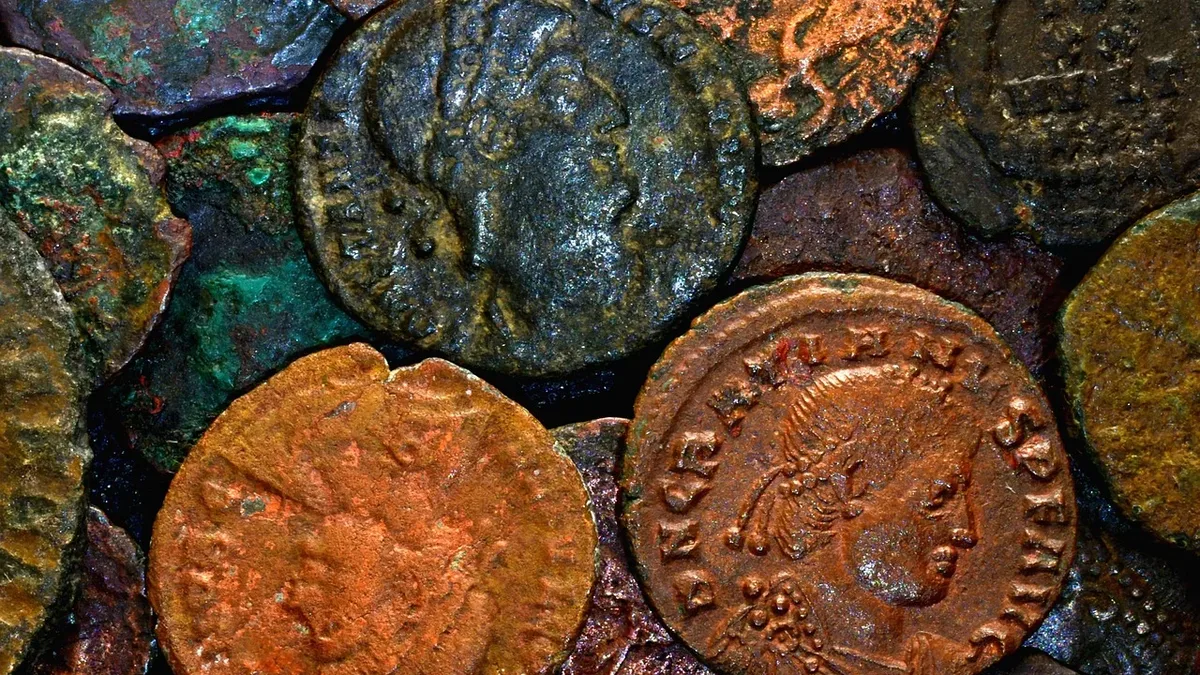
A licensed metal detectorist has uncovered one of the largest Roman silver coin hoards from Emperor Hadrian's reign ever found in Germany. The discovery of more than 900 silver denarii, weighing over 3 kilograms, was made in a field near Wesseling, a few miles south of Cologne.
Oliver Riedl, the detectorist licensed and trained by regional archaeological authorities, made the find about a year ago. After initially uncovering 15 coins, his metal detector signaled a much larger presence underground. "It was clear to me that there was something bigger in the ground here," Riedl said. He immediately stopped digging and informed the authorities. Archaeologists from the Rhineland regional government then excavated the entire hoard of 934 coins, carefully removing the intact earth block for X-ray analysis before opening it.
Composition and dating
The hoard consists of more than 900 silver denarii, the standard coin of the early Roman Empire. The coins span more than three centuries, from the Roman Republic to the Flavian dynasty. The oldest coin was minted in 148 B.C. Most of the coins, however, date from A.D. 69 to 96, the reign of the Flavian emperors Vespasian, Titus, and Domitian.
Archaeologists believe the hoard was buried during the reign of Emperor Hadrian, who ruled from A.D. 117 to 138. Numismatist Marjanko Pilekić noted, "In this case, we can cautiously assume that the hoard was buried not long after the most recent coin was minted." The hoard's location is significant, found just inside the northern frontier of the Roman Empire near the Rhine limes, unlike later burials often found outside the empire in the Barbaricum.
Context and interpretation
Experts suggest the collection represents years of accumulated savings, likely buried for safekeeping in an era without banks. Erich Claßen, head of archaeology for the Rhineland regional government, stated that the original owner probably collected most coins around A.D. 100 but buried them decades later during Hadrian's time. We can only speculate about the motives, but very likely someone wanted to keep this money safe, Claßen said.
Regional archaeologist Rahel Otte, who led the excavation, provided context on the hoard's substantial value. During Hadrian's time, 300 denarii was the annual pay for a Roman legionary, with about half deducted for food and equipment. Otte calculated that a legionary would have needed to save all available disposable income for approximately six years to amass such a sum. While the owner's identity remains unknown, Otte suggested it could have been a legionary or someone living on a Roman estate in the area.
Presentation and significance
The complete hoard is now on public display at the Rhineland Regional Museum in Bonn, the LVR-Landesmuseum Bonn. Its size and specific historical context make it a rare find. It offers a tangible connection to private wealth storage and economic behavior on the Roman frontier. The hoard provides a snapshot of individual saving linked to the broader imperial economy of the second century A.D. The coins remain on view for public examination, a direct link to a moment of personal security, or loss, nearly two millennia ago.