Rare Celtic Berru-type helmet found at Łysa Góra in Poland
A rare 4th-century B.C. Berru-type Celtic helmet, the only one found outside the La Tène homeland, has been discovered in a ritual pit at the Łysa Góra site in northeastern Poland, highlighting the site's key role on the Amber Route.
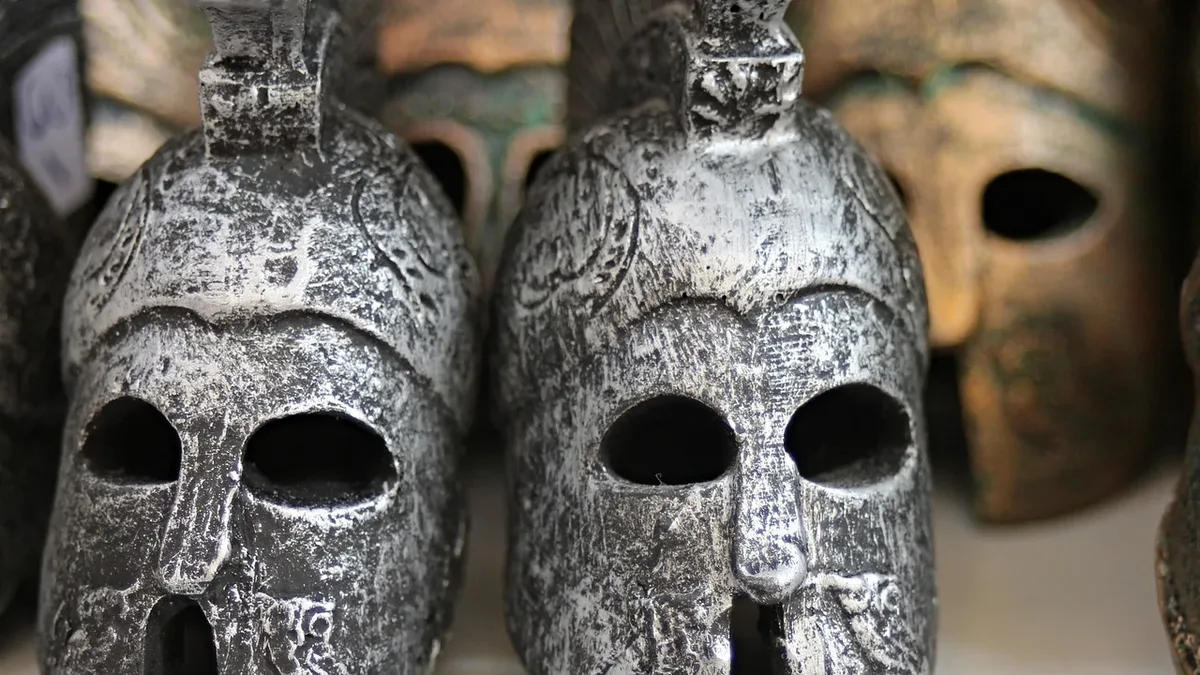
A rare Berru-type Iron Age helmet, the only one of its kind ever discovered outside the Celtic heartland, has been unearthed at Łysa Góra in northeastern Poland. The 4th-century B.C. La Tène culture artifact was found in a pit containing charred organic remains, placed alongside iron tools including adzes and a scythe.
This discovery reshapes understanding of Iron Age trade and social hierarchy in the region by linking local finds to broad La Tène elite exchange networks. The helmet's presence at a fortified hilltop settlement far from central Europe points to long-distance connections along the Amber Route.
Łysa Góra: A Multifunctional Iron Age Site
Excavations reveal Łysa Góra was a fortified settlement and metalworking center active between the 6th and 4th centuries B.C., likely inhabited by the West Baltic Barrow Culture. The site was defended by an embankment with a palisade and an outer ditch on its southern side, with a second timber defense in the north.
Evidence of extensive long-distance trade and ritual activity abounds. Researchers have recovered nearly 350 metal objects, amber beads, an unfinished amber ring, and a bronze coin of the Thracian king Seuthes III. Clay casting crucibles confirm on-site metalworking. Two distinct ritual deposits of bronze rings, earrings, and glass beads were placed in the marsh below the southwestern slope. One bundle included a decorated bronze spiral armlet showing an old repair with two rivet holes.
A significant collection of 31 mostly fragmentary Early La Tène brooches and ring ornaments, dated to the mid-fourth century B.C., was also found. In total, approximately 80 artifacts at the site are identified as La Tène. Bartłomiej Kaczyński noted, "Łysa Góra is one of the most exciting and mysterious archaeological sites dating to the Early Iron Age."
La Tène Connections and Trade Networks
The helmet's design closely matches finds from Dürrnberg in Austria, confirming its origin in the La Tène culture of central Europe. In the La Tène world, such helmets were markers of high rank among warrior elites. Their appearance at Łysa Góra is unusual because local communities in northeastern Poland at this time appear to have had no chiefs or pronounced social hierarchy.
The presence of the helmet, alongside amber and numerous bronze artifacts, suggests La Tène people played a direct role in establishing or maintaining the Amber Route network. Small La Tène ornaments are known to have reached distant parts of Central and Eastern Europe through hand-to-hand trade, but the helmet represents a different order of elite exchange. Its singular prestige weakens explanations based solely on local elite adoption, pointing instead to the possible physical presence of southern groups, including elites, at the site.
Ongoing Research and Future Studies
Planned scientific analyses aim to clarify the site's structure and the origins of its metals. Electrical resistivity tomography and magnetic surveys will map the defensive features in greater detail. Lead isotope testing will trace the ore sources of the metal artifacts and allow comparison with materials from Bohemia.
Further study will also examine a trepanation tool uncovered in 2025, which suggests advanced medical knowledge among the inhabitants. The research, published in Antiquity in 2026, posits that Łysa Góra served as a crucial node on the Amber Route, connecting the amber-rich Baltic coast with the cultures south of the Carpathian Mountains.
Future work includes non-invasive surveys, detailed isotope sourcing, and comparative studies of object use to further define the site's role in regional trade and elite interaction networks.