Silverpit Crater confirmed as ancient asteroid impact site
A study confirms the Silverpit Crater under the North Sea was formed by a 160-meter asteroid 43-46 million years ago, triggering a colossal tsunami.
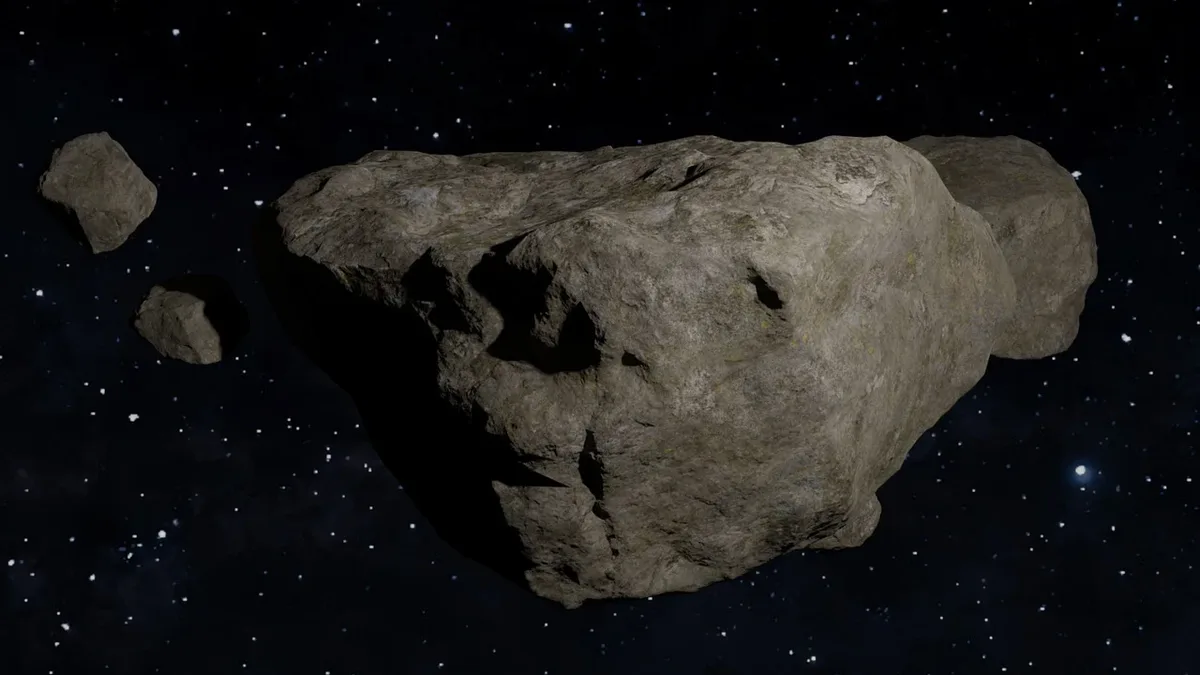
A September 2025 study in Nature Communications provides definitive proof that a massive asteroid struck the North Sea tens of millions of years ago. Led by Dr. Uisdean Nicholson of Heriot-Watt University, the research confirms the long-debated impact origin of the Silverpit Crater, an event that generated a tsunami over 100 meters high and a 1.5-kilometer-high curtain of rock and water.
The investigation combined seismic imaging, microscopic analysis of rock samples, and computer simulations. Researchers identified shocked quartz and feldspar crystals in samples from a nearby oil well, taken at the same depth as the crater floor. These minerals contain microscopic structures formed under extreme pressure, which cannot be produced by ordinary geological processes. Dr. Uisdean Nicholson noted, "Samples from an oil well in the area also revealed rare 'shocked' quartz and feldspar crystals at the same depth as the crater floor."
Crater dimensions and location
The Silverpit Crater lies buried 700 meters beneath the North Sea seabed, approximately 80 miles off the coast of Yorkshire, England. It measures about three kilometers across. Surrounding the central depression is a 20-kilometer-wide region of circular fractures, visible in seismic data.
Impact scale and effects
The asteroid was estimated to be 160 meters wide. It struck the seabed at a shallow angle from the west roughly 43 to 46 million years ago. Computer simulations of the event estimated the resulting tsunami reached over 330 feet, or 100 meters, high. The impact also created a vast, transient curtain of ejected material.
Scientific validation and context
The discovery of shocked minerals provided the critical evidence needed to confirm the impact theory after more than 20 years of debate. The crater, first identified in 2002, is unusually well-preserved beneath the seabed. It is one of only about 33 confirmed submarine impact craters on Earth, compared to around 200 found on land. Dr. Uisdean Nicholson said, "New seismic imaging has given us an unprecedented look at the crater."
Broader implications
The study, funded by the Natural Environment Research Council (NERC), offers insight into how impact events shape planetary surfaces, including those beyond Earth. It also aids in assessing future asteroid impact risks. Professor Gareth Collins of Imperial College London, who contributed to the simulations and participated in the 2009 debate, was part of the research team. The work builds on similar investigations, such as the study of the Nadir Crater off West Africa, also led by Nicholson.
The confirmation of the Silverpit impact provides a clear case study for understanding the catastrophic geological and oceanic consequences of such events, directly informing models used to evaluate contemporary planetary defense strategies.