Ake Maya settlement reveals post-collapse habitation
Archaeologists have documented 96 small structures at the Maya city of Ake, dating from A.D. 1100 to 1550, proving the site remained inhabited for centuries after its political collapse around A.D. 900.
Archaeologists have documented 96 small structures at the Maya site of Ake in Mexico’s Yucatán state, revealing sustained post-collapse habitation. The dwellings, built on low mounds within the city’s walled center, were occupied from about A.D. 1100 to 1550, long after the city's political power disintegrated.
Excavations at or beside 17 of these mounds uncovered pottery dating from that period. A refuse deposit provided a more precise window of activity, dating between A.D. 1116 and 1218. The houses were constructed with wooden poles and thatched roofs, often built directly on top of old plazas, roads, and the rubble of the city's earlier, grander buildings.
Evidence of daily life and ritual
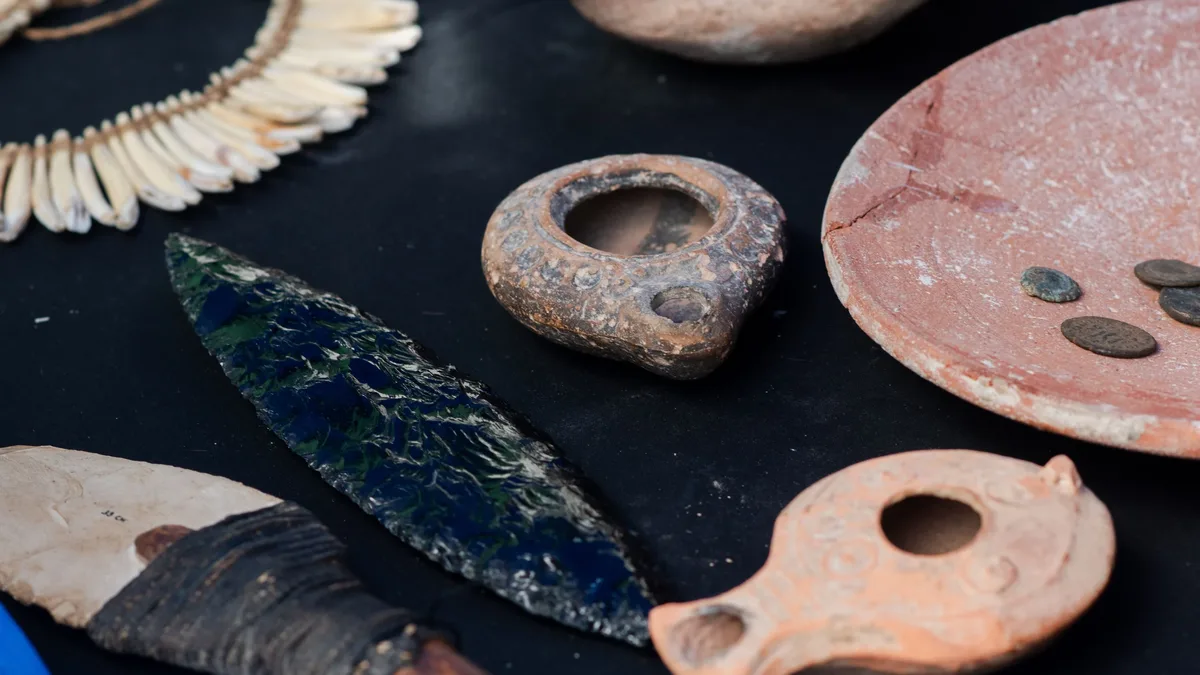
Artifacts recovered from the mounds paint a picture of continuous domestic and ceremonial life. Grinding stones, stone tools, spindle whorls, and animal bones indicate that food preparation, cooking, and weaving were routine activities. The community also maintained its spiritual practices.
Five small shrine-like structures were identified among the dwellings. These contained ceramic incense burners, animal figurines, and vessels. One shrine included a carved monument fragment that originated around A.D. 600, showing how residents repurposed materials from their city's past. The foundations of at least three-quarters of the small mounds incorporated large stones taken from the deteriorating monumental buildings that once defined Ake.
Post-collapse adaptation and Spanish removal
The discovery fundamentally challenges the narrative of total abandonment following political collapse. Ake had been a major center. Roberto Rosado-Ramirez, who led the research, said "as many as 19,000 people lived in Ake around A.D. 900." The city collapsed due to drought, conflict, and violence around that time, but people did not leave.
Instead, a smaller community adapted, building their homes within the ruins. They arranged at least 76 of their mounds around shared open areas, forming 12 distinct patio groups. A burial was even placed within the rubble of the older buildings, signifying a deep, ongoing connection to the site.
The settlement’s ultimate end appears linked not to the earlier collapse, but to Spanish colonial rule. A document from 1567 may refer to Ake as an Indigenous community. The evidence suggests residents were forcibly moved elsewhere by Spanish authorities between 1567 and 1580. The final discovery underscoring this long continuity was the five shrine-like structures containing ceramic incense burners and animal figurines, with one featuring a carved monument fragment dating to about A.D. 600.