Germany's largest Hadrianic coin hoard
A metal detectorist has discovered Germany's largest known hoard of silver coins from the reign of Emperor Hadrian near Wesseling, south of Cologne.
Germany's largest coin hoard from the reign of Emperor Hadrian has been discovered near Wesseling on the Rhine, just south of Cologne. The find consists of 934 silver denarii, weighing a total of 3.1 kilograms (6.8 pounds).
Metal detectorist Oliver Riedl made the initial discovery. After recovering 15 coins, he realized a much larger deposit was present when his machine continued to signal. He immediately stopped and notified the Rhineland Regional Association's Office for Archaeological Heritage Management (LVR-ABR).
The excavation and recovery
Archaeologists from the LVR-ABR's Nideggen branch were dispatched to excavate the site. They unearthed more than 900 additional coins. The team noted a concentration of numerous coins in the soil. To preserve the context, the find was recovered as a single block of earth and transported to the restoration workshop of the LVR State Museum in Bonn.
There, the block was X-rayed to gain insights before the coins were individually extracted. Fragments of a ceramic pot and remnants of straw were also discovered. "The coins were probably originally buried in a pot lined with straw," says Rahel Otte of the LVR-ABR. Years of agricultural activity destroyed the container, scattering the coins, but archaeologists report recovering all of them during their investigation.
The coins and their value
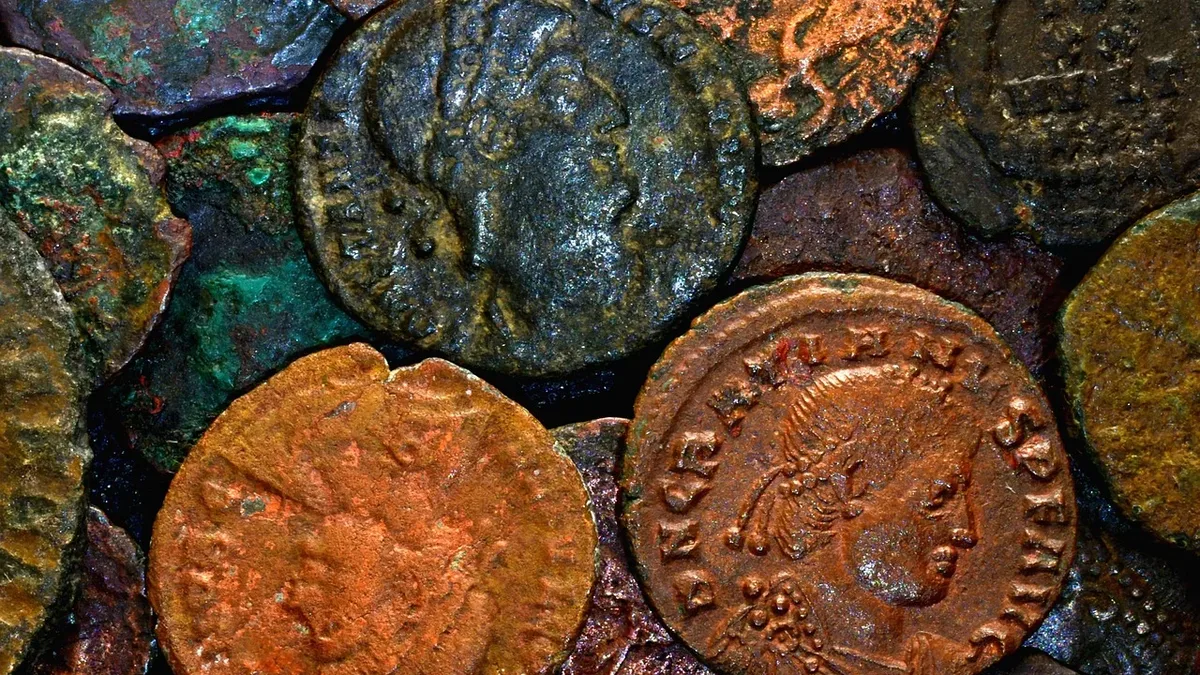
The hoard's most recent coin was minted in 124/125 A.D..D.). However, almost all the coins are older, with the bulk minted during the Flavian dynasty (69-96 A.D.). Archaeologists therefore believe the hoard was largely collected around 100 A.D. And buried two or three decades later.
The oldest coin is a denarius from the Roman Republic minted in 148 B.C., making it nearly 300 years old at the time of burial. Even the oldest and most worn coins remained valid currency. One bears a countermark confirming it retained the value of a silver denarius despite decades in circulation.
For ancient buying power, the hoard's silver weight represents more than three times the annual pay of a Roman legionary. Since half a legionary's salary was deducted for food and equipment, a soldier would have needed to save every denarius for six years to amass such a sum.
Public display and context
The hoard is now on display at the LVR State Museum in Bonn. It is being presented to the 300 archaeologists from across Germany currently attending the annual conference of the West and South German Association for Archaeological Research. The find provides a significant snapshot of currency and wealth in the Roman province of Germania Inferior during the early second century.