Roman-Era Man Found in Storage Jar at Bulgarian Fort
Archaeologists in Bulgaria have discovered the remains of a man inside a large storage jar at a Roman fort, alongside evidence of a violent attack in the
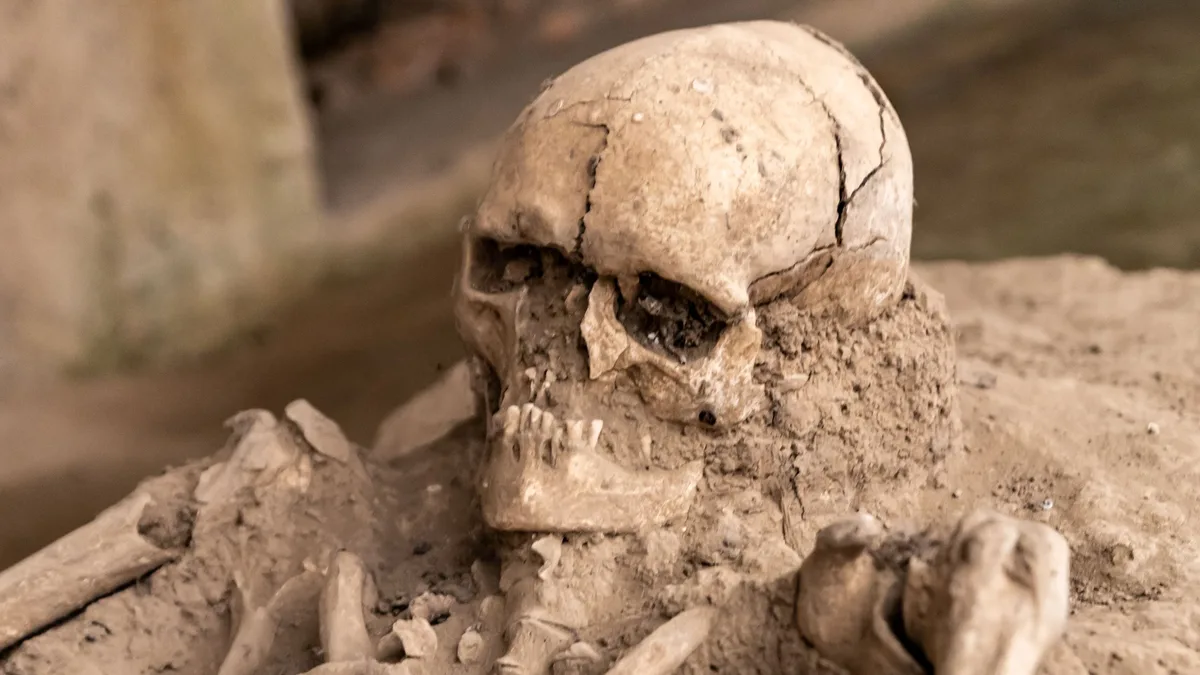
Archaeologists have uncovered the skeleton of a man inside a large Roman storage jar at the site of Deultum in southeastern Bulgaria. The discovery, reported by Live Science, includes two iron knives and a belt, and points to a violent event during the fort's final days in the fourth or fifth century A.D.
Lyudmil Vagalinski of the Bulgarian Academy of Sciences led the excavation at the Roman colony's gate tower. The team found the man's remains inside a dolium, a massive ceramic container used for storing grain or liquids. One knife was still in his belt, while the other was positioned between his legs, as if he was prepared to defend himself.
Evidence of a Sudden Attack
The area surrounding the jar revealed dramatic signs of destruction. Archaeologists found ashes, coals, blackened walls, melted glass, bronze coins, and the burned bones of domestic animals. According to Vagalinski, this evidence suggests residents received warning of an imminent assault. They likely herded their livestock into the fortress for safety before the attack began.
Since a layer of ash was discovered beneath the man's skeleton, Vagalinski theorizes the individual sought refuge in the jar after the fire had already started. "After the attack, the inhabitants of the city leveled the ruins of the tower and covered them with a new, higher floor," Vagalinski concluded. This act of rebuilding sealed the scene for centuries.
The Strategic Importance of Deultum
The Roman fort at Deultum was a strategically vital colony. Historical records indicate its soldiers frequently clashed with East Germanic tribes and later with the Huns during the turbulent fourth and fifth centuries. The site's location made it a key defensive point, but also a repeated target for invasion.
The discovery within the gate tower is particularly significant. This structure would have been a focal point during any assault. The presence of the man and the evidence of fire provide a snapshot of the fortress's violent end. The artifacts were not looted or moved, preserved exactly as they were left.
Artifacts from the Jar
The items found with the man offer clues about his life and final moments. The two iron knives and his belt are typical possessions for a Roman-era individual, possibly a soldier or a civilian caught in the conflict. The careful placement of the second knife suggests he was alert and ready to fight.
The bronze coins and animal bones were scattered in the ash around the dolium, part of the broader evidence of the fire. The melted glass and blackened walls complete the picture of intense heat.
Excavations at Deultum continue, with researchers aiming to learn more about the colony's final years. The jar burial provides a direct, human connection to a period of upheaval at the edge of the Roman Empire.