RAC Volunteers Drove into WWI, Ushering
Twenty-five British motoring enthusiasts, members of the Royal Automobile Club Volunteer Force, took their own cars to France in August 1914.
On August 25, 1914, Toby Rawlinson drove his silver Hudson roadster into Landrecies, France. A volunteer scout for the British Expeditionary Force, he was soon caught in a German assault, his car disabled by a curb. Rawlinson later wrote in his memoir Adventures on the Western Front that the British machine guns inflicted an appalling slaughter. He was the unofficial leader of the Royal Automobile Club Volunteer Force.
This improbable unit consisted of 25 motoring enthusiasts who brought their personal automobiles to the front at the outbreak of the Great War. They were ex-Olympians, big-game hunters, Boer War veterans, and wealthy heirs. Some, like the 47-year-old Rawlinson, were considered too old for regular enlistment. The British War Office needed their speed and mobility.
From Pall Mall to the Front Lines
The Royal Automobile Club, founded in London in 1897, was a hub for wealthy motorists. Its Pall Mall headquarters featured Turkish baths and a swimming pool. Members like Arthur Conan Doyle speculated about using automobiles in a future war. In late July 1914, after Austria-Hungary declared war on Serbia and Germany invaded Belgium, Britain entered the conflict.
Christopher D'Arcy Bloomfield Saltern Baker-Carr, a 36-year-old retired officer, was told by the War Office to register at the RAC. The club had offered to send cars to France. Baker-Carr hurried to Pall Mall, where hundreds applied. Two dozen men were selected.
The Drivers and Their Machines
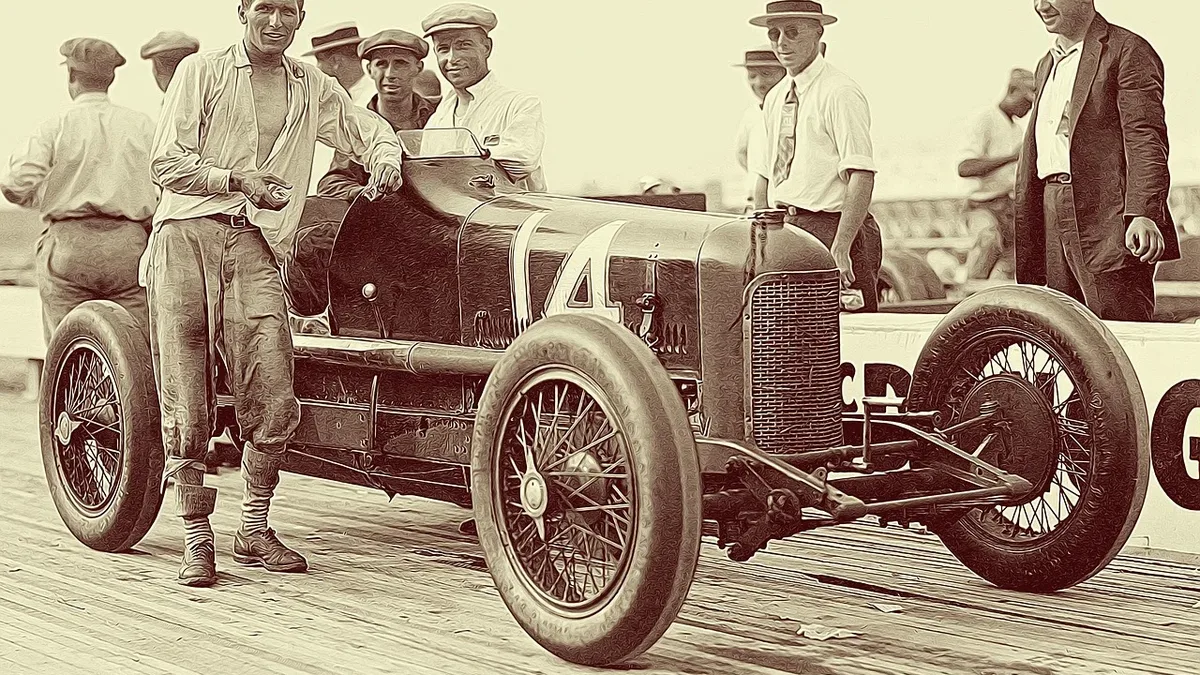
The volunteers arrived in an assortment of powerful and expensive vehicles. These were not standard military issue but the personal roadsters and racers of affluent gentlemen.
Jimmy Radley was a daredevil driver and heir to a coal-mining fortune. He had famously poured champagne into his Rolls-Royce's radiator at the start of the 1913 Alpine Trials. H. Stanley Westcott later switched to a sleek luxury automobile made by a Spanish manufacturer.
Witnesses to a New Warfare
For several months, these men served as chauffeurs, couriers, ambulance drivers, and scouts. They experienced the war's fast-moving initial phase, the retreat to Paris, the Battle of the Marne, the siege of Antwerp. They carried messages, identified enemy movements, and helped plug gaps in the Allied line. All of them survived.
They were present at the birth of modern, mechanized combat. The world of cavalry charges vanished into industrial-scale slaughter with machine guns, poison gas, and artillery. The RAC volunteers were not just transporting officers. They were watching the old ways of war disappear. Edward Shrapnell-Smith, a magazine editor, had earlier warned that the War Office's vehicles would have disgraced a third-class engineering shop. The volunteers' superior cars briefly filled a critical gap.
In July 1914, drivers from England, France, and Germany had still competed at the French Grand Prix in Lyon. German Mercedes outperformed French Peugeots. The RAC Journal had recently praised Germany as a touring ground with gentle, unsophisticated people. That illusion was shattered. The gentlemen drivers found themselves hurled into the grim mechanics of 20th-century conflict. Their contributions, long neglected, helped usher in the mechanization of war.