Protein analysis confirms Denisovan fossils in northern China
A 2026 study identifies 199,000-year-old fossils from China's Xujiayao site as Denisovan, using protein analysis to create the first morphology-based framework for identifying this ancient human lineage across East Asia.
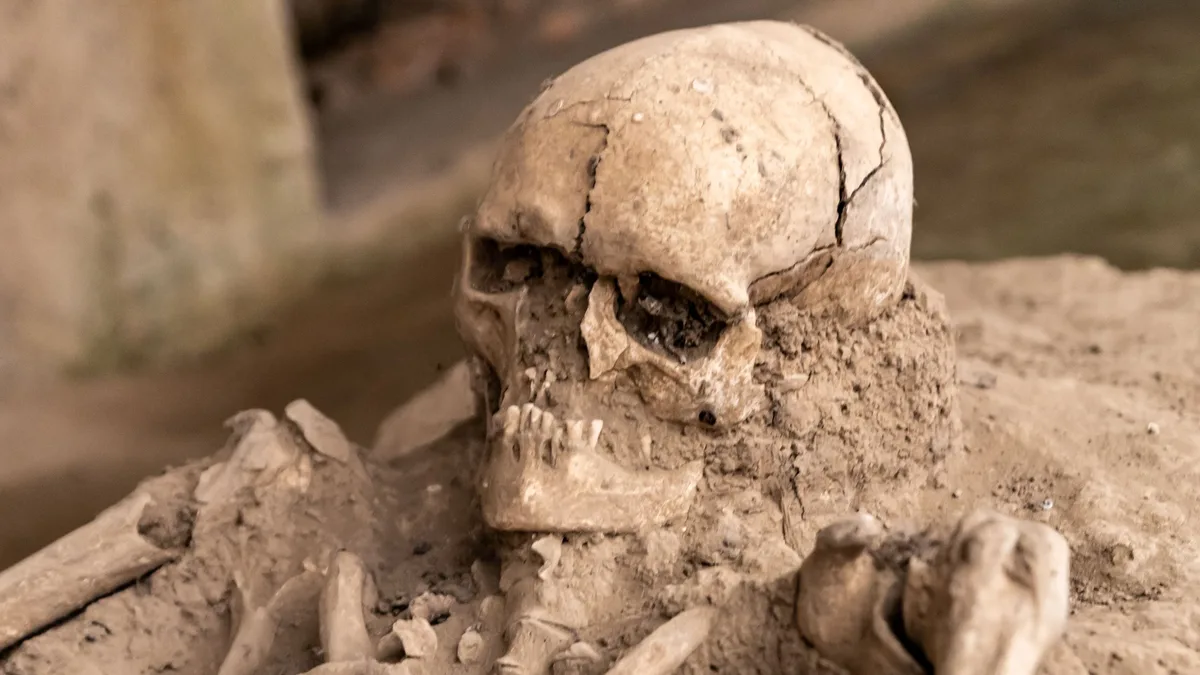
A new study has confirmed the Denisovan identity of fossils unearthed in northern China during the 1970s. Led by researchers Song Xing and Qiaomei Fu from the Institute of Vertebrate Paleontology and Paleoanthropology, the work provides the first morphology-based method to identify Denisovan remains using protein analysis and skeletal comparisons.
The research, published in the journal Nature, centers on the Xujiayao archaeological site in Hebei Province. Excavations between 1976 and 1979 yielded 20 cranial, mandibular, and dental fossils representing at least 16 individuals. Dating places this assemblage in the late Middle Pleistocene, roughly 199,000 to 138,000 years ago.
Palaeoproteomic analysis was key. Scientists extracted ancient proteins from two specimens. They identified 18 endogenous proteins. One collagen variant carried a mutation exclusive to Denisovans, not found in Neanderthals or modern humans. This molecular fingerprint settled a long-standing debate about the fossils' ancestry.
Protein evidence confirms Denisovan traits
Analysis of ancient proteins revealed key Denisovan-specific features. The team identified a unique R>K mutation in the COL1A2 collagen gene. Qiaomei Fu stated, "We identified 18 proteins in the fossils." This protein evidence allowed researchers to confidently assign the Xujiayao hominins to the Denisovan lineage.
With this molecular anchor, scientists used 3D computer models to reconstruct the bones and compare their shapes with other hominins. They described a distinct physical profile. Denisovans are now thought to have had low, flat skulls with thick bones. Their facial features included prominent brow ridges, flat cheek regions, a weak forward projection, and a moderately raised nasal bridge.
Fossil context and dating established
The Xujiayao assemblage dates to 199,000-138,000 years ago and represents 16+ individuals from the late Middle Pleistocene. The site is noted for one of the clearest stratigraphic records and richest fossil assemblages from this period in East Asia. The study compared the Xujiayao fossils with other regional remains, including the Harbin cranium and specimens from Dali, Jinniushan, and Hualongdong.
Shared traits emerged from these comparisons. Identified Denisovan characteristics include a low, broad cranial vault, thick skull bones, short mastoid processes, and simplified premolar chewing surfaces. This morphological framework suggests Denisovans were widespread. The study finds their fossils and genetic signals across Siberia, the Tibetan Plateau, northern and southern China, Taiwan, and parts of Southeast Asia, from around 300,000 to 45,000 years ago.
Leg bones from the Taiwan Strait suggest large-bodied Denisovans occupied diverse environments. Their genetic legacy persists, with Denisovan ancestry linked to populations across Asia, Oceania, and Indigenous America. The study establishes a morphology-based identification framework for Denisovans, 16 years after their initial molecular discovery in a Siberian cave.