Brazilian Construction Site Yields Giant New Dinosaur
A 20-meter-long dinosaur discovered during construction in Brazil reveals a 120-million-year-old link to Europe, suggesting ancient migrations across
Scientists have identified a new giant dinosaur species from fossils unearthed at a construction site in northeastern Brazil. The animal, named Dasosaurus tocantinensis, measured about 20 meters long and lived roughly 120 million years ago.
Its discovery provides fresh evidence for how massive dinosaurs dispersed across ancient landmasses. The dinosaur's closest known relative lived in what is now Spain, indicating a surprising evolutionary connection between South America and Europe.
Maranhão's Largest Dinosaur
Elver Luiz Mayer, a professor at the Federal University of the São Francisco Valley, calls it the largest known dinosaur for the state of Maranhão. "It's the largest known dinosaur for Maranhão, which has other species, but not sauropods like this one," he says. The region's other known dinosaurs, like the diplodocid Amazonsaurus maranhensis, reached only about 10 meters in length.
Mayer became involved in 2021 after archaeologists monitoring the Davinópolis construction project initially mistook the deep-buried bones for remains of large prehistoric mammals. Mayer suspected they were far older. "Given its depth of about eight meters, I realized that it was much older," he notes. The geological formation dated to the transition from the Lower to Upper Cretaceous, about 120 million years ago.
A Well-Preserved Specimen
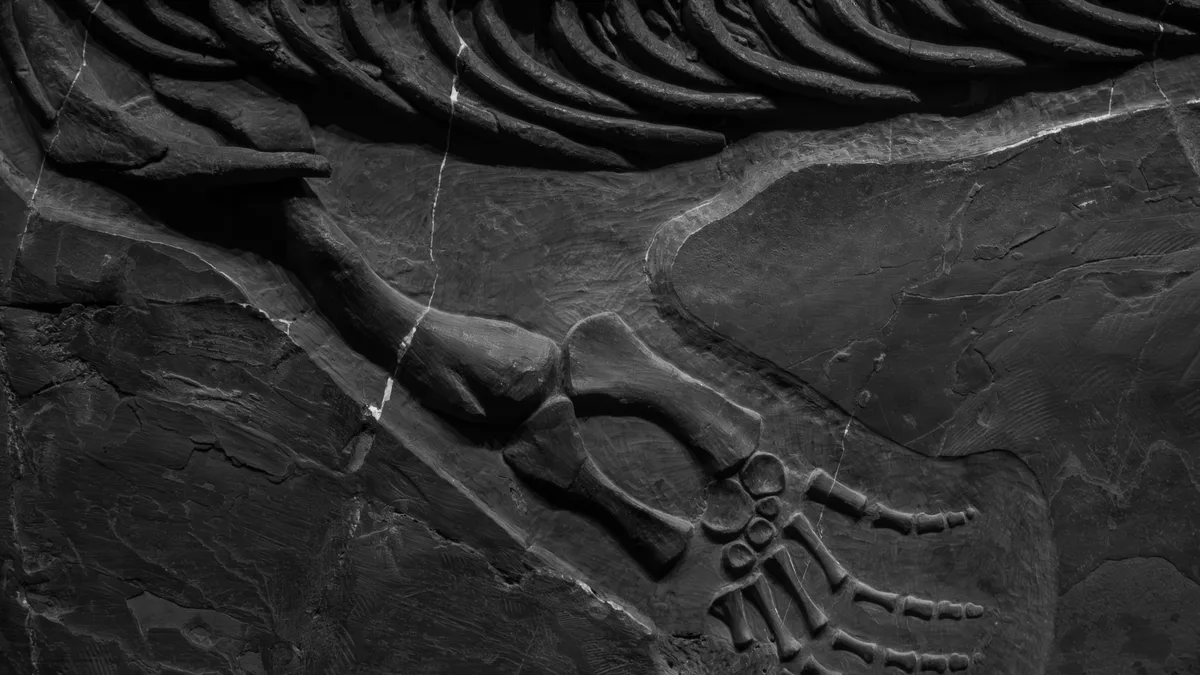
The fossilized skeleton is considered relatively complete for a dinosaur of its size. After extensive preparation, the specimen was returned to Maranhão and is now housed at the State Center for Natural History and Archaeology Research in São Luís.
Max Langer, a professor at the University of São Paulo who participated in the study, described the find. "Because it includes tail vertebrae, a 1.5-meter femur, ribs, foot bones, and arm and leg bones, this is considered a relatively complete specimen," Langer states. The research team believes more fossils from the same individual remain buried at the site.
Naming and Evolutionary Links
The species name Dasosaurus tocantinensis reflects its discovery location. "Daso" means "forest," referencing the wooded environment early Portuguese colonizers described as a dense tangle, or "maranhão." "Tocantinensis" refers to the nearby Tocantins River.
Researchers propose the ancestors of Dasosaurus migrated from Europe to South America via North Africa between 140 and 120 million years ago, when these regions were connected within the supercontinent Gondwana. Microscopic bone analysis led by Tito Aureliano and Aline Ghilardi of the Federal University of Rio Grande do Norte revealed a growth pattern blending older sauropod traits with those of later titanosaurs. This suggests some bone growth adaptations for enormous size appeared earlier in dinosaur evolution than previously thought.
Construction and Fossil Discovery
The find shows the dual role of major construction projects in paleontology. They can damage fossil deposits but also expose deep rock layers otherwise inaccessible to scientists. Max Langer points out the reliance on such activity in Brazil's tropical, vegetation-covered landscape. "If we map Brazil's fossil sites, we'll see highways and quarries," he says.
Both researchers stress the need for closer cooperation between developers and scientists to comply with fossil protection laws and ensure proper heritage preservation. The team is currently negotiating with the construction company for permission to conduct further excavations at the Davinópolis site. The research received support from the Fundação de Amparo à Pesquisa do Estado de São Paulo (FAPESP).