Machine learning study reveals Spinosaurus was predominantly submerged
Yale University researchers used machine learning and fossil data to determine Spinosaurus spent most of its life underwater, challenging previous assumptions about its aquatic behavior.

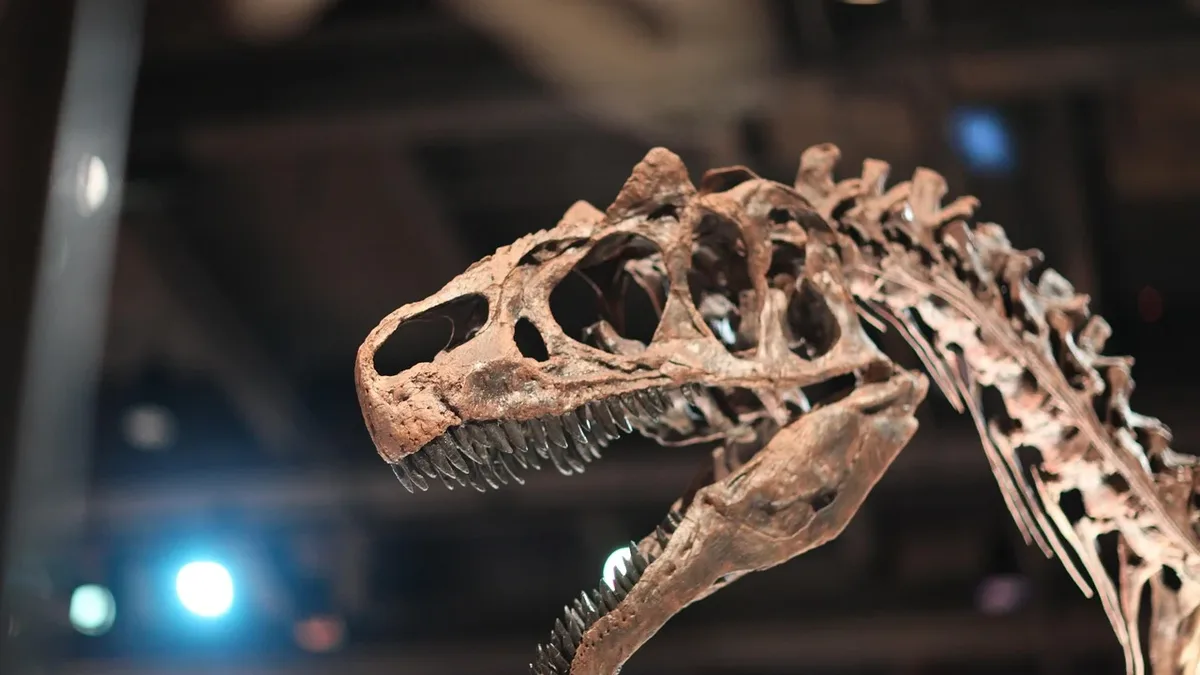
A new study published in the journal Current Biology uses machine learning to demonstrate that the giant dinosaur Spinosaurus spent the vast majority of its life submerged in water. Yale University researchers analyzed more than 11,000 measurements from Yale's Peabody Museum and other collections, including modern and fossil specimens, to reach this conclusion. The findings provide the first quantitative evidence resolving a decades-old debate about the aquatic lifestyle of this predator, which lived approximately 113-94 million years ago in what is now North Africa.
Researchers used photographs, computed tomography scans, and machine-learning models trained on living animals with known lifestyles. The models linked skeletal proportions to aquatic adaptation, with forelimb proportions proving particularly key for distinguishing aquatic from terrestrial habits. The team's models predicted soft-tissue swimming structures and high or complete aquatic adaptation in animals with more than 90% accuracy.
Methodology repurposed from WWII statistical models
The research applied a statistical approach originally developed during the Second World War to estimate enemy aircraft probability. This method was repurposed to assess aquatic adaptation in extinct species through the analysis of skeletal proportions. By applying this framework to the fossil record, the team could quantitatively estimate the likelihood of an animal being aquatic based on its bone structure.
Machine learning models trained on modern animals
Caleb Gordon, the study's lead author, developed the machine learning models. Gordon, a postdoctoral researcher at the Florida Museum of Natural History who completed his doctorate at Yale's Graduate School of Arts and Sciences earlier this year, trained the models using data from living animals with known aquatic habits. These models were then used to estimate the swimming structures and aquatic lifestyles of extinct species like Spinosaurus.
Spinosaurus vs. mesosaurs and Paleozoic marine reptiles
The analysis confirmed Spinosaurus was fully aquatic, but provided contrasting conclusions for other ancient reptiles. It showed that mesosaurs, small marine reptiles from 290-274 million years ago in regions now forming South Africa and eastern South America, regularly moved between aquatic and terrestrial environments, spending significant time on land. The study concluded that all Paleozoic marine reptiles before dinosaurs remained amphibious and did not fully lose their connection to land.
Paleontologists had long debated whether Spinosaurus hunted underwater or moved along shores and searched for prey in shallow water. The new machine learning analysis supports the idea that it spent the vast majority of its time submerged. The research was supported by the Yale Institute for Biospheric Studies, the IUCN Crocodile Specialist Group, and the National Science Foundation. Co-authors include Yale doctoral student Lisa Freisem and Christopher Griffin, an assistant professor of geosciences at Princeton University and a former Yale postdoc. The study's definitive conclusion is that Spinosaurus spent most of its life submerged in water.