Late Roman House and Pier Found on Corsican Coast
Archaeologists in Corsica have uncovered a 4th-century A.D. house carved into bedrock, located just 30 meters from a contemporary ancient pier.
A 1,600-year-old Roman house, its foundations cut directly into the schist bedrock, has been discovered on the Corsican coast. Found less than 100 meters from the sea, the dwelling sits roughly 30 meters uphill from a late Roman-era pier uncovered the previous year, indicating a small seaside settlement at Meria in Cap Corse.
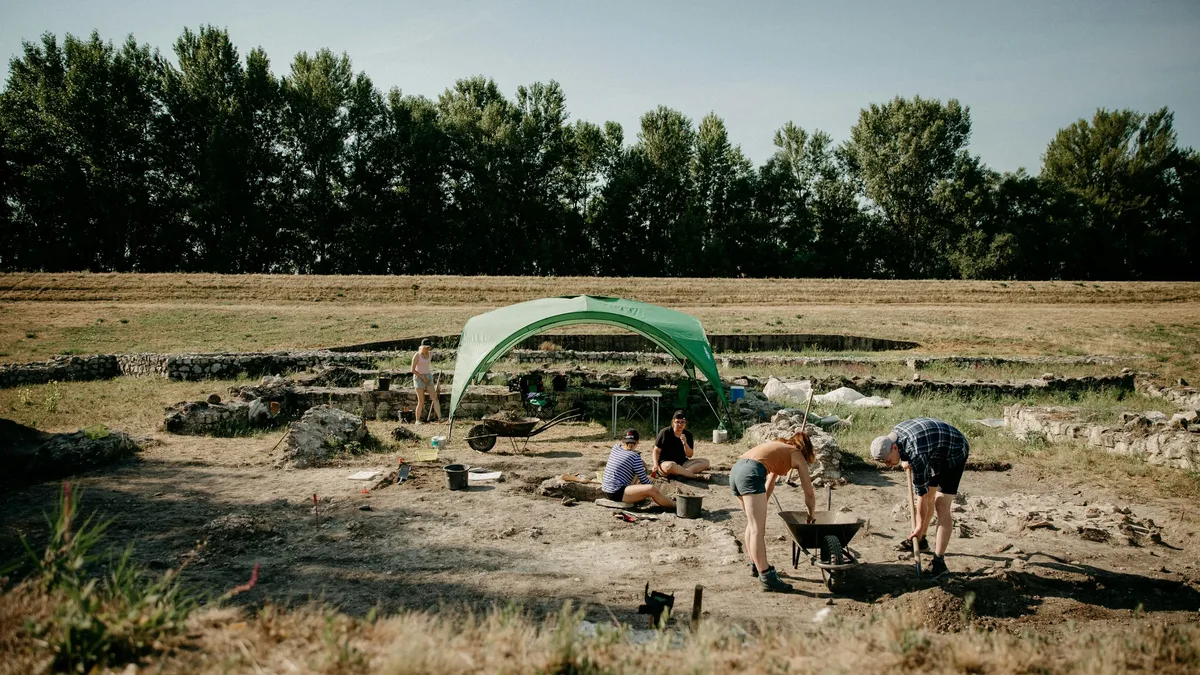
The preventive excavation, mandated by the island's regional archaeology service, took place in May and June 2026. It covered 150 square meters on a rocky promontory overlooking Meria Bay. This was only the second such excavation ever conducted on the Cap Corse peninsula.
A Building Integrated with the Bedrock
The structure measures at least 50 square meters and is divided into two parts. Builders first carved into the local schist to create a firm seat for the foundations. They then used the quarried stone, cut into squared blocks, to build the walls. These blocks were laid in a precise alternating pattern of stretchers and headers to strengthen the masonry.
The living rock itself was incorporated into the building's design, forming the interior face of some walls. Large, vertical schist slabs, wedged in place with stones and wooden posts, were used to partition rooms. Postholes with stone supports found throughout the building likely held wooden uprights for a tiled roof, evidenced by numerous tegulae roof tiles in the abandonment layers.
Evidence of Domestic Life
Refuse pits dug into the corners of the rooms contained the material that confirms the building was a home. The pits held fragments of cooking pottery, glass tableware, iron tools, and a catillus-the upper stone of a hand mill. These items all point to daily domestic activities.
Trade Links Beyond the Island
The ceramic evidence from both this dwelling and the 2025 pier excavation is rare for Corsica. It includes late antiquity pottery types barely documented on the island and a notable number of imports, such as a North African shard decorated with the Titan Oceanus. This assemblage places Meria within Mediterranean trade networks that largely bypassed the rest of Corsica. Copious metal, glass, and stone materials also attest to a relatively high level of accessible artisanal production.
The proximity of the house to the contemporary landing structure suggests Meria was a more complex coastal settlement than previously known. An earlier discovery of a white marble altar support dedicated to Emperor Claudius further supports the hypothesis of a settlement with regular interactions with the wider Roman world. The relationship between the dwelling and the port infrastructure will be a focus of further study.