World's Oldest Shipwreck Found Off Turkey's Kekova Island
A 4,700-year-old shipwreck discovered near Kekova, Turkey, has been confirmed as the world's oldest. The site, containing 30 amphorae and three stone anchors, reveals new details about Bronze Age Mediterranean trade and onboard food production.
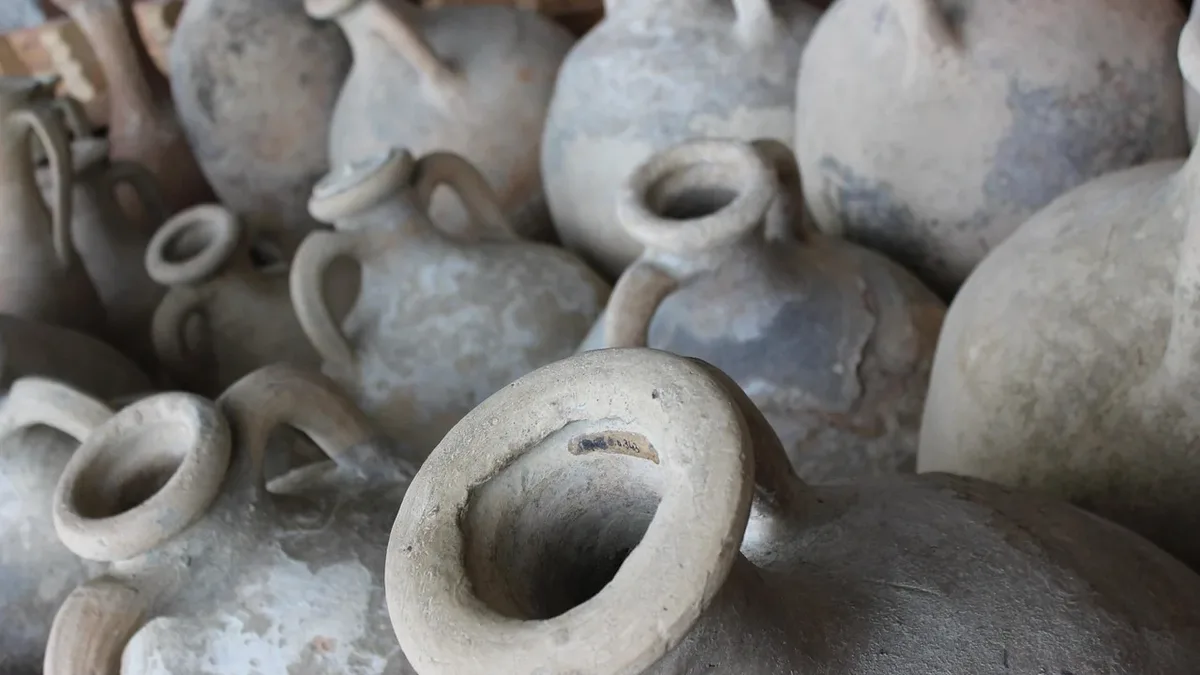
A 4,700-year-old shipwreck near Kekova, Turkey, has been identified as the world's oldest. The discovery, made four years ago at a depth of 30 meters, includes a 10-meter-long hull and over 30 large amphorae, pushing back the known timeline of seafaring trade networks in the eastern Mediterranean.
Only ceramic vessels remain on the sea floor; the wooden ship structure did not survive. Radiocarbon dating was impossible, so archaeologists determined the wreck's age by analyzing the shape of the amphorae. The artifacts date to between 4,400 and 4,700 years ago, placing them in the early Bronze Age around the time the Great Pyramid was built in Giza. This makes the wreck older than the previous record holder, a 4,200-year-old wreck off the Greek island of Dokosa.
Evidence of Ancient Trade and Cargo
The amphorae are the key to understanding the ship's journey. They feature two handles, a middle bulge, and a flat base, matching Egyptian and Levantine examples from the same period. Clay analysis suggests the vessels were probably made in workshops in the Jordan Valley. Similar amphorae have been found in Egypt, Troy, and Crete.
Traces of original contents remain in some jars. The viscous, glossy residue could indicate they carried olive oil, wine, or tree resins. One amphora has distinctive markings and two holes in its body, suggesting a different use. Researchers hypothesize it may have been used as a churn for making cheese or butter. This implies sailors may have brought goats on voyages to produce dairy products at sea.
| Artifact Type | Quantity Found | Notable Features |
|---|---|---|
| Amphorae | 30 | Two handles, middle bulge, flat base; some with residue |
| Stone Anchors | 3 | Help date the wreck to the same period |
Expert Analysis and Confirmation
Hakan Öniz, a professor at Akdeniz University in Antalya who led the excavation, stated the team was generally confident this is the world's oldest shipwreck. The amphorae were initially thought to be much newer. Öniz compared them to vessels found near Egypt's Giza pyramids and noted striking similarities.
After this comparison, researchers invited Australian archaeologist and amphora expert Karin Sowada to examine the wreck. The team reached a consensus following her examination. The find provides concrete evidence for reconstructing trade networks that connected different territories via eastern Mediterranean routes. Turkey’s culture and tourism minister, Mehmet Nuri Ersoy, announced the discovery. Ersoy emphasized the importance of the evidence for understanding Anatolia's maritime history and sea-linked trade networks.
Future Research and Preservation
The artifacts are now being conserved by specialists. They are destined for the upcoming Mediterranean Underwater Archaeology Museum in Antalya, scheduled to open in the next few months. Minister Ersoy reaffirmed a commitment to protecting submerged cultural heritage and thanked the research team. The amphorae will be available for future study and public engagement, offering continued insights into ancient cultural interactions.
The discovery fundamentally alters our understanding of Bronze Age maritime capability. It shows that extensive trade from the Levantine coast toward destinations like Troy or Crete was established centuries earlier than proven before. The conserved amphorae await display, holding secrets from the dawn of long-distance sea trade.