Rome's Largest Roman Wall Mosaic Opens to Public
A 160-square-meter wall mosaic, the largest known from the Roman world, is now on public view at the new Museum of the Baths of Trajan.
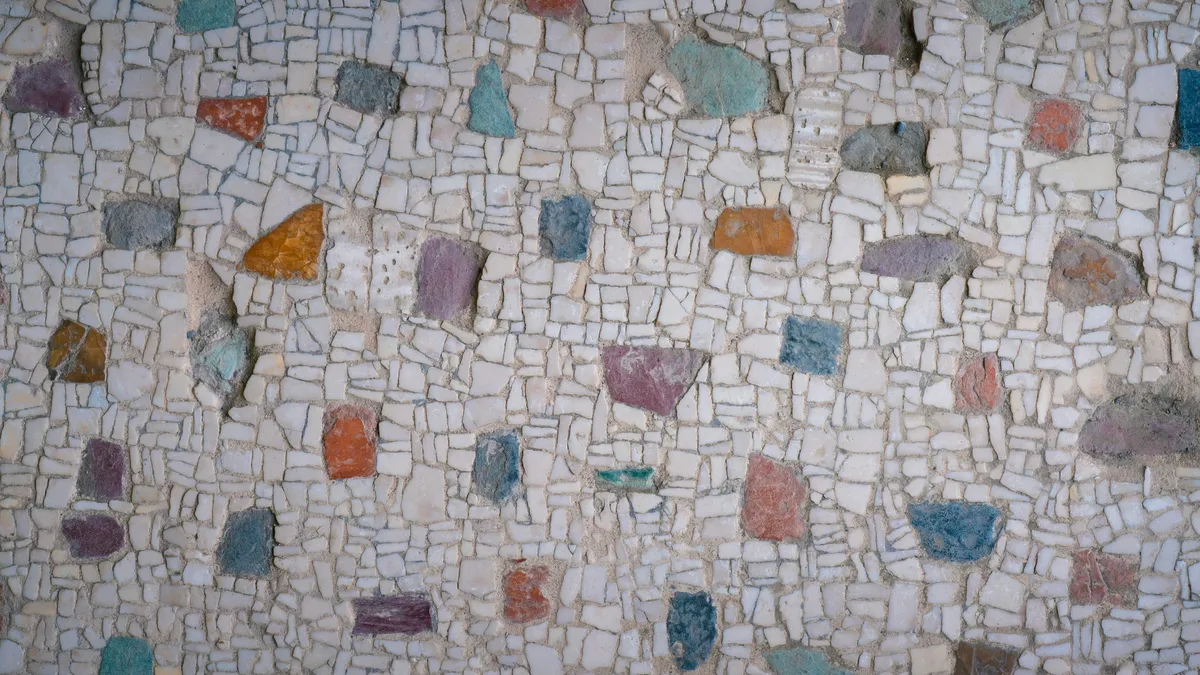
The largest ancient wall mosaic in Rome has been opened to the public for the first time. Measuring 10 meters high and 16 meters wide, the 1st-century artwork is displayed at the new Museum of the Baths of Trajan on the Oppian Hill.
It depicts a two-tiered theatrical backdrop, or scaenae frons, featuring columns, marble-inlaid walls, statues, and figures including Muses, a bearded philosopher, and Apollo.
The Mosaic's Discovery and Context
The mosaic is part of the Baths of Trajan, an enormous complex built by Emperor Trajan in 109 A.D. The baths covered 80,000 square meters and were constructed over the remains of Nero's Domus Aurea. While the mosaic itself is not believed to be from the Domus Aurea, many of its tesserae are missing, likely taken for reuse during the bath's construction.
Most of the Great Mosaic was found in 2011. Recent excavations uncovered a new section showing maritime villas on a Roman port in incredible detail. Archaeologists are unsure if the port depicted is real or an idealized version.
Public Access and Preservation
The excavation of the mosaic is ongoing. Despite this, cultural heritage authorities have opened the underground gallery to the public. Access is currently limited to a few days a week for small, ticketed groups. Tours are guided and free but require advance reservation.
The Painted City Fresco
The same structure houses the largest wall fresco ever discovered from the Roman era. Called the Painted City, it offers a bird's-eye view of a walled city by the sea. The fresco shows high walls, towers, gates, a theatre, and golden statues. Neighborhoods are painted in such detail that house windows are clearly visible.
"If it did exist, it was extremely important," said Claudio Parisi Presicce, Rome's heritage chief. The fresco was first unearthed in 1997 and has now been restored. A walkway has been built above the room so visitors can view the works from a height.
Museum Exhibits and Infrastructure
The museum also displays huge lead pipes, or fistulae, that supplied water to the Baths of Trajan. These artifacts highlight the engineering behind the massive bath complex. The public opening marks a significant step in presenting this layered archaeological site, where Trajan's baths literally built upon Nero's palace.