1,700-year-old church found under Turkish lake
Archaeologists in Turkey have uncovered a small church beneath a basilica at Lake İznik that may be the site of the 325 AD First Council of Nicaea.
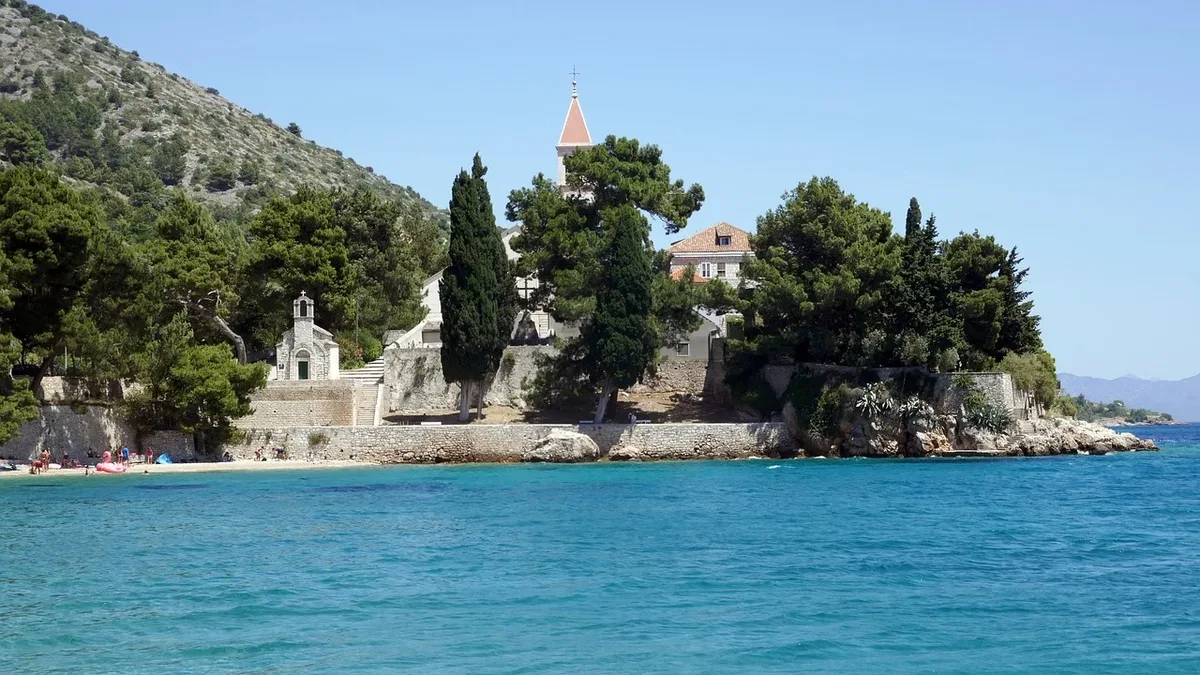
Archaeologists have identified the potential site of the First Council of Nicaea, a pivotal gathering of Christian bishops that occurred in A.D. 325. According to Mustafa Şahin, an archaeology professor at Bursa Uludağ University leading the dig, the discovery involves a smaller structure located beneath a larger basilica under Lake İznik. \Nicaea was an ancient Greek city situated in modern-day Turkey on the shores of Lake İznik, also known as Lake Nicaea. The council itself sought to resolve theological disputes and resulted in the adoption of the Nicene Creed, a fundamental statement of faith. During this period, Constantine I ruled the Roman Empire, having legalized Christianity and reportedly playing a central role in organizing the event.
The excavation team first identified a larger church beneath the lake in 2014. Since the following year, their work has gradually revealed the remains of a smaller church situated directly under it. Şahin noted that a pavement floor from this smaller building sits approximately 30 centimeters below the basilica, indicating that it dates back to an earlier period.
Şahin points to Eusebius of Caesarea, an attendee of the council, who described the meeting place as a small church or a "house of prayer.\" He argues this find aligns with that historical description better than the later basilica. While the exact dimensions of the smaller church remain unknown, Şahin hypothesizes it could be the Church of Neophytos, while the upper structure is the Church of Holy Fathers. Neophytos was a Nicaean Christian killed in 303, and the later church was named to honor the council.
Historical records suggest the smaller church was destroyed by an earthquake in A.D. 368. The larger basilica was subsequently constructed on the same site in A.D. 380. To date, researchers have not found any walls or decorations from the older structure. Şahin stated that because only the stone foundation pavement survives, the original building may have been constructed of wood.
Experts not involved in the project have expressed caution regarding the interpretation. They suggest that while the bishops were present, the most significant meetings likely took place within Constantine I's imperial palace rather than a church. However, the palace has not yet been located and may also be submerged beneath the lake.
Richard Kim, a classics professor at the University of Illinois Chicago, noted it remains uncertain if bishops met in this specific church. Charles Odahl, a history professor at Boise State University, also cautioned against definitively identifying the church as the meeting site, noting the council could have occurred in the imperial palace near Lake İznik.
David Gwynn, a historian at Royal Holloway, University of London, stated that the evidence links the earlier church to the early fourth century. He observed that the council lasted for over a month and involved hundreds of bishops and perhaps 2,000 staff members. Gwynn believes the excavations provide significant insight into the era despite the lack of a confirmed location for the palace.