Punín-2 Facial Reconstruction Reveals 3,000-Year-Old Andean Man
A digital facial reconstruction of the Punín-2 skull, from Ecuador's Andes, depicts an Indigenous American man who lived roughly 3,000 years ago.

The face of a man who lived in Ecuador's Andes Mountains approximately 3,000 years ago has been digitally reconstructed from the Punín-2 skull. The work provides new visual insight into the ancestry of ancient Indigenous American populations in South America.
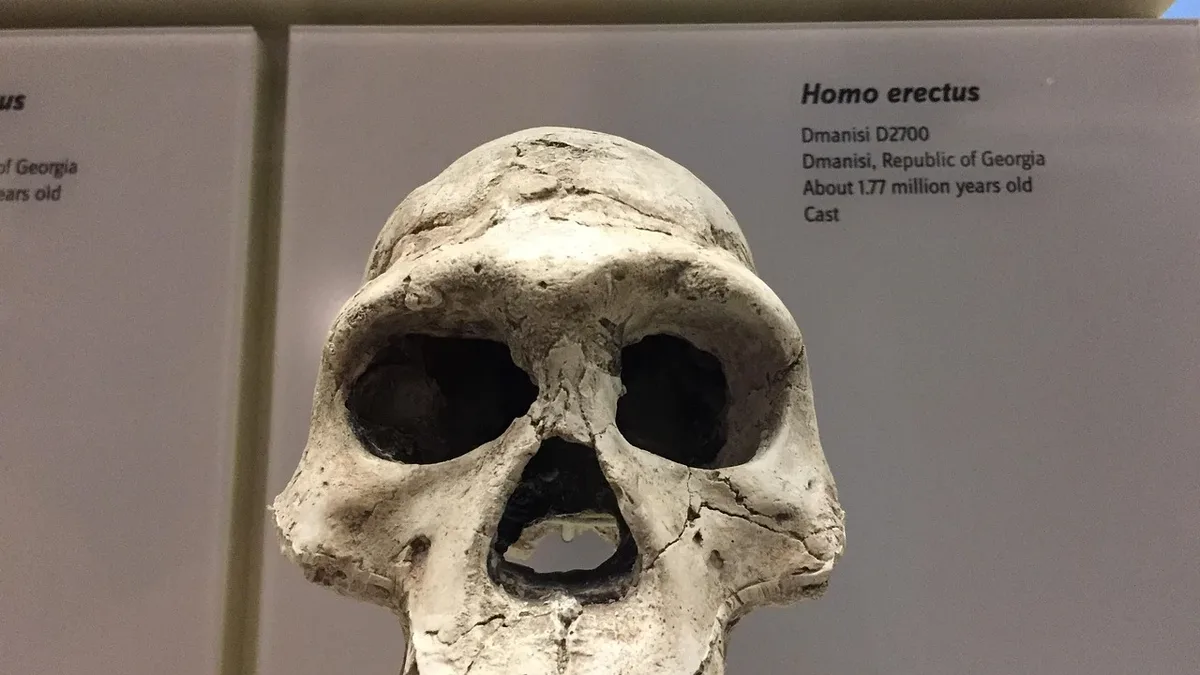
The skull known as Punín-2 was discovered in a ravine in the Chimborazo region of Ecuador in the 1970s. It is nearly complete. The man represented by Punín-2 lived approximately 3,000 years ago, though some reporting places his date between 3,000 and 4,000 years before present. A frequently cited date of about 1240 B.C. Came from a human femur found among other remains, not from the skull itself.
Punín-2 is tied to an older archaeological debate involving Punín-1, a similar skull found in the same ravine in 1923. Punín-1 was later radiocarbon dated to about 7,000 years ago, weakening earlier claims that it was as old as nearby Pleistocene animal fossils.
Methods and collaboration in the facial reconstruction
British forensic craniofacial anthropologist Christopher Rynn led the facial reconstruction of Punín-2. The National University of Chimborazo led the overall effort. The Polytechnic School of Chimborazo produced a 3D scan of the skull.
Rynn used digital techniques, partial physical reconstruction with wax, and reference data on facial tissue thickness. He initially limited information about the skull’s origin to avoid bias from assumptions about its background. Local people from Chimborazo, who are likely descended from Punín-2, were consulted on details not preserved in the bones. They provided guidance on hairstyle and eye setting.
Results and interpretation of the reconstructed face
Physical analysis of the skull suggests the man was about 50 years old when he died. The finished image shows an older man with black hair parted in the middle. The facial reconstruction depicts an Indigenous American man, roughly in his 50s, who died more than 3,000 years ago.
Rynn explained that the man descended from an ancestral group of North Siberians and East Asians. He stated the skull’s shape is consistent with Indigenous American ancestry. Christopher Rynn said: "Punín-2 resembles an East Asian skull from the front, but not at all from the side." The hairstyle and some surface features of the reconstruction are interpretive, while the skull provides the main anatomical basis. Rynn noted, "The hairstyle is very specific. If it’s wrong, it looks like a different tribe."
Limitations, future work, and public engagement
The reconstruction does not establish the genetic ancestry of the Punín-2 individual. The team hopes to conduct ancient DNA testing on both Punín-1 and Punín-2 skulls. Rynn said, DNA will tell us the true genetic lineage.
The digital face was shown to a small group of people from Chimborazo described as likely descendants. Rynn called the reconstruction a portrait of their actual ancestor. A physical bust using real hair is planned for 2027. Researchers are seeking support for further work on Punín-1 and genetic testing.