Crocodile survival after dinosaur extinction linked to climate refuges
A new study reveals crocodile relatives survived the asteroid impact 66 million years ago by relying on warm tropical refuges and key biological traits like ectothermy and flexible diets.
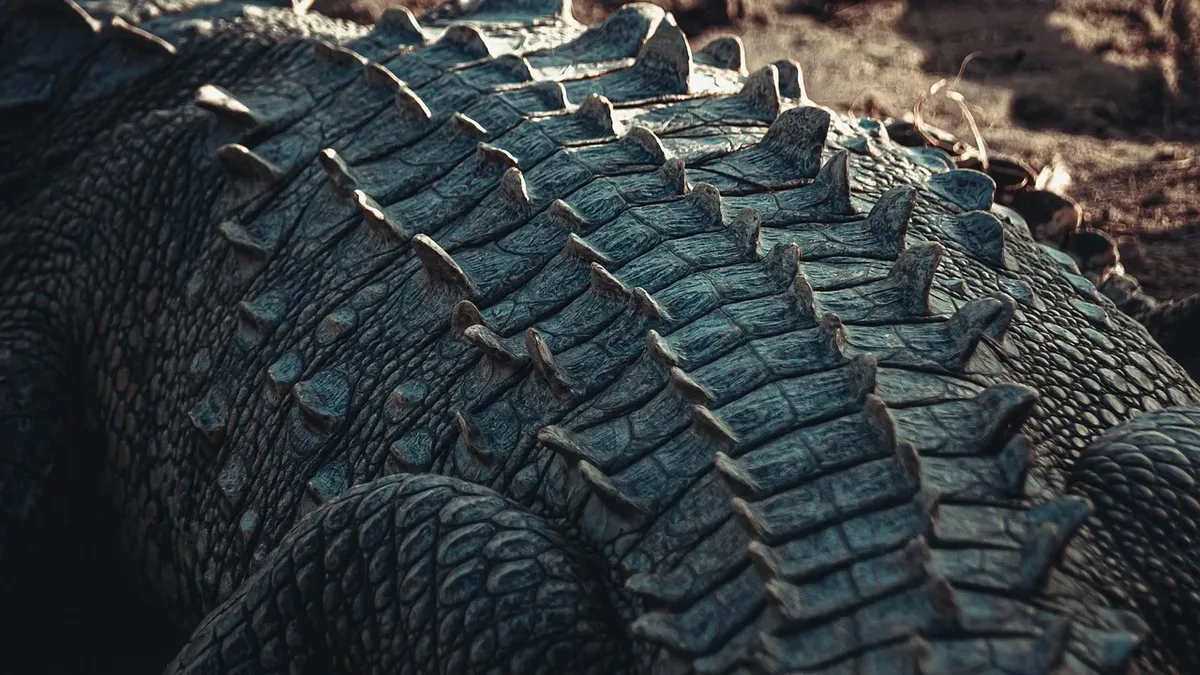
Crocodile relatives survived the asteroid impact that wiped out the non-avian dinosaurs 66 million years ago because of their long-term preference for warm climates. Research published on October 30, 2026, in Science Advances explains how these reptiles endured the catastrophe by remaining in tropical and subtropical refuges where conditions stayed habitable. The study, led by University College London researchers, combined fossil analysis with climate modeling to trace survival patterns across 245 million years of evolutionary history.
Fossil records and climate simulations suggest tropical refuges could have remained suitable after the dinosaur-killing Chicxulub impact. Warm regions near the equator may have offered crocodile relatives a sanctuary when global conditions deteriorated. Suitable habitats for non-avian dinosaurs contracted much more severely after the impact. The findings indicate that favorable temperatures were probably one reason crocodiles survived the mass extinction, though climate alone cannot fully explain their persistence.
Climate refuges and geographic range shifts
Fossil and climate data show crocodile relatives found stable habitats near the equator and expanded into high latitudes during warm periods, then retreated as climates cooled. The team assembled more than 7,000 fossil occurrence records and an evolutionary tree containing over 400 living and extinct species. Their reconstructions reveal a consistent pattern of following warmer conditions as the planet's climate changed.
Crocodile relatives lived at high latitudes across North America, Europe, and Antarctica during the warm early Eocene around 50 million years ago, when Earth was about 10°C warmer than today. As global temperatures dropped, their geographic range contracted toward warmer tropical regions over millions of years. Climate simulations testing the aftermath of the asteroid impact showed that with sunlight reduced by 5% or 10%, warm equatorial areas remained climatically suitable. Only the most extreme simulation, with a 15% reduction in sunlight, eliminated these potential refuges.
| Climate Simulation | Sunlight Reduction | Equatorial Refuge Suitability |
|---|---|---|
| Moderate | 5% | Remained suitable |
| Moderate | 10% | Remained suitable |
| Extreme | 15% | Became unsuitable |
Volcanic carbon dioxide increased the geographical extent of suitable climates in some simulations, though increased carbon dioxide did not affect climate suitability for crocodiles in others. The deep-time climate maps use roughly five-million-year intervals, leaving shorter-term changes unresolved outside the separate impact simulations.
Evolutionary flexibility and extinction survival
Crocodile lineages endured multiple mass extinctions by adapting to changing climates, with key survival traits including ectothermy, flexible diets, and habitat versatility. The wider crocodile lineage, called Pseudosuchia, originated about 250 million years ago and has survived at least two of Earth's five major mass extinction events. Their evolutionary history spans 250 million years.
Being ectothermic, or cold-blooded, means crocodiles need less food than endothermic animals like mammals. They can also live partly in water and have flexible diets. Smaller body size and semiaquatic lifestyles further contributed to their survival. The authors note two major exceptions to the warm-climate preference rule, with evolutionary changes occurring around 94 million years ago during the Cretaceous Thermal Maximum and 34 million years ago in Australia, where some crocodiles evolved to tolerate arid, desert-like environments.
Crocodile diversity declined after the dinosaur extinction, with ancient relatives including 40-foot 'super crocs' like Sarcosuchus and land-dwelling forms such as Postosuchus failing to persist. Modern crocodiles now face a reduced ability to move into newly suitable habitats due to barriers like cities, agriculture, and roads. The study was led by Dr. Alfio Alessandro Chiarenza of UCL Earth Sciences, with contributions from Professor Philip Mannion, and was funded by The Royal Society, the Leverhulme Trust, and the National Environment Research Council.