Etruscan tombs used sound and light for immersive ritual
Acoustic and AI analysis of two fifth-century B.C. Etruscan painted tombs reveals they were engineered as multisensory environments.
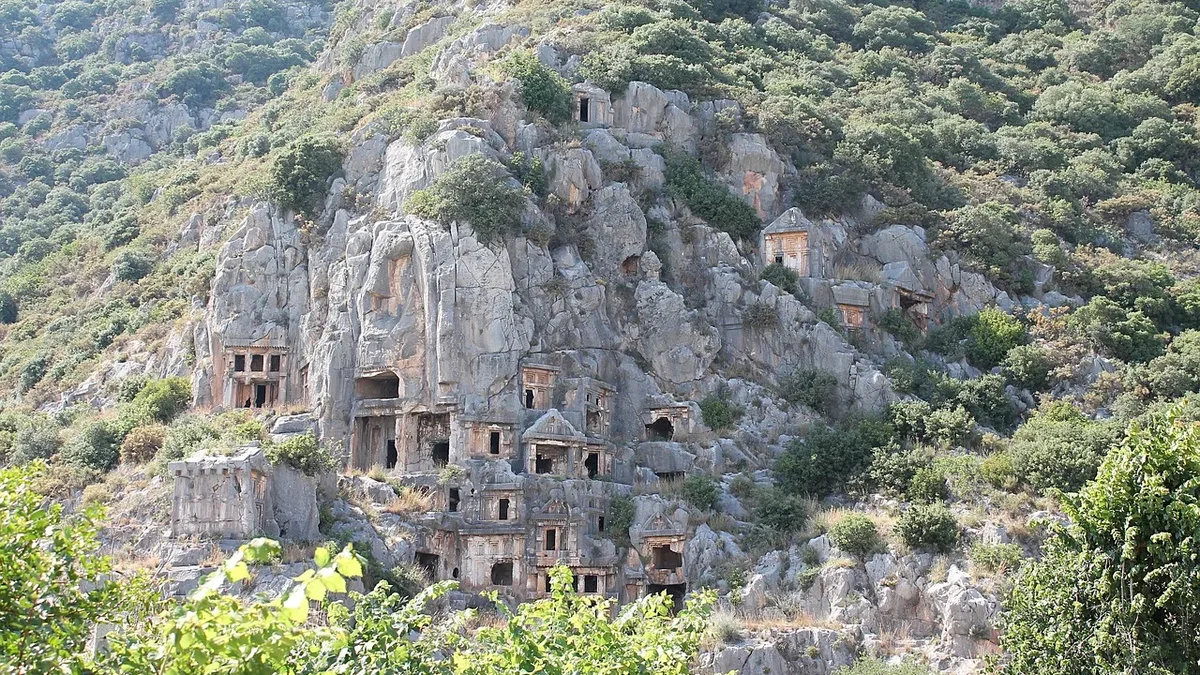
New research reveals how two fifth-century B.C. Etruscan tombs were engineered to create immersive, multisensory environments. The study of the Tomba dei Demoni Azzurri and Tomba del Gallo shows they used acoustics, light, scent, and architecture to engage the living in ritual experiences, not just house the dead. This work redefines these spaces as dynamic, sensory-rich transitional zones designed for performance.
The University of Oxford-led Sounds of Silence project used acoustic techniques to investigate the tombs' soundscapes. The research suggests the design aimed to affect visitors through an immersive environment akin to a modern 3D film. The tombs, located in towns such as Tarquinia, Chiusi, and Orvieto in central Italy, were built for Etruscans of higher socioeconomic and political status. They may have been kept open throughout the year for rituals commemorating important dates, festivals, and worship of the dead.
Architectural features were carefully crafted. The entrance passage features narrowing walls and a descending axis, creating a liminal stage to orient the body before entering the burial chamber. Trenches, benches, and niches are carved into the floor and walls. These elements mediated between order and chaos, memory and transformation. The research posits the tombs were transitional spaces between life and death, potentially used to perpetuate the legacy and power of families or clans.
Technology reveals ancient performance
Using acoustic analysis, AI, and digital reconstruction, researchers from Oxford and Duke uncovered how light, sound, and spatial design worked together. The study, titled 'Performing Power and Transitional Space: the Use of Acoustics and Multimodal AI in Etruscan Painted Tombs,' combined these technologies to capture the 'performing power' of the sites. At Duke University, the Neuroartifact project used neuroscience and AI to study the cognitive impact of archaeological artefacts, building on this interdisciplinary approach.
The two tombs created distinct sensory experiences. The Tomba dei Demoni Azzurri, or Tomb of the Blue Demons, exhibits exceptionally long reverberation and echoes, creating dramatic sound effects. This tomb induces perceptual disorientation. In contrast, the Tomba del Gallo, or Tomb of the Rooster, privileges visual attention and architectural discipline of gaze.
A multisensory ritual environment
Ancient lighting, from beeswax and tallow candles, incense burners, and torches, played a key role. Torchlight flickering across painted figures would have created movement amid shadows. Incense and the smell of libations added another sensory dimension. Researcher Jacqueline Ortoleva described the scene in the Blue Demon tomb: "Merry banqueters on the rear wall appeared unaware of the demons crawling up the side wall, as though ready to burst into the chamber itself."
The architectural and symbolic elements were designed to shape perception. The study suggests the tombs were sensorily immersive environments intended for ritual performance by the living. This challenges the view of them as static burial chambers.
Extending the research
The researchers aim to reconsider the category of funerary architecture throughout the ancient Mediterranean and beyond. The work is being extended to investigate exterior landscapes used for ritual activities in the wider southern Mediterranean using similar acoustic and AI techniques. This expansion seeks to understand how sensory manipulation was employed in broader ritual contexts.