Thracian Nymphaeum Hosted Pagan Rites Into Fifth Century
A Thracian temple in southeastern Bulgaria, built in the third century A.D., was used for pagan rites into the mid-fifth century.
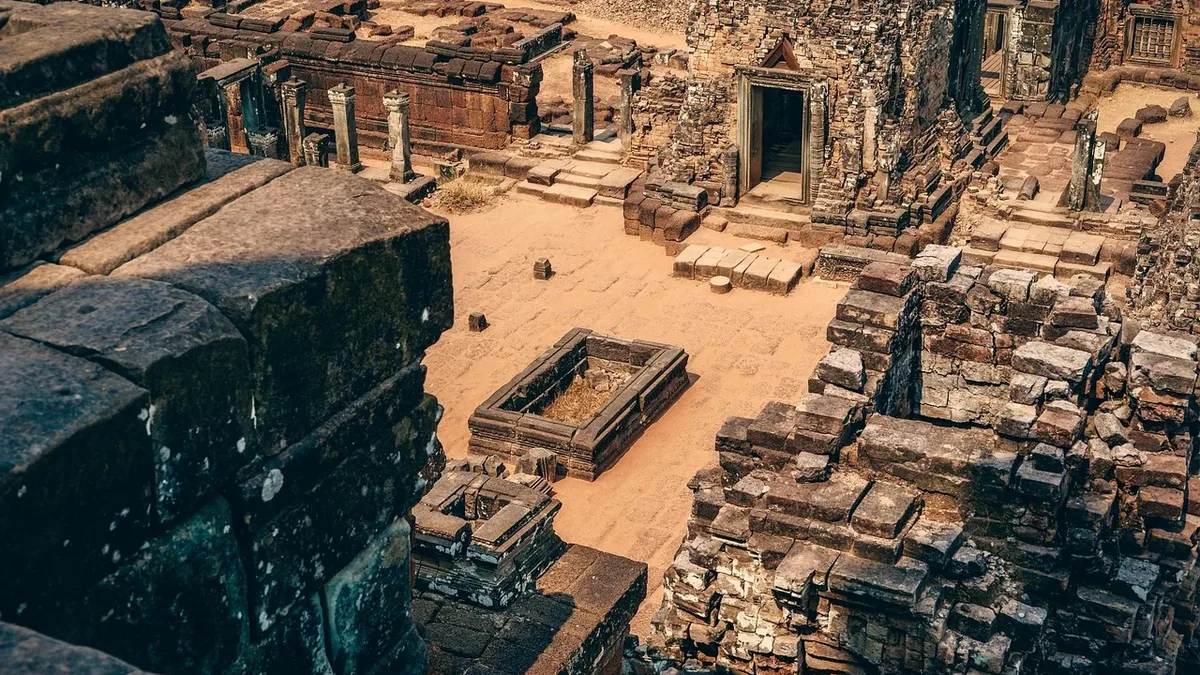
A Thracian temple at Balak Dere continued to host pagan rites well into the fifth century. This occurred long after Emperor Theodosius I banned all pagan rites in November 392 AD. Ivaylo Kanev, chief curator at Bulgaria's National Museum of History, stated that people conducted pagan rites at the temple into the middle of the fifth century. Worship at the site may have persisted for over fifty years after the imperial ban.
Physical characteristics and function
The trapezoid-shaped temple measured 49 feet long. It featured three specialized rooms linked by doorways. The largest room held an altar. Archaeologists believe the middle room was used for sacrifices. The third room may have served as storage for offerings.
A water channel ran around the entire building. This feature identifies the structure as a nymphaeum, a shrine to nymphs. The temple was decorated with a marble relief. It is thought to depict three nymphs and the mother goddess Cybele.
| Feature | Description |
|---|---|
| Length | 49 feet (15 meters) |
| Shape | Trapezoid |
| Rooms | 3 in a row |
| Key feature | Perimeter water channel |
| Decoration | Marble relief of nymphs and Cybele |
Context within regional history
The site is located in southeastern Bulgaria near Ivaylovgrad. It sits beside the Arda River, less than 30 kilometers from Edirne, Turkey. The temple was found within a walled area covering approximately one hectare.
It was discovered near Villa Armira, a Roman mansion built in the second half of the first century AD. That villa contained 22 ground-floor rooms and held the only Roman-period mosaic portraits found in Bulgaria. Villa Armira was burned and looted in the second half of the fourth century. The temple's discovery may represent one of the last pagan temples of the Thracians in Western Thrace.
Historical timeline of destruction
Theodosius I signed a law banning every pagan rite in November 392. Another law from February 391 had already forbidden entering pagan temples. Despite these bans, evidence suggests the temple at Balak Dere remained active.
A burned layer indicates the temple eventually succumbed to fire. Its destruction may have occurred in the middle of the fifth century. The excavation season for the site ended in 2026. The work was funded entirely through a Ministry of Culture project with local municipality support.
Nymphs were female nature spirits associated with water, springs, caves, forests, and mountains. Cybele originated from Phrygia in central Anatolia. Rome adopted her as Magna Mater in 204 BC. A study from Trakya University documents 72 published finds of Cybele in Thrace, with the earliest dating to the sixth century BC.
Later, a lead amulet with a Cyrillic inscription was found in a layer from the early tenth century. It bore the names Nikola and Pavel. This amulet has been attributed to a Bulgarian garrison during the rule of Tsar Simeon the Great, who reigned from 893 to 927. The temple's destruction may have occurred in the middle of the fifth century.