Semigallian multiple burial reveals early Viking Age violence
A 1,200-year-old multiple burial in Latvia contains six Semigallian individuals, with three men showing fatal battle wounds, potentially from a Viking raid during the early Viking Age.
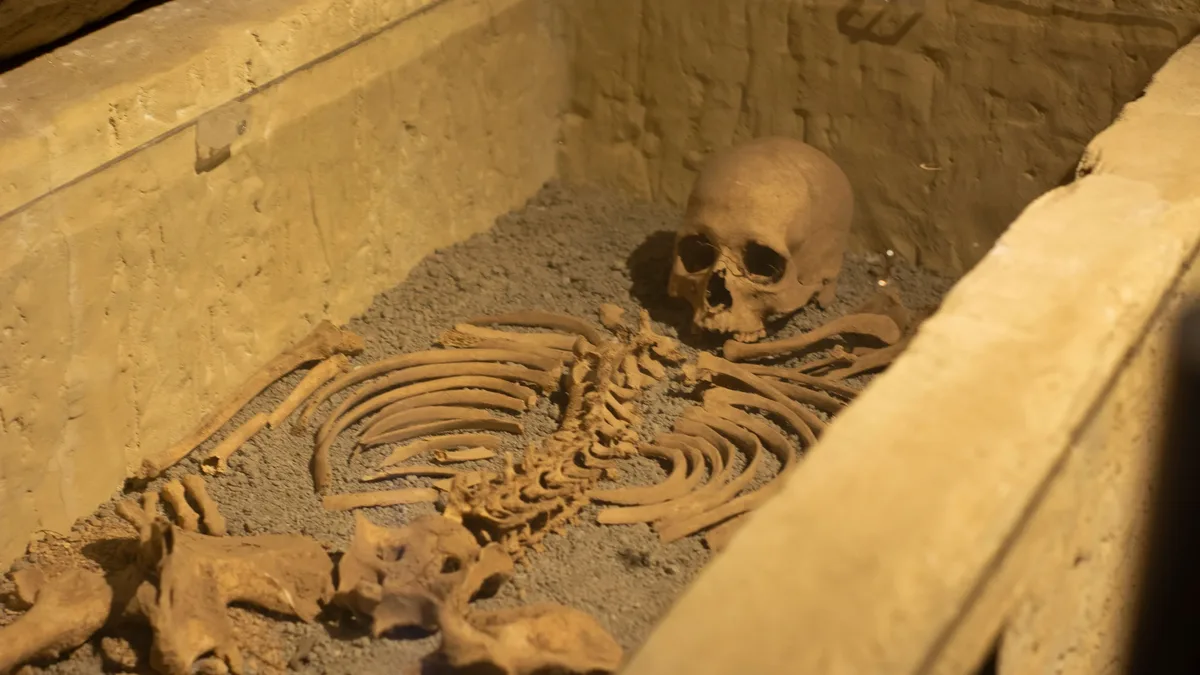
A 1,200-year-old multiple burial in Latvia contains six individuals from the Semigallian culture. The grave, dating to the second half of the ninth century C.E., holds four men, a boy, and a girl, all of indigenous Baltic ancestry. Researchers suggest they may have been killed in a violent event, possibly a Viking raid, though the identity of the attackers remains uncertain.
The burial site is the Čunkāni-Dreņģeri cemetery near the Gulf of Riga. This cemetery was in use from the seventh to the 11th centuries C.E. The grave was first discovered in 1924. Most graves in the region contain only a single set of remains, making this multiple burial a notable find.
Violent deaths among the deceased
Three of the men show clear evidence of fatal sharp force trauma. One man suffered defensive cuts on his forearm and hand. Another was killed by a blow that shattered his jaw. A third was almost decapitated. These injuries suggest a violent confrontation.
The cause of death for the fourth man and the two children could not be determined from the skeletal remains. They may have died from soft-tissue injuries not visible in the analysis. At least three individuals were killed during a violent event.
Family relationships uncovered
Genetic analysis revealed complex family ties within the group. The boy was the son of one of the men. Another man was identified as a third-degree relative, likely a cousin or great-uncle. Two other men were not genetically related to this family group.
The unrelated men may have belonged to the same community or extended household. Ancient DNA could not be extracted from the girl, so her relationship to the others remains unknown.
Local community context
The individuals were local Baltic people, identified as Semigallians, an Iron Age farming community. Elīna Pētersone-Gordina stated, "They were most likely local people." The burial was ritualistic and careful, not a haphazard mass grave.
The girl was buried with her head pointing northwest. All the male individuals were placed beside her in a row with their heads pointing southeast. This pattern follows local Baltic customs and is seen at other burials from this time. The group was interred with traditional grave goods.
Vikings or their predecessors were active in the Eastern Baltic area around that time. Two Scandinavian boat burials from around 750 C.E., holding men with battle wounds, were found on the Estonian island of Saaremaa. This suggests prior Viking activity in the region. However, violence within the community or with neighbors could also explain the deaths.
The study provides new insight into the social organization of the Semigallian people, including hints of an emerging aristocratic structure.