Czech Neolithic site reveals 6,500-year-old circular enclosure
Archaeologists have uncovered a 6,500-year-old circular enclosure in the Czech Republic, designed with 12 entrances aligned to solar and lunar cycles.
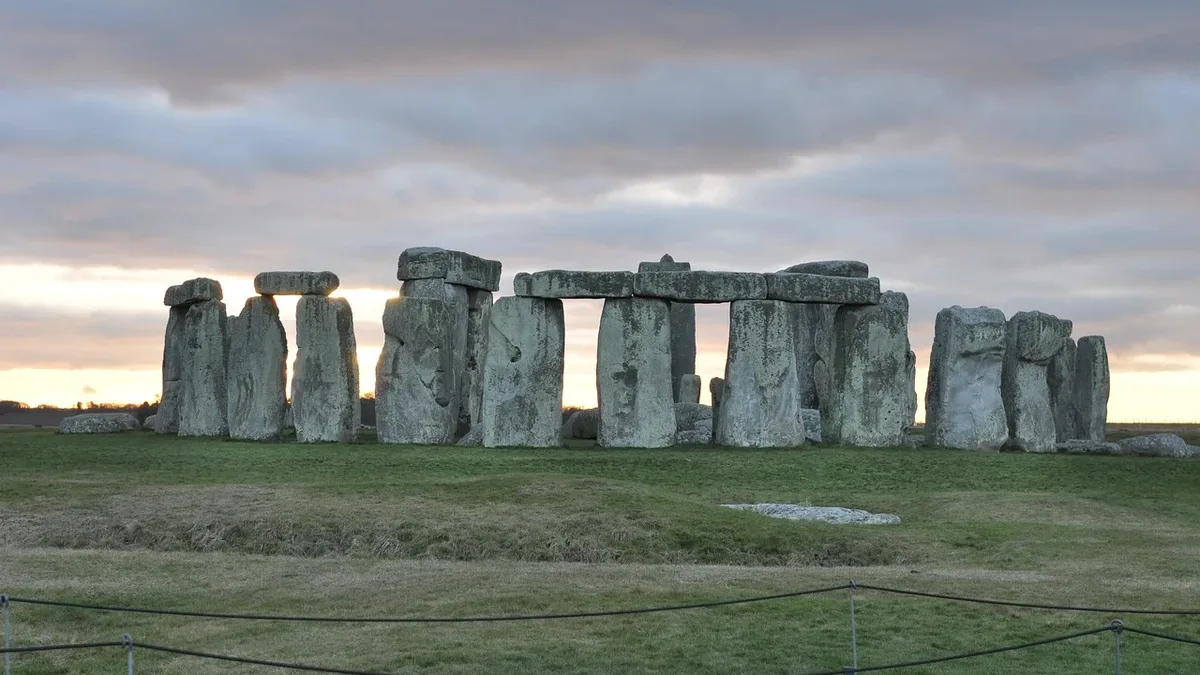
Archaeologists have unearthed a 6,500-year-old ritual structure in the Czech Republic, oriented to the movements of the sun and moon. The site, located at Chleby in the Central Bohemian Region, is approximately 1,000 years older than Stonehenge, according to a statement from the research team issued on Aug. 18.
The discovery consists of a large circular ditch measuring about 750 feet (230 meters) in diameter and 8 feet (2.5 m) deep. Twelve distinct entrances were positioned around the ditch, leading to its center. The team suspects the enclosure's walls were originally formed by wooden posts. Animal bones found within the ditch suggest the entryways may have been adorned with bull skulls and horns.
"The cult of the bull was an important religious symbol among the first farming communities and is known from many parts of prehistoric Europe," said Jan Turek, an archaeologist at Charles University in Prague involved in the research. He noted that bulls likely symbolized strength and fertility in these Neolithic cultures.
An Exceptional Geometry
Petr Krištuf, an archaeology professor at the University of West Bohemia leading the team, emphasized the site's uniqueness. "Circular enclosures are completely unknown in our region for this period," he stated. Analysis revealed the entrances were not randomly placed.
Their specific geometry created a system for observing key astronomical events. The alignments allowed people inside to track the moon's most extreme positions during its 18.6-year cycle. They also framed the sunrise on the summer solstice and the sunset on the winter solstice.
"For prehistoric farming communities, the connection between sunrise and the summer solstice symbolized a beginning, while sunset and the winter solstice represented an ending," Krištuf explained. He drew a parallel to Stonehenge's main axis, suggesting the Chleby site was designed with a similar principle.
Later Use and Loss of Meaning
The ritual purpose of the location appears to have shifted over millennia. Earlier excavations at Chleby uncovered the burials of 18 individuals from the Bronze Age Únětice culture, which thrived from around 2300 to 1600 B.C. This culture is known for distinctive burials and artifacts like the Nebra Sky Disc. The site may have retained a ritual significance during this era.
That original meaning was lost by the Iron Age, circa 800 B.C. To 1 B.C. "The ditch was gradually filled in, and an ordinary settlement was established on the site of the former sanctuary," Krištuf said. The monument was effectively buried by domestic life.
Research continues. Jan Fišer, an archaeologist at the University of Hradec Králové, pointed to soil analysis as a key next step. "In addition to artifacts and the remains of the dead, people leave chemical traces in the soil," Fišer said. These traces could clarify how the site was used across different prehistoric periods.
The team's findings were reported by Live Science.