Fourth-Century B.C. Graves Found at Hattusha
Archaeologists have discovered three ancient tombs at the Hittite capital city of Hattusha in central Turkey. The graves date back around 2,300 years and are distinguished by their circular stone structures.
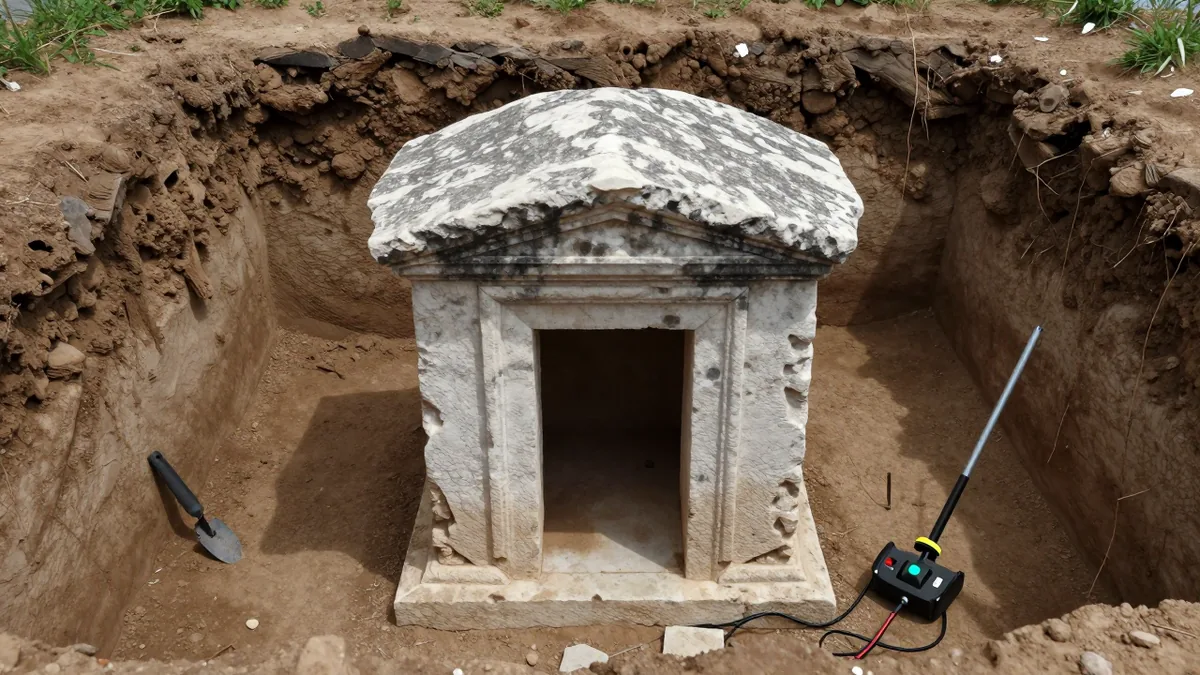
Archaeologists have made a significant discovery at the ancient city of Hattusha in central Turkey. Three tombs dating back to the fourth century B.C. have been uncovered in a small cemetery at the site. The graves are notable for their unique circular stone structures, which measure around 23 feet in diameter.
According to Andreas Schachner of the German Archaeological Institute, the circular stone structure surrounding the graves is a distinctive feature of these burials. One of the tombs, which has been preserved well, contains skeletal remains with a knife placed at the right shoulder. It is not yet clear whether the remains belong to a man or a woman.
Schachner noted that most of the graves uncovered in the area contain the remains of women. The discovery also includes coins and cosmetic sets recovered from some of the burials. These finds provide valuable insights into the lives and customs of the people who lived in Hattusha over 2,300 years ago.
The Hittite capital city of Hattusha is a significant archaeological site, and the discovery of these ancient tombs is a major find. The site is known for its well-preserved ruins and artifacts, which offer a glimpse into the lives of the people who lived there. The discovery of the fourth-century B.C. graves at Hattusha is a significant contribution to our understanding of the history and culture of the ancient Hittite civilization.
Further excavation and analysis of the site are likely to provide more insights into the lives and customs of the people who lived in Hattusha.
The Significance of the Discovery
The discovery of the fourth-century B.C. graves at Hattusha is a significant find for archaeologists and historians. The site provides valuable insights into the lives and customs of the people who lived in Hattusha over 2,300 years ago. The graves are a testament to the advanced knowledge and skills of the ancient Hittite civilization.
The circular stone structures surrounding the graves demonstrate a high level of craftsmanship and engineering skills. The discovery also highlights the importance of continued excavation and analysis of the site. Further research is likely to provide more insights into the lives and customs of the people who lived in Hattusha.
The Future of the Site
The discovery of the fourth-century B.C. graves at Hattusha is a significant find, and the site is likely to continue to provide valuable insights into the history and culture of the ancient Hittite civilization. Further excavation and analysis of the site are likely to provide more insights into the lives and customs of the people who lived in Hattusha. The site is a significant archaeological find, and its continued study is likely to provide valuable information about the ancient Hittite civilization.
The discovery of the fourth-century B.C. graves at Hattusha is a significant contribution to our understanding of the history and culture of the ancient Hittite civilization. The site is a valuable resource for archaeologists and historians, and its continued study is likely to provide more insights into the lives and customs of the people who lived in Hattusha.
Source: Archaeology Magazine (Archaeological Institute of America)